Reviews

Press for every engagement since 2005, newest first. The full record, with or without reviews, is under Career.

2020

La traviata (Violetta Valery)

Brava Oropesa!

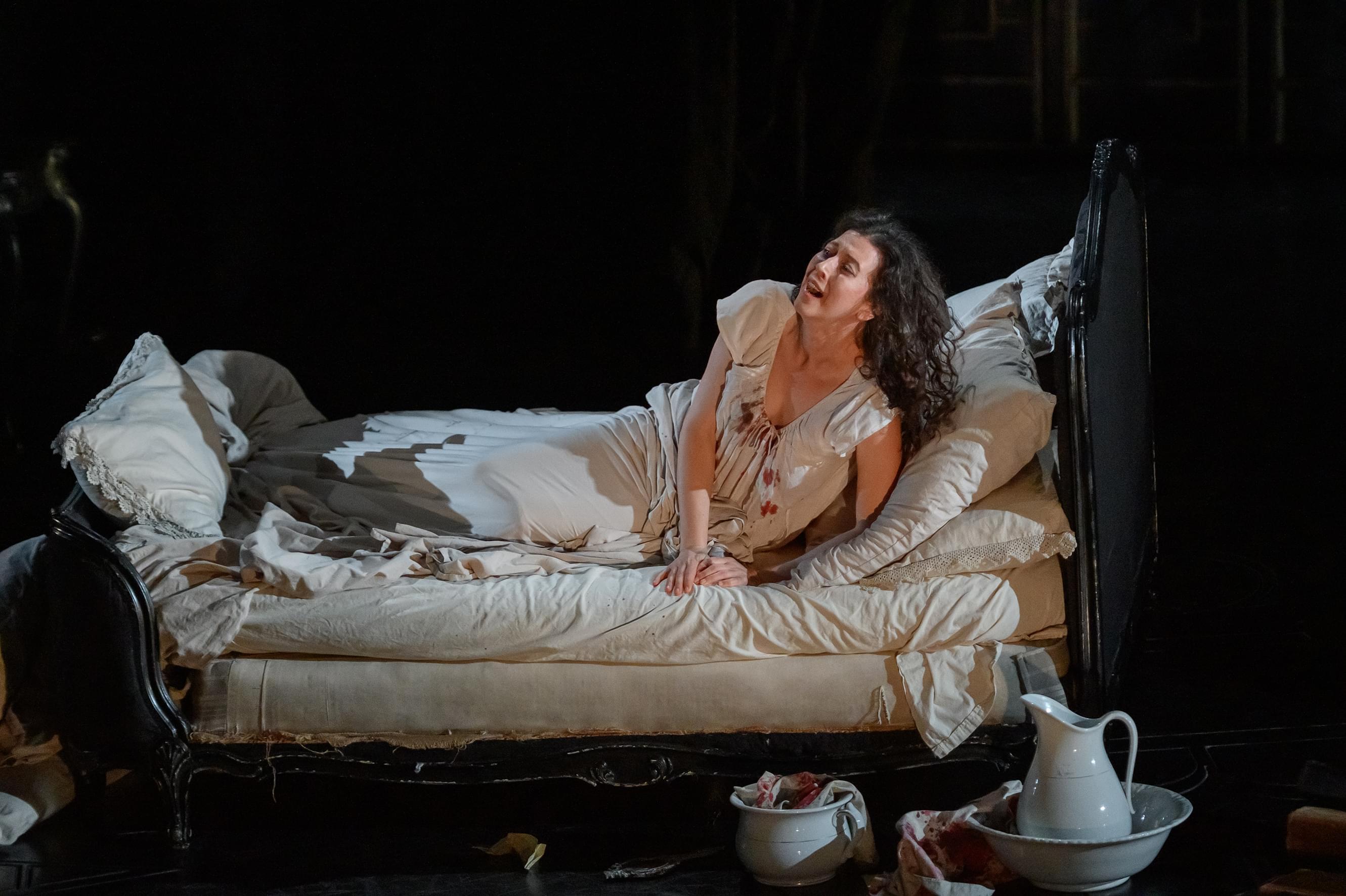
Lugar y fecha: Gran Teatre del Liceu (15/XII/2020) Seductora y carismática, así fue la Violetta Valéry de la estadounidense Lisette Oropesa, éxito personal y ovación en el Liceu. Recuperadas las funciones de La Traviata tras ampliar el tope de 500 espectadores a 1.000, faltaba disfrutar de la tercera de las cuatro Violetta en discordia, vistas ya Kristina Mkhitaryan y Pretty Yende, y a falta de Ermonela Jaho en la última función. Lisette, la más ligera, sorprendió, pues más allá de un primer acto brillante, donde desplegó su instrumento a piacere, Mi bemol al nal del “Sempre libera!” , agudos fáciles, luminosos y timbrados, creció con el desarrollo de la partitura. En su dúo con Germont padre coloreó, buscó expresión y matices, siempre sul ato, con un fraseo detallado, articulando cada frase con una escuela belcantista de primera. En su aria nal “Addio del passato” , la más aplaudida, controló el vibrato, aportó drama y acabó con un pianissimo volátil inolvidable. Brava la Oropesa!

—  Jordi Maddaleno  •  La Vanguardia

Concert

Constellation d’étoiles (dé)filantes pour l’Ouverture de saison à La Scala

Arrive ensuite Donizetti et Lucia di Lammermoor, l’œuvre initialement prévue en cette ouverture de saison et ici “réduite” à un seul air (“Regnava nel silenzio”). Lisette Oropesa, à peine remise de sa déception de ne pouvoir endosser le rôle dans l’entièreté de l’œuvre, déploie dans cet extrait son timbre clair et pur, présentant une incarnation de Lucia portée par l’énergie et une certaine candeur, aussi. 

—  Pierre Géraudie  •  Olyrix

Scala-Eröffnung in Milano: Der Abend lässt auf eine glanzvolle Renaissance nach Covid 19 hoffen

Der Preis des Abends gebührt eindeutig der Newcomerin Lisette Oropesa. Sie war als Premierenbesetzung für die Lucia-Aufführung angesetzt und durfte nun zum Trost die Arie der Lucia aus dem ersten Akt singen. Dabei konnte sie unter Beweis stellen, dass sie weitaus mehr als nur eine Coloratrice mit geläufiger Gurgel ist. Ihre Stimme sitzt perfekt, hat ein ausgesprochen schönes Timbre und wird von ihr wirkungsvoll eingesetzt. Da will man dann doch bald einmal mehr hören!

—  Andreas Schmidt  •  Klassik Begeistert

Roma e Milano: la capitale vince il confronto

Fra i migliori, certamente la strepitosa Lisette Oropesa — canto perfetto al servizio di un fraseggio acuminato

—  Nicola Cattò  •  Revista Musica

Prima della Scala 2020

La migliore: Lisette Oropesa (voto 9)
Il soprano Lisette Oropesa ha fatto capire cosa sarebbe potuta essere la prevista ‘Lucia di Lemmermoor’. Toccante il suo “Regnava nel silenzio”, fatto di splendide colorature e tanto altro

—  Enrico Girardi  •  Corriere Della Sera

Un “dream team” para resucitar la ópera

Con fines benéficos e intención de redimirse, claro. La más brillante, de largo fue la soprano cubano-estadounidense Lisette Oropesa, que interpretó el aria «Regnava nel silenzio» de «Lucia di Lammermoor». La ópera de Donizetti, a la que habían consagrado en este 2020 la «prima» de La Scala antes de que llegara la pandemia, se vio relegada a una actuación más.

—  Ismael Monzón  •  La Razón

La Scala’s online gala is a triumph

Donizetti’s Lucia di Lammermoor is usually found in gloomy Scotland, not paddling on a sun-soaked beach, but the brilliant-voiced Lisette Oropesa thrived there anyway.

—  Richard Fairman  •  Financial Times

Die Entführung aus dem Serail (Konstanze)

Double vision in Wiener Staatsoper's Entführung... and the opera benefits

Lisette Oropesa shone both in voice and action as Konstanze in her Staatsoper debut. Demonstrating ownership of the role from the start, she moved through the contrasting lyric and coloratura sections of “Ach ich liebte” with aplomb, soaring to the repeated top Ds with ease.

—  George Jahn  •  Bachtrack

Staatsoper: „Entführung aus dem Serail“in Hans Neuenfels’ „historischer“Regie

der Besetzung brilliert Lisette Oropesa: ein wunderbar geschmeidiger, warm leuchtender Sorpan mit hoher Koloraturensicherheit. Betörend schön ihre Arien „Traurigkeit ward mir zum Lose“und die „Marternarie“.

—  Karlheinz Roschitz  •  Kronen Zeitung

Aufgewärmter Opernkaffee statt Verjüngungskur

Fulminant hingegen die Dramatik der Martern-Arie, wobei der Akzent von Lisette Oropesa ausging. Die amerikanische Sopranistin überzeugte als Konstanze, beherrschte wahnwitzige Koloraturen sowie feine Zwischentöne und zelebrierte darstellerische Vielseitigkeit. 

—  Michael Wruss  •  OÖNachrichten

„Die Entführung aus dem Serail“: Doppelt steht Mozart gut

Das sorgt für große Momente, wenn Lisette Oropesa als Konstanze ihr heftig bejubeltes Staatsoperndebüt gibt: ein wunderbar in – an Erika Köth erinnerndem – Feinvibrato leuchtender Sopran. Eine souverän alle Klippen meisternde „geläufige Gurgel“, die auch noch voller Ausdruck zu singen versteht.

—  Stefan Musil  •  Tiroler Tageszeitung

Wenn Musik die Worte retten muss

Den Abend trägt die tragisch Leidende, Konstanze. Lisette Oropesa singt zum ersten Mal in der Staatsoper und nimmt das Haus im Sturm. Ihr Sopran verströmt herzwärmende Innigkeit und meistert auch die extremen Klippen der Rolle mühelos. Tritt sie auf, findet das Stück zu jener Schlichtheit zurück, die seinen Zauber ausmacht. „Sing, Konstanze, sing!“, fleht ihre Doppelgängerin in der Not. Musik als Heilmittel.

—  Zeitung  •  Kleine Zeitung Steiermark

"Entführung aus dem Serail“ an der Staatsoper: Wütende Buhs, ephorische Bravos

Wolfgang Amadeus Mozarts Singspiel „Die Entführung aus dem Serail“in der legendären Regie von Hans Neuenfels mit einer grandiosen Lisette Oropesa „Entführung“

Die amerikanische Sopranistin ist eine Konstanze von Weltformat, verfügt über alle nötigen Koloraturen, Lyrismen und Registerübergänge und gestaltet nicht nur die berühmte „Martern-Arie“ mit einer unglaublichen stimmlichen Intensität. 

—  Peter Jarolin  •  Kurier

Die Poesie eines (Musik-)Theatermachers

Lisette Oropesa ist eine wahre Entdeckung. Ihre Konstanze ist ein Ereignis. Der amerikanischen Sopranistin fehlt nichts: ihr Sopran erstrahlt in den hohen Tönen, die sie mühelos erreicht, besticht durch Sinnlichkeit und Ausdruck. Fulminant ihre "Martern"-Arie. 

—  Susanne Zobl  •  News.AT

WIEN / Staatsoper: DIE ENTFÜHRUNG AUS DEM SERAIL


Und Konstanze der Stern, der alles überglänzte. Wer Lisette Oropesa schon an der Met (im Kino) kennen gelernt hat, als so nachdrückliche Manon von Massenet, wie man sie von einer damals noch weitgehend Unbekannten nie erwartet hat, der war nicht überrascht – und doch: eine Konstanze, die mit dunkel leuchtendem Sopran und attackierender, darstellender Koloratur so leidenschaftlich gesungen und gestaltet wird, erlebt man nicht alle Tage.

—  Renate Wagner  •  Online Merker

Mozarts "Entführung aus dem Serail": Hans Neuenfels' verspielter Aufreger

Lisette Oropesa wieder einmal in Regionen besonderer Unmittelbarkeit auf. Trotz eines leicht flatternden Wesenszugs ihrer Stimme gelingen der Hausdebütantin (als Konstanze) Momente immenser vokaler Präsenz.

—  Ljubiša Tošić  •  Der Standard

WIEN/ Staatsoper: DIE ENTFÜHRUNG AUS DEM SERAIL. Premiere

Die beste Leistung bot ohne Zweifel Lisette Oropesa als Konstanze. Sie sang mit großer Dynamik, gutem Ausdruck und schön geführter Stimme.

—  Heinrich Schramm-Schiessl  •  Online Merker

Double blonde: Neuenfels' "kidnapping" at the State Opera

mit dem strahlenden Debüt von Lisette Oropesa als Konstanze ist Hans Neuenfels' Deutung von Mozarts "Entführung aus dem Serail" am Montag an die Wiener Staatsoper gekommen.

—  APA  •  Salzburger Nachrichten

Staatsoper: Wien hält auch Hans Neuenfels aus

Strahlender Star des Abends: die US-Sopranistin Lisette Oropesa, die bei ihrem Staatsoperndebüt als Konstanze ausnahmslos alle im Publikum überzeugte.

—  heid  •  ORF.AT

Einen Jux wollt’ er sich machen

Und erst recht die Konstanze der Lisette Oropesa, die man bisher nur aus den Übertragungen der Met kannte und die ein strahlendes Debüt ablieferte, eine wunderbare, dunkel timbrierte Stimme mit einer Koloratur-Attacke, die sprachlos machte.

—  Volksblatt  •  Volksblatt

Live in Concert

Getting the band back together: Pappano leads The Royal Opera's return to action

Vocally, these two delivered outstanding contributions. Oropesa’s technique is superb. She is the reigning bel canto queen in my book and the finale from La sonnambula was perfectly pitched, crowned by a sparkling “Ah! non giunge”.

—  Mark Pullinger  •  Bachtrack

The Royal Opera: Live in Concert review — Antonio Pappano had brilliant energy

The American soprano Lisette Oropesa partnered Castronovo in a Donizetti duet, but her slinky Manon (the gavotte from Massenet’s opera) and affecting Amina (the finale of La Sonnambula) were more memorable.

—  Neil Fisher  •  The Times

Royal Opera: Live in Concert was a Covid-secure evening of world-class singing and music-making

There was something deeply affecting in hearing the chorus singing once more in the theatre as Oropesa caught the eye and ear during Amina’s engrossing final scene from La sonnambula (The Sleepwalker) with more than just a little help from Felipe Manu’s cameo as Elvino. (Manu is a promising New Zealand-Tongan tenor and currently on the Jette Parker programme.) There are wondrous qualities in Oropesa’s singing and her voice has such bloom and (if she will forgive me) you could see her diaphragm working overtime to provide secure support and allow her to send Bellini’s phrases soaring. Oropesa clearly had a particularly sensitive understanding of nuance in the combination of notes and words she was singing.

—  Jim Pritchard  •  Seen and Heard International

Rossini Gala

Verona, Festival d’estate 2020 – Rossini Gala

Spicca il nome di Lisette Oropesa, soprano statunitense, che proprio con Rossini al ROF di Pesaro si è fatta conoscere due anni fa dal pubblico italiano, e che ora è una certezza del panorama lirico internazionale. Si tratta in effetti di una solida professionista: un soprano lirico-leggero dotato di una tecnica e una personalità interpretativa che le consentono di spaziare in un repertorio che va da Mozart a buona parte dell’Ottocento operistico italiano e francese. La voce, che ha un leggero vibrato e ricorda, come è stato giustamente notato, certe inflessioni timbriche della Gheorghiu, corre senza problemi anche in ampi spazi. L’emissione è rotonda e fluida in tutta la gamma e solo qualche sopracuto a volte risulta meno pieno e timbrato. In “Bel raggio lusinghier” da Semiramide, Oropesa mette subito in luce l’accuratezza del fraseggio, l’accento ben calibrato, l’ottima dizione, dominando senza particolari problemi la tessitura tendenzialmente centrale dell’aria (il ruolo viene concepito da Rossini per la Colbran), dando sfogo al registro acuto e sopracuto nella parte finale, debitamente variata con eleganza e disinvoltura. Le agilità sono buone, ma non trascendentali. Poco filologica, se vogliamo, la scelta di cantare l’aria di Rosina dal Barbiere di Siviglia, “Una voce poco fa”, che Rossini scrive per contralto, con una tessitura che oscilla per la precisione fra contralto e mezzosoprano. Anche qui, nessun problema per Oropesa, che affronta la versione sopranile con facilità, coloratura puntale ed espressiva, senza i bamboleggiamenti tipici dei soprani leggeri che un tempo avevano l’appannaggio del ruolo. Insomma, non sarà una fuoriclasse del canto rossiniano, ma sicuramente Lisette Oropesa si conferma una vocalista e un’interprete di rango.

—  Roberto Mori  •  Conessi all'Opera

ROSSINI SPLENDE NEL CIELO DELL’ARENA

As we said, the vocal sector was extraordinary, starting with Lisette Oropesa. The soprano highlighted the grace of her voice, the technical cleanliness, the sparkle of a springy and bright song. He opened the evening with “Bel radius flattering” by Semiramide, painted with elegant variations and continued with the cavatina by Rosina del Barbiere (“Una voce poco fa”), light and lively, in full correspondence with the artist's temperament.

—  Francesco Lodola  •  Ieri Oggi Domani Opera

ARENA DI VERONA, FESTIVAL D’ESTATE 2020: ROSSINI GALA

The vocal part of the gala opened by Lisette Oropesa: the American soprano, scenically casual and equally brilliant in her soaring on the staff, addressing the pages from Semiramide ("Bel radius flattering") and from the Barber of Seville ("Una voce poco fa") it brings us back a Rossini with a "liberty" taste, funanbolic in the variations, not "philological", but with a sure hold on the public.

—  Giorgio Bagnoli  •  GB Opera Magazine

Verona, a Rossini si addice l’Arena

Oropesa (also debut in Pesaro two years ago, alongside Sekgapane nell'Adina), opened the journey on the notes of "Beautiful flattering ray" (Semiramide, act I), the triumph of belcanto as the elegance of the line, in a coloratura of supreme abstraction and captivating precision; and he continued it on the ironic and very concrete brilliance of Rosina's Cavatina (Barbiere di Siviglia, act I), this time bending agility to the needs of an expressiveness entirely of comedy. 

—  Le Salon Musicale  •  Le Salon Musicale

Il Rossini Gala dell’Arena di Verona

Excellent interpretations by all the interpreters involved. Lisette Oropesa confirms herself as a singer perfectly at ease in the bel canto repertoire, as well as able to immerse herself in the different characters she has to face in a few minutes, although so different from each other (Semiramide and Rosina in the Barbiere in the first part of the concert).

—  Blogartpost  •  The.blogartpost

La traviata (Violetta Valery)

Lisette Oropesa réveille les braises de la passion lyrique

Oropesa a conçu Violetta Valéry précisément sur la base solide de la tradition belcantiste, en déployant un chant d'une rare pureté, d'une perfection vertigineuse, d'un équilibre admirable. Elle a un formidable contrôle de la respiration, ce qui lui permet au deuxième acte une exquise énonciation de Dite alla giovine, un moment de rare concentration, dans lequel elle rend le théâtre muet devant la qualité de l’expression, comme absorbée, rêveuse, obtenue grâce à la généreuse amplitude de la tenue de souffle. Et comme on pouvait s'y attendre de la part d'une chanteuse qui maîtrise si bien les ressources de son instrument, la fin du premier acte est admirable pour la limpidité et la précision de la colorature.

—  Antoine Lernez  •  Wanderer

La realidad como propuesta escénica. La Traviata en el Teatro Real

But if this particular performance is memorable, it is because of the magnificent performance by Lisette Oropesa. The memories of her Lucia from last summer still alive in this very place, the American soprano (and now Spanish nationalized) offers a dramatically overwhelming and vocally very own portrait of the protagonist. If we look at the cliché of Violeta's three voices - light, lyrical and dramatic - Oropesa is situated in the initial part of the triad, and there he remained throughout the performance. She solved with ease and comfort the agility of the first act while showing us a timbre that, without being very rich in harmonics, seduced us by brightness and homogeneity. A beautiful legato song and a very careful diction - every word was understood, each inflection in each syllable - demonstrated during the second act the technical quality of this artist. And in the final part, the lightness of her instrument managed to outline a delicate Violet, fragile to the point of breaking at any moment. The masterful mastery of pianissimo and dynamics presided over the final part, shattering the myth that a more bodied voice is essential for the outcome, and leaving the unforgettable memory of an “Or tutto finì” issued as an exquisite and eternal floating row. .

—  Juan José Freijo  •  Bachtrack

CRÍTICA: LISETTE OROPESA TRIUNFA EN «LA TRAVIATA» DEL TEATRO REAL

Second and third acts require a soprano of more robustness and dramatic substrate, but the Oropesa shows off her weapons, namely, remarkable vocalist skills and sincere expression, without artifice, or any room for excess. An example of this was the precise attack in pianissimo and link with the phrase "Dite alla giovane" in the great Duet with Germont Sr. [climax of the work] in which an impeccable spianato sostenuto song [flat song with a slow rhythm, without ornamentation and based on long values], firm and full of morbidity compensated for the lack of timbral width to fill the Verdi phrase. Likewise, the "Amami Alfredo" achieved an impact in the room, first because it was vocally and technically irreproachably reproduced and the expression, in the absence of greater doses of punch and charisma, treasured frankness and truthfulness. It is also fair

The sensitive and musical singing of Oropesa and his control of the emission and the column of air were imposed on the personality and dramatic force (appreciable deficiencies in that speech of the reading of the letter "You have the promessa") and on a timbre far from be patrician in the aria "Addio del passato" and also in "Prendi quest'è l'immagine" of the third act. Indeed, pure singing and outstanding vocal skills, especially in Italian opera, are genuine elements of pathos and expression.

—  Raúl Chamorro Mena  •  Codalario

Lisette Oropesa Protagoniza 'La Traviata' En El Teatro Real De Madrid

I well remember the impact that the soprano Lisette Oropesa caused exactly two years ago with her Lucia di Lammermoor at the Teatro Real, together with the tenor Javier Camarena. For her naturalness, for her magnetism, for her careful technique, for the closeness of her singing ... And all this has once again marked her return to Madrid, embodying a very close Violetta, with whom it is inevitable to empathize. There is a rare mix of control and emotion in Oropesa's song. Naturalness and technique converge in her doing, in a very chosen, almost select way. Oropesa is a singer of palpalbe intelligence, aware of her means, who manages and manages in such a way that they seem to redouble her potential. Its material, with a pleasant natural vibrato and a slightly dark color,with a barely metallic timbre - it sometimes reminds me of Gheorghiu in its beginnings - it manages to flow with distinguished naturalness. His first act was a paragon of virtues, crowning with an E flat that was nothing but the icing on an exhibition of technical resources, despite a slight fatigue in the last section of 'Semper Libera'.

Already in the second act, Oropesa once again exhibited a prodigious ability to manage his means, singing in a low voice the 'Dite alla giovine', putting the hair on end and creating an atmosphere of outstanding theatricality, as had already happened in the first act with a masterful and chilling 'Ah, maybe him'. Her composure and dignity, in dialogue with Germont; her despair later when she met Alfredo again; and finally his heartbreak when he faced death in the third act. All this reflected Oropesa's voice with amazing ease and with palpable truth. There were even moments in which his voice seemed to double its flow, as in that thrown 'Amami Alfredo quant'io t'amo', with the pit at full throttle. As a final,crowning the page with a sharp A that he regulated at will, in 'Or tutto finì!'. In short, and in short, an anthology Violetta.

—  Alejandro Martínez  •  Platea Magazine

Llegó Lisette Oropesa y ‘dio el canto’ en ‘La Traviata’ (y el Teatro Real se vino abajo)

Now, in the final stretch, Lisette Oropesa arrives. You have to go see it, and especially to listen to it. Even if it is only for the few seconds in which her Amami Alfredo transports us to the great ones that we all have engraved in our brain, which is the best hard drive that can exist.

It is true that we are in need of beautiful things. And it is no less true that the Oropesa gives us the ear. When we still remember his Lucia from two years ago (and his Gilda del Rigoletto from 2015), now comes his Violetta, which enshrines her in the Real: from chaste diva, chaste goddess, to absolute diva. But with the closeness that the divas of the 21st century require. Her elegance on stage, in addition, adds many points.

El Real, we insist, is at fifty percent capacity for health reasons. Those who were on July 18 filled all the gaps with applause; a welcome that makes history. The shadow of the encore flew over the room after his sublime Addio del passato of the final act. Just as the illusion that he would come out to be applauded behind the curtain that closed the first one also flew overhead. As before, as could be done when the voice prevailed.

—  Nacho Fresno  •  Shangay

At Home Gala

El Maggio Musicale de Florència va regalar una gala lírica per internet

Lisette Oropesa –que al desembre inaugurarà la temporada de la Scala, aportant la millor interpretació de la nit, una ària de l’òpera americana ‘The Ballad of Baby Doe’,

—  Pablo Meléndez-Haddad  •  El Periódico

The Top 5 Moments From the Maggio Musicale Fiorentino’s At Home Gala

In an outstanding rendition of Douglass Moore’s aria “Willow,” Oropesa offered audiences a refined and moving performance filled with crystal clear high notes, all sung a capella.

While the performance was pre-recorded, Oropesa also recited the text for Italian audiences in a beautiful and moving reading.

—  Francisco Salazar  •  Opera Wire

BWW Review: Maggio Musicale's Home Gala

Because of the remote location, Lisette Oropesa's singing was prerecorded in her home at Baton Rouge, Louisiana. She offered a gorgeous, heart-rending a cappella version of Baby Doe's aria from Douglas Moore's The Ballad of Baby Doe. Before singing, however, she read an Italian translation of the American aria. Sometimes we forget how much Italian is translated for us.

—  Maria Nockin  •  Broadway World

Constellation de stars en ligne du Maggio Musicale Fiorentino : l’empathie plus que le plaisir

Lisette Oropesa, à Bâton-Rouge, prête sa finesse prosodique à des intervalles définis avec une immense précision et à une ligne de chant déconfinée.

—  Thibault Vicq  •  Opera Online

La porti un bacione a Firenze ! (streaming)

Mais il faut dire que le moment le plus admirable nous est venu de Lisette Oropesa qui, depuis son domicile de Baton-Rouge aux Etats-Unis, a choisi d’interpréter a capella une chanson du saule. Pas du tout celle de Verdi ni celle de Rossini, mais celle de la Ballad of Baby Doe de Douglas Moore. Un moment d’enchantement, aidé par l’une des meilleures captations de la soirée, pré-enregistrée.

—  Cédric Manuel  •  Forum Opéra

El Maggio Musicale de Florencia regaló una gala lírica por internet

Lisette Oropesa que en diciembre inaugurará la temporada de La Scala, aportando la mejor interpretación de la noche, una aria de la ópera americana 'he Ballad of Baby Doe,

—  Pablo Meléndez-Haddad  •  Cordoba

Livestream Gala

The Metropolitan Opera’s online gala was the most ambitious event of its kind

Lisette Oropesa, in Robert le Diable, raised the spirits.

—  Richard Fairman  •  Financial Times

The Met At-Home Gala review: a galaxy of opera stars 'phone in' for a glitchy but uplifting concert

at the soprano end of the scale, Lisette Oropesa twittered very prettily through En vain j’espère from Meyerbeer’s Robert le Diable.

—  Rupert Christiansen  •  The Telegraph

The Metropolitan Opera’s At-Home Gala review – thrilling singing, live from the stars’ living-rooms

The high point, though, for me, came from Lisette Oropesa, singing an aria from Meyerbeer’s Robert le Diable from her house in Baton Rouge: astonishing singing, her coloratura thrilling beyond belief.

—  Tim Ashley  •  The Guardian

The Met Opera’s At-Home Gala: Informal Yet Profoundly Moving

The soprano Lisette Oropesa, in Baton Rouge, La., sounded radiant in an aria from Meyerbeer’s “Robert le Diable.”

—  Anthony Tommasini  •  New York Times

BWW Review: Metropolitan Opera's At-Home Gala

The Met technical folks went to Baton Rouge, Louisiana, to catch Lisette Oropesa who, accompanied by Michael Borowitz, sang a perfectly executed "En vain espère" from Meyerbeer's Le Prophète.
Her rendition contained some of the best singing I've heard in years.

—  Maria Nockin  •  Broadway World

La Traviata (Violetta Valery)

Metropolitan Opera 2019-20 Review: La Traviata (Cast B)

Lisette Oropesa, taking on the role at the Metropolitan Opera for the first time (according to her official website she had taken it on just 11 times prior to this run), is one of the few artists that can manage to pull off the role with not only the dramatic temperament, but also the vocal consistency.

—  David Salazar  •  Opera Wire

BWW Review: A Marvelous Oropesa is Definitely Not 'Lost' in Met's TRAVIATA

She gave a stellar performance that showed a firm grip on all the facets of the role--the coloratura, the drama, the pathos, the glamour.

She was the party girl of Act I, the delirious lover and compassionate figure of Act II, and the dying woman of Act III, each perfectly placed, each cannily acted. Whether she was singing the joyous "Sempre libera" at the opera's start or the woeful "Addio del passato" at the end of Act III, she was in full command of all that was demanded of her. She had good backup from the Met Orchestra, under Bertrand de Billy, with the usual stellar work of the Met Chorus, under Donald Palumbo.

—  Richard Sasanow  •  Broadway World

Review: Lisette Oropesa Makes ‘La Traviata’ Her Own

In Act I, when Violetta, a charming courtesan, is throwing a lavish party, a soprano must summon flights of coloratura brilliance and coquettish sparkle. Ms. Oropesa breezily dispatched runs and embellishments as she mingled with her guests and met Alfredo, the smitten young man from a bourgeois family who has been pining for her from afar.

Yet you could detect a trace of forced vivacity in Ms. Oropesa’s interpretation, an intentional touch of tremulous fervor in her sound, even as she let bright-voiced, ebullient phrases soar. Here was a young woman determined to prove that she was undaunted and would remain, as she later sings, “sempre libera”: always free.

—  Anthony Tommasini  •  New York Times

Oropesa is an unforgettable Violetta in Met’s “Traviata” revival

There’s a melancholy feeling that very occasionally accompanies the greatest performances. Tangled up in the thrill of witnessing a historic interpretation of an iconic work comes the sad realization that you may never encounter its equal.

The Metropolitan Opera has seen a number of superb sopranos appear as Violetta Valéry in the past decade: Diana Damrau, Natalie Dessay, Sonya Yoncheva, and Angelina Gheorghiu are just a handful of the most recent leading artists to make a mark in La Traviata’s touchstone role.

The sensational performance that Lisette Oropesa gave on Wednesday night in her role debut at the Met deserves to be counted in the very first rank.

Oropesa brings a voice ideally suited to the role: direct and lively, bright yet round, so focused you can almost see it as it pierces through the air of the auditorium and slams into the back wall. Yet even with its power and laser clarity, her soprano never feels aggressive, as she wields her instrument with musical sensitivity and classic elegance.

—  Eric C. Simpson  •  New York Classical Review

Il Barbiere di Siviglia (Rosina)

Opéra National Review 2019-20: Il Barbiere di Siviglia

The Star of the Show
American lirico-leggera soprano Lisette Oropesa took on the role of Rosina. She is well-loved by the Parisian audience, as she has stepped into the role of Marguerite di Valois in “les Hugenots” on very short notice last season and then stepped in as well into “L’Elisir d’amore,” combining rehearsals for the Donizetti work while performing the Meyerbeer opera at the Bastille.

All the admiration she received on this particular night was well-deserved. Her timbre is dark, round, and completely even throughout her register. She tops off this combination with amazing, ringing high notes.

She surprisingly sang the famed aria “Una voce poco Fa” in the mezzo-soprano key ( the aria is published in two different keys, with the soprano version one semi-tone higher) delivering sonorous low B naturals and C sharps. Her coloratura technique is depurated and immaculate, as well as her staccato notes and all the high interpolated high notes; it must be said that she was very cautious with variations, maintaining most of the original written lines.

Her duet with Figaro was lively and cunning, again proving her amazing control of the middle voice. Her voice was quite present during the final concertante; choosing this time to sing Berta’s lines which are written for a soprano with two chromatic ascensions to high C; here her voice shined clearly over the rest of the cast, chorus, and orchestra.

She took on her second act aria “Contra un cor” in the soprano key which is one and a half semi tones higher than the mezzo key. Her voice was constantly tasked with high Cs, which she pulled off beauifully. The rest of the aria was a masterful display of vocal fireworks well-rewarded by the audience.

She kept her polished coloratura technique and sweet timbre for the trio with Figaro and Almaviva, and for the final scene, always adding subtle variation in order to preserve the integrity of the original melody.

Oropesa was the true success of the evening, and she received a well-deserved long ovation at the curtain call.

—  Mauricio Villa  •  Opera Wire

“The Barber of Seville”, “Les Contes d'Hoffmann” or “Les Bains Macabres”: the lyrical year is well u

Cavalcades à tous les étages
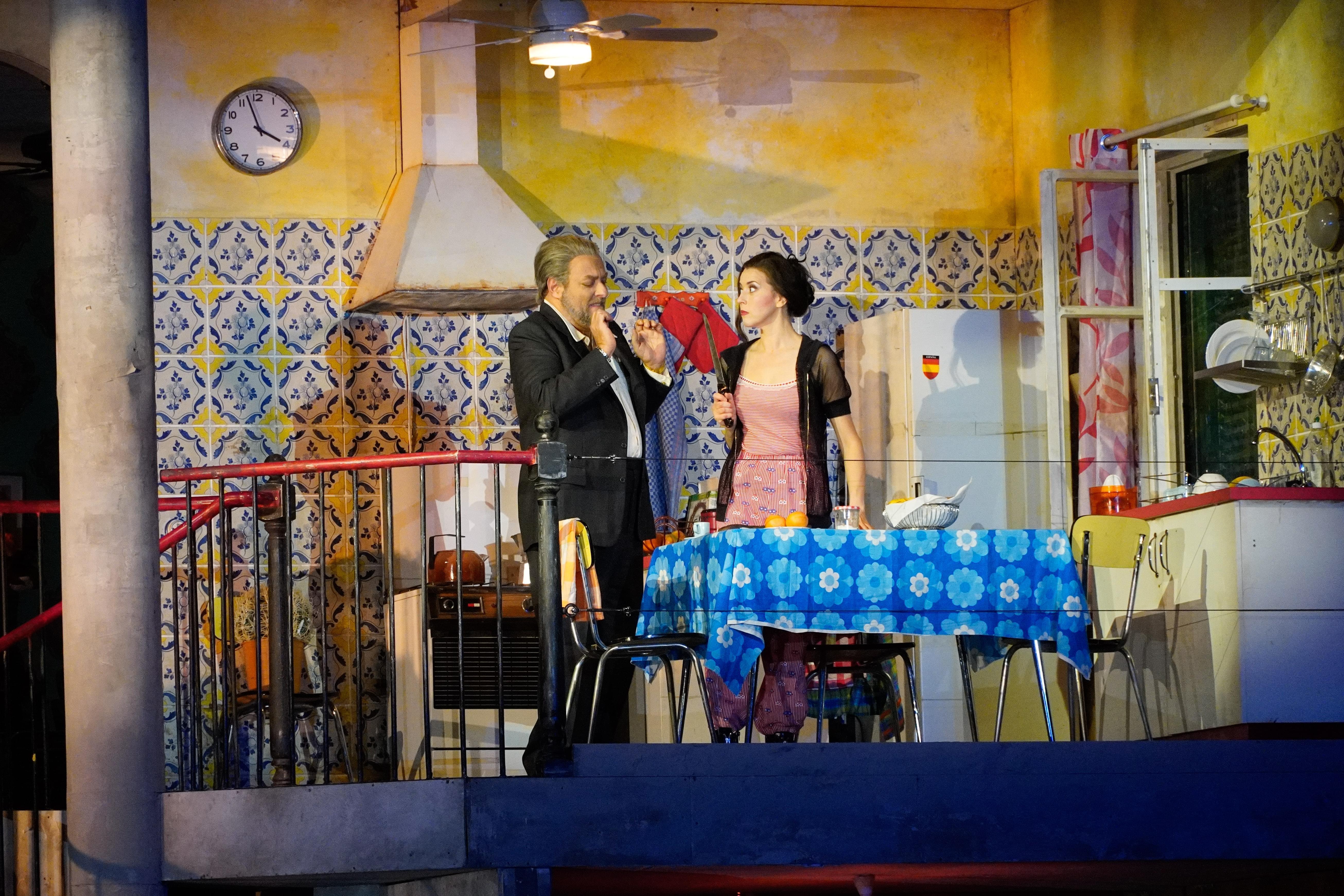
Installée dans un immeuble sévillan joliment décati, dont on nous révèle alternativement la façade et les intérieurs, l’efficace mise en scène de Damiano Michieletto fait cavalcader les chanteurs entre la rue et les étages. Non seulement cela ne semble pas coûter le moindre effort à Lisette Oropesa, 36 ans, marathonienne de choc à la ville comme à la scène, mais la soprano américaine, actrice très expressive autant que fine chanteuse, semble s’amuser énormément à camper Rosina en adolescente frondeuse, amoureuse et délurée.

C’est aussi à l’opéra Bastille qu’on l’avait découverte, à l’automne 2018. Éblouissante Marguerite de Navarre dans Les Huguenots de Meyerbeer — elle y remplaçait, en catastrophe et pour le meilleur, la très attendue Diana Damrau —, Lisette Oropesa y fut ensuite une délicieuse Adina dans L’Elixir d’amour de Donizetti. Son soprano radieux, vif et agile fait merveille dans le rôle moins dramatique, mais tout aussi exigeant, de la juvénile Rosina. En attendant qu’elle revienne (comme on l’espère) à l’Opéra de Paris, les Provençaux la retrouveront le 18 avril au Grand Théâtre de Provence (Aix-en-Provence), en récital avec le ténor Juan Diego Florez, et les Franciliens l’entendront les 10 et 11 juin à la Philharmonie de Paris, dans les Carmina Burana de Carl Orff.

—  Sophie Bourdais  •  Télérama

Bastille resumes filming, resumption of the Barber of Seville in a striking climate

Lisette Oropesa  finally returns and for the second time to Rosina, 17 years after her debut in the role (she posted a charming souvenir photograph of youth on social networks). The character here is even younger: a rebellious and sulky post-adolescent girl in Gothic attire. The American soprano embodies it with the plausibility of a teenage movie  and does not forget to channel this sparkling and luminous game in the voice. With its long breath, it passes in one sentence from a colored high to a deep bass, then goes up in agile and sensual vocalizations from the low guttural to the high, moiré or shimmering, explosive or intensely contained .

—  Charles Arden  •  Olyrix

Jeunes et prometteurs

 Appréciée du public parisien depuis sa Marguerite de Valois dans Les Huguenots à l’automne 2018, Lisette Oropesa compose une Rosine en tout point captivante. La jeune soprano ne manque ni de piquant ni de charme. La voix est brillante, l’aigu aisé, les vocalises sont parfaitement exécutées et la ligne de chant ornementée avec subtilité. Actrice accomplie, elle évolue comme un poisson dans l’eau dans l’univers imaginé par Michieletto. 

—  Christian Peter  •  Forum Opéra

Recital

A variety of musical discoveries

When was the last time you caught your breath in surprise? Anyone who is passionate about concerts and frequently attends will agree that this is fairly rare and only happens when expectations are well and truly exceeded. Top performances are always expected from well-known stars but expectations not always met. However, if you sit in a concert at a small music festival where the names of the artists are unfamiliar, the surprise is all the more intense.

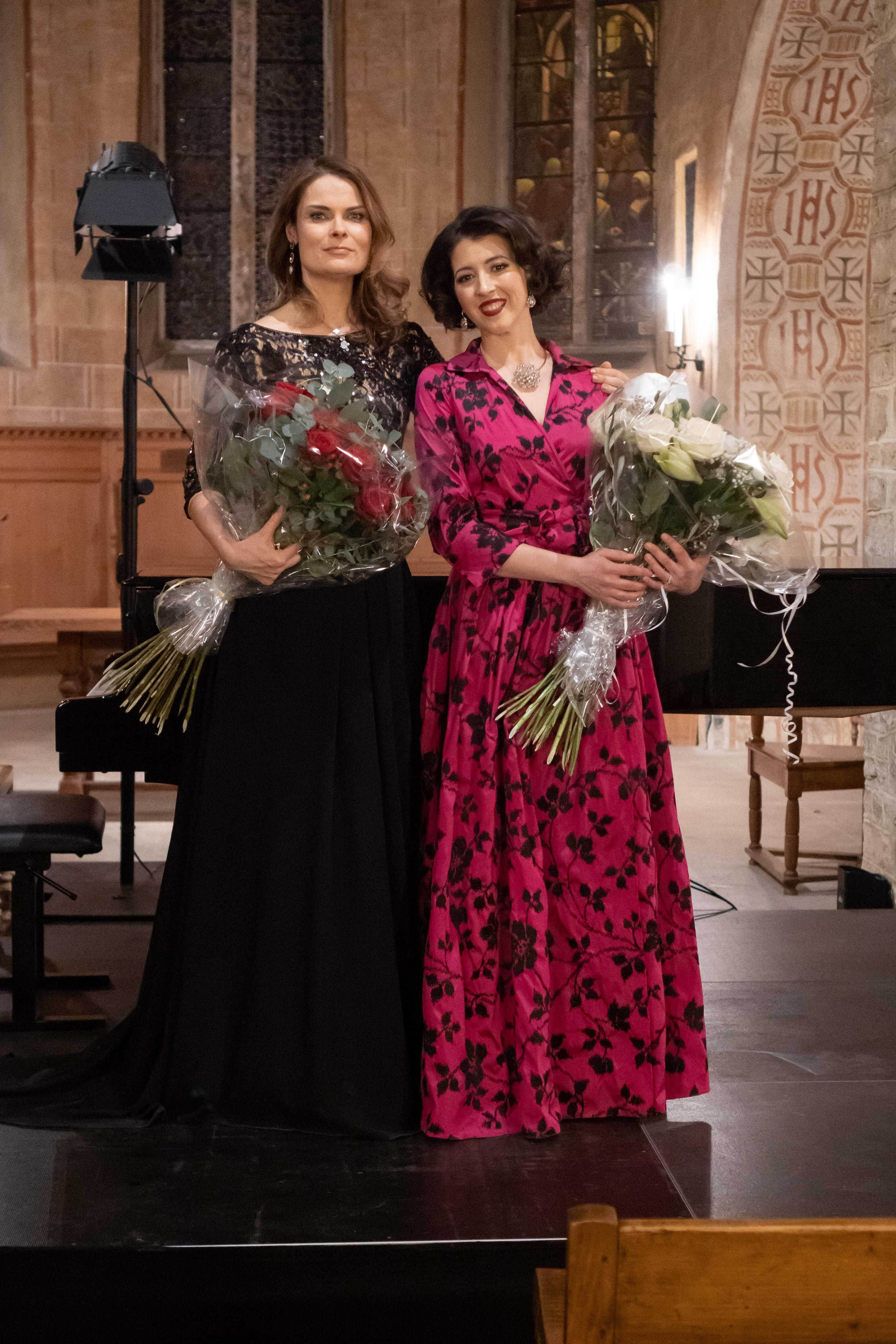
This is how the audience found the performance by Lisette Oropesa and Natalia Morozova in Rougemont church. The warm timbre of the soprano was already very moving at the start of Handel’s "V’adoro pupille" by Giulio Cesare.

—  Çetin Köksal  •  Gstaad Life

Lisette Oropesa enchante le New Year Gstaad Festival

In the little church of Rougemont, she offers an original, diversified and balanced recital, in which she can showcase all the facets of her art: in fact, she deploys the evening during treasures of charm, intelligence and of sensitivity. The belcanto is first honored thanks to the famous "V'adoro pupille" extracted from Handel's Giulio Cesare, then to the air "Come dolce all'alma mia" taken from Tancredi by Rossini. His prodigious technique allows him an almost infinite range of colors, dynamics, breathtaking mass and ineffable pianissimi. Of Cuban origin by his parents, we then savor his impeccable Spanish in "De Espana, vengo" (El nino judio de Luna Carné),

But most of the evening will be devoted to the German Lieders, with the Drei Lieder der Ophelia by Richard Strauss and various Lieder by Schubert including the sublime "Marguerite au rouet" (Gretchen am Spinnrade). The first cycle offers Lisette Oropesa's voice their miraculous melodic drawings and the opportunity to display the most varied colors. In the Schuberts, each of the retained tunes takes its poetic charge in an iridescent murmur of the infinite nuances of an inspired voice. French music - remember that Lisette was born in New Orleans and she speaks perfect French - is also part of it with a Romance by Debussy, then the air "Je vais par tous les chemin" drawn by Manon de Massenet. In the second tune, she pays the luxury of retaining her voice, to better release the emotion, and the unique bis will also be extracted from our national heritage, the air of jewelry in Faust ... which won him a triumph; in fact, what an art to apply - as with a brush - the colors on the vowels without giving up virtuosity!

—  Emmanuel Andrieu  •  Opera Online

Gstaad in majesty

One of the highlights of the 2019-2020 edition of the Gstaad New Year Music Festival was the recital of the American soprano Lisette Oropesa. In rehearsal in Paris for Le Barbier de Seville, the singer did not hesitate to make a quick return trip to Gstaad, despite the strikes in France and their batch of trains canceled, to offer a memorable evening. The program was particularly varied and eclectic, alternating opera arias and lieder, in four different languages. Unmistakable charisma, clear and luminous voice, ample and majestic, healthy and homogeneous over the whole range, with brilliant treble and perfectly assured vocalizations, Lisette Oropesa has everything to make a good career, and besides the biggest scenes are l 'tear. In Gstaad, she was especially able to highlight her musicality, her impeccable diction, whatever the language sung, and its sense of expressiveness, playing on each word, each sentence, each inflection of the score, whether in melancholy and sad compositions or in flamboyant and brilliant pages. She was accompanied on the piano with finesse and tact by Natalia Morozova, a follower of Gstaad since she has been performing there for ten years.

—  Claudio Poloni  •  Concerto Net