Reviews

Press for every engagement since 2005, newest first. The full record, with or without reviews, is under Career.

2016

Rigoletto (Gilda)

Roma - Teatro dell'Opera: un buon Rigoletto pre-natalizio

Alongside this Rigoletto, the excellent Guild of Lisette Oropesa. With a high school legacy and a beautiful lyric soprano timbre, the Oropesa indulges in high notes exposed as a nice merchandise (for example at the end of the duet with the Duke, who however does not follow her in the high notes, thus seeming almost an intimidated Duke ), but it is not limited to singing. The diction is, also for her, well-kept and almost perfectly understandable in every passage, even in the moments of coloring, the in-depth and communicative phrasing. He catches an applause on the open scene after a notable Caro name, supported by the work of orchestra and conductor, and together with Salsi brings home the ending to be framed. The acting is really convincing: the fall after the stabbing is very credible, and even more the singing and the slow movement of the last scene,

—  Michelangelo Pecoraro  •  Opera Click

Torna "Rigoletto" con una Gilda di classe

The Cuban-American soprano Lisette Oropesa, was a classy Guild, with a very beautiful, balanced and tuned voice.

—  Luca Della Libera  •  Il Messaggero

La fille du regiment (Marie)

Review: Oropesa, Brownlee, Burdette in Rollicking Washington National Opera “Fille du Régiment”, Nov

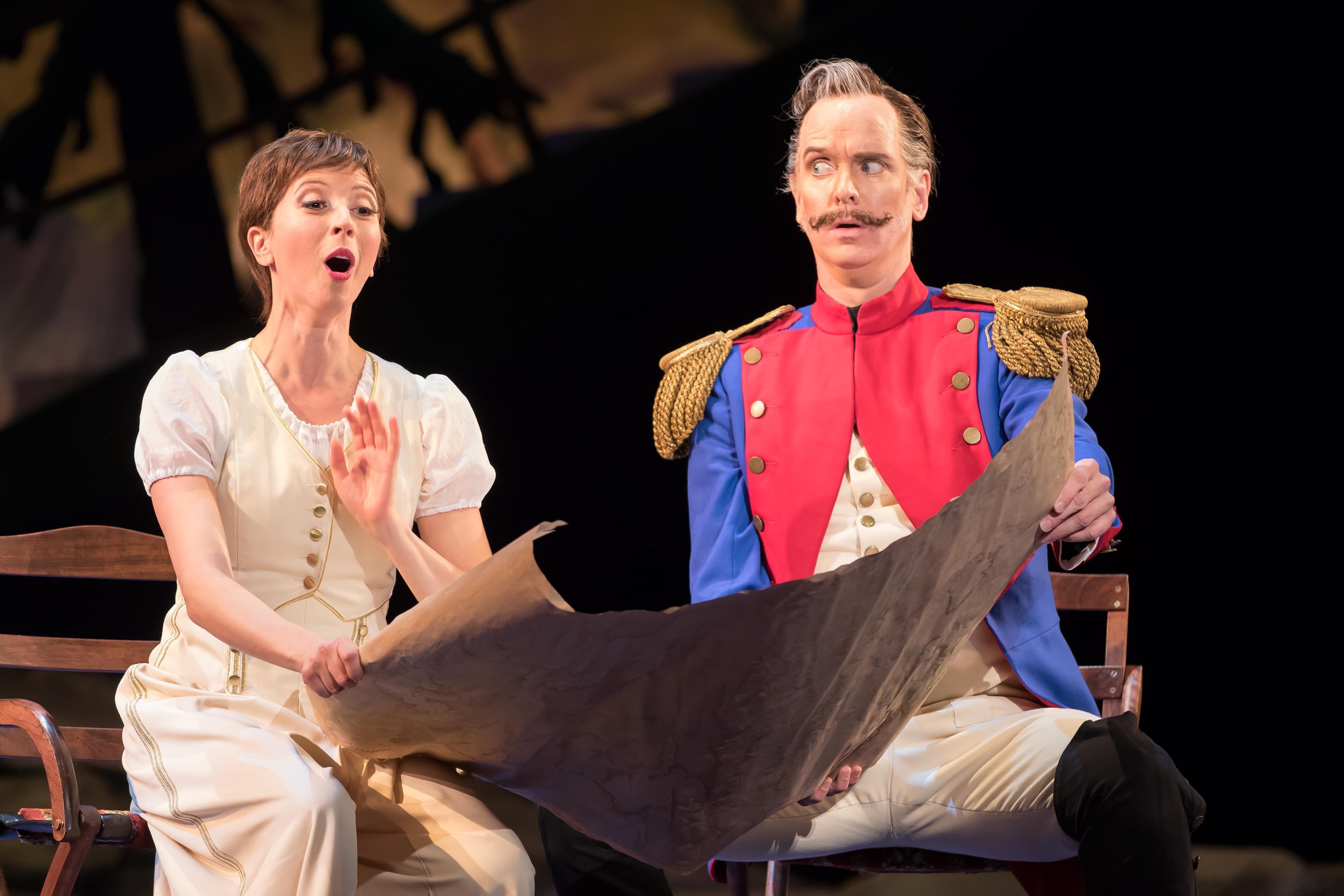
The title role of Marie, the regimental “daughter”, proved a winsome vehicle for Louisiana lyric coloratura soprano Lisette Oropesa. The role of Marie encompasses both light-hearted coloratura fireworks and highly emotional legato passages. Oropesa navigated the challenging role brilliantly.

Oropesa’s second act aria Par le rang et par l’opulence was one of the many high points of her performance. That aria, whose descending melodies seem to foreshadow later masterpieces of Giuseppe Verdi, the younger composer whom Donizetti mentored, was performed with exquisite sensibility and style.

—  William Burnett  •  Opera Warhorses

Justice is served in comic opera

The role of Marie was sung by Baton Rouge soprano Lisette Oropesa on opening night, and she was perfect in this role so closely associated with Beverly Sills and Dame Joan Sutherland. She sang flawless runs and coloratura, acted in the humorous tradition of Carol Burnett, moved like a prima ballerina, and used vocal coloring for best emotional effect. Her pianissimo, crescendo and decrescendo were breathtaking. Clearly, Oropesa is a rising star of opera.

—  Arnold Saltzman  •  Washington Jewish Week

BWW Review: THE DAUGHTER OF THE REGIMENT at Washington National Opera

Despite it's highly visible ensemble of cheery papas, THE DAUGHTER OF THE REGIMENT is really a showcase for its two stars, Oropesa and Brownlee. The role of Marie is a coloratura soprano's dream and Oropesa makes the role look super fun and easy despite being the busiest presence onstage. Oropesa demonstrates impressive vocal control and agility. Possessed of a bright smile and prolific comedic talent, she is the highlight of the opera.

—  Jennifer Minich  •  Broadway World

WNO’s jolly good production of “Daughter of the Regiment”

Lisette Oropesa, whose star shone brightly as Susanna in WNO’s season-opening production of Mozart’s “Marriage of Figaro,” outdoes even that fine performance in her star turn as Maria in WNO’s production. Bright, youthful and full of spunk, her tomboy attitude and her character’s essentially good nature combine to drive this opera’s lighter-than-air plot with loads of charm and—particularly in the second stanza—excellent comic acting and timing including a touch of slapstick and a few bars of intentionally bad singing.

Ms. Oropesa sings Maria with a bright, almost carefree lyrical approach, expertly shaping each line for effect but doing so in a natural way.

—  Terry Ponick  •  Communities Digital News

The Daughter of the Regiment offers much-needed respite from tumultuous times

First there are the leads. Grabbing every scene by the short and curlies is an insuppressible Lisette Oropesa, singing her Marie with technical fabulousness and beautifully-toned buoyancy. If she veers a tad close to the chronically-cheerful tradition of Julie Andrews, she offsets it with some great physical comedy. 

—  Kate Wingfield  •  Metro Weekly

Opera Review: ‘The Daughter of the Regiment’ by Washington National Opera at The Kennedy Center

Lisette Oropesa (one of two Maries performing the role during the production’s run) is equally strong, handling the wide dramatic range of the character from the comic music lesson, to the starkly beautiful “Par le rang et l’opulence” when left alone in the chateau. This moment is heightened by subtle and sensitive lighting shifts in Mark McCullough’s design. Oropesa’s control in her upper register is particularly dazzling.

—  Chris Williams  •  MD Theatre Guide

Theater review: Fun cameo by Ruth Bader Ginsburg launches buoyant 'Daughter of the Regiment' in D.C.

Oropesa does not have a big sound, but her limpid tone and elegant phrasing pay dividends. This is especially true in "Il faut partir," Marie's Act 1 aria of farewell to Tonio after learning that she must leave him and the regiment to follow her new-found aunt. (The opera is performed in the original French; Ginsburg said her lines in English.)

The soprano is a natural comic actress, too. She has particular fun in the second act, when Marie, pushed to hone high-society ways, makes a mess of singing and dancing lessons.

—  Tim Smith  •  Baltimore Sun

Brownlee, Oropesa and Ginsburg in WNO's 'Regiment'

Oropesa, who dominated the recent WNO production of “The Marriage of Figaro” as Suzanna, does so again as the foundling Marie, displaying not only marvelous, trilling and thrilling singing chops, but also a gamine comedic touch that reminds one of silent-movie clowns. She’s athletic and not afraid of slapstick, and she even has to pretend to sing badly, always a neat trick for a superb singer.

—  Gary Tischler  •  The Georgetowner

Daughter of the Regiment at Washington National Opera (review)

All the vocal performances impress, but none more so than Lisette Oropesa as Marie, the title character. Oropesa is in complete command throughout. Her coloratura is both delicate and precise, and equally as impressive, she makes the high notes demanded by the role seem easy. While it’s hard to point to any particular moment, her rendition of “Par le Rang”—one of the better known arias from this opera—was strikingly effortless and fluid. And her virtuosity is matched only by the joy she brings to the role with her acting and movement.

—  Dante Atkins  •  DC Theatre Scene

Washington National Opera’s ‘The Daughter of the Regiment’

Oropesa’s soaring and sensitive Soprano come to the fore immediately with the initial regimental song that exudes the character’s charismatic affection for the camaraderie of her fellow army “fathers”(Aria: Chacun le sait. Chacun le dit /” Everyone knows it, everyone says it”.) The joy that this character feels, while exhibiting her nationalistic pride, is pervasive throughout the opera.

Ms. Oropesa possesses a thrilling soprano voice of infinite variety and an ethereal purity of tone.

—  David Friscic  •  DC Metro Theater Arts

Washington National Opera's sparkling Daughter of the Regiment

Lisette Oropesa gave a simply dazzling performance as tomboy-turned-lady, Marie. From the graceful, ardent first notes (sung off stage) to the glorious finale on the shoulders of the regiment, she was seemingly born to play the part. Her garçon persona – carried off with irresistible spirit and aplomb – was belied by one of those effortlessly lovely female voices, quite thrilling at the higher register, soaring above the chorus and the other leads when needed. It was a consummate performance, sung with notable facility.  

—  Hilary Stroh  •  Bachtrack

Concert

Review: A Musical Tour of Mendelssohn’s Europe

Berlin was represented by select Mendelssohn songs, which the soprano Lisette Oropesa, accompanied by the pianist Gilbert Kalish, rendered with pellucid tone and unfussy styling

—  Corinna Da Fonseca-Wollheim  •  New York Times

Chamber Music Society opens season with a lively Mendelssohnian road trip

Three familiar songs by Mendelssohn himself followed. In “Wanderlied,” “Auf Flügeln des Gesänges,” and “Suleika,” soprano Lisette Oropesa’s clear, agile, well-placed voice easily projected this composer’s distinctive brand of submerged passion, and pianist Gilbert Kalish subtly rendered his busy accompaniments.

Oropesa’s pinpoint intonation rang like a silver bell through Mendelssohn’s euphonious harmonies. A delighted audience rewarded the pair with vigorous applause.

—  David Wright  •  New York Classical Review

Lisette Oropesa @ Chamber Music Society

All of the things I love about her singing were in abounding evidence tonight: the distinctive colour, the mastery of dynamics, the magical turns of phrase, the imaginative way with words. In three Mendelssohn songs - "Wanderlied", "On the Wings of Song" and "Suleika" - Lisette cast a spell over the hall, and Mr. Kalish was a most valuable fellow sorcerer.

—  Oberon  •  Oberon's Grove

Le Nozze di Figaro (Susanna)

BWW Review: THE MARRIAGE OF FIGARO Offers a Bouquet of Musical Delights at Washington National Opera

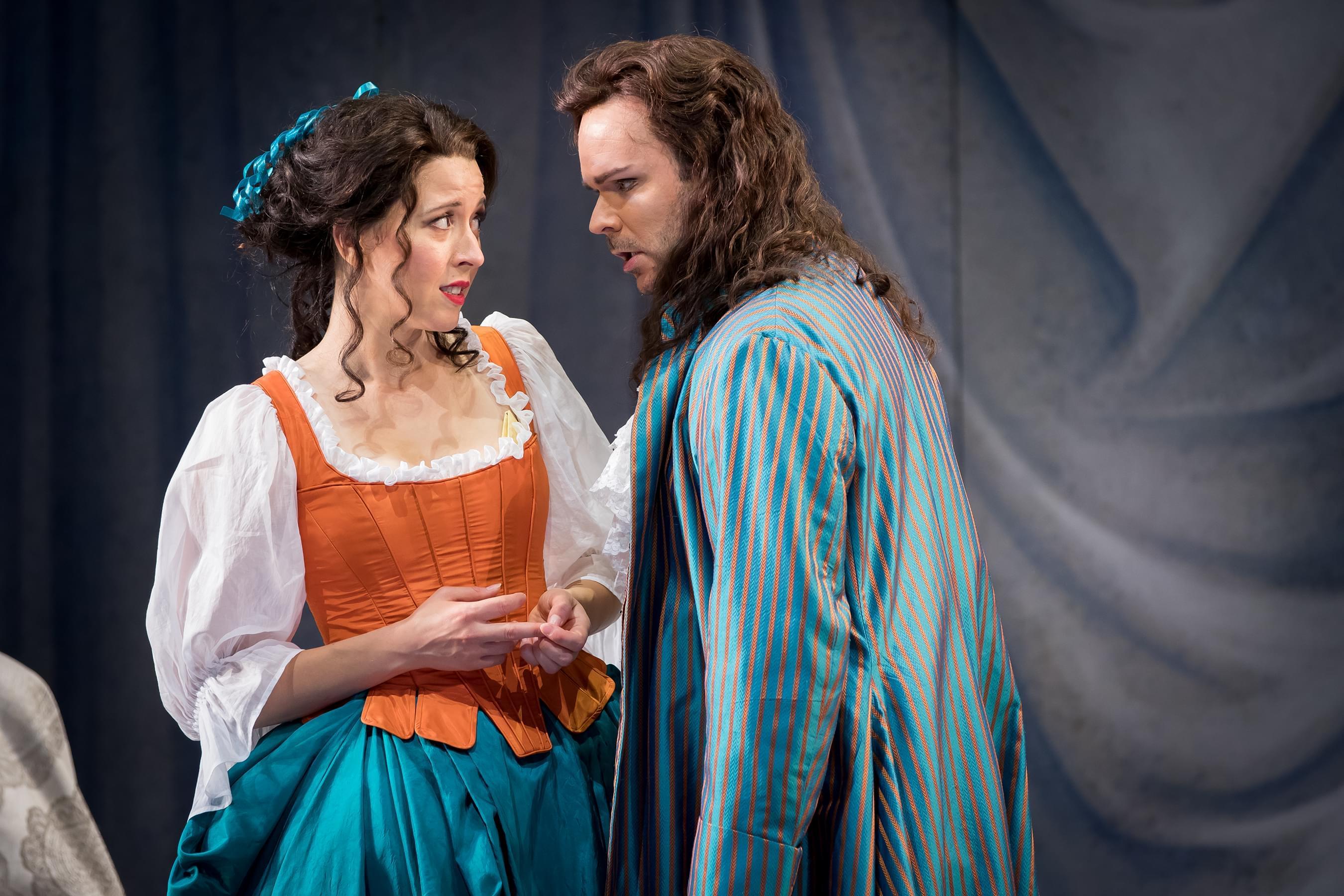
Also making an auspicious debut was the Susanna of this FIGARO, sung with pointed grace and lyricism by Lisette Oropesa. As Countess Almaviva's strong-willed servant who must battle the advances of the Count while preparing to marry Figaro, Oropesa brings out the nuances of character with clarity, whether she is flirting with her intended or standing her ground against the Count. Her voice also rings true with clear tone and supple beauty, especially in her playful rendition of "Deh vieni, non tardar."

—  Jeffrey Walker  •  Broadway World

The Marriage of Figaro from Washington National Opera (review)

Lisette Oropesa may not have had the same size of voice as others on the big Kennedy Center stage, but her Susanna was effervescent and charming.  In her duets, both with Figaro in Act I and gorgeously with the Countess in the second half of the production, the voices blended beautifully. More important to this audience member, she acted the part with such verisimilitude that I was rooting for her all the way.

—  Susan Galbraith  •  DC Theatre Scene

WNO’s winning ‘Marriage of Figaro’ triumphs over adversity

Regarding Ms. Oropesa, congratulations are in order for one of the brighter, better-informed renditions of Susanna we’ve had the privilege to hear. In many respects, “Figaro” is more Susanna’s opera than it is a starring vehicle for the title character, given the amount of beautiful and challenging music Mozart gives her to sing.

Ms. Oropesa made this notable role her very own, deftly and intelligently adapting to every negative plot twist with a fine sense of theater and with a bright, sunny soprano that matched the positive attitude of Mr. McKinny’s Figaro.

—  Terry Ponick  •  Communities Digital News

Opera Review: ‘The Marriage of Figaro’ at The Washington National Opera

Oropesa is immediately engaging and she demonstrates impressive control of her voice, most notable in Susanna’s playful aria “Deh vieni, non tardar.”

—  Jennifer Minich  •  MD Theatre Guide

Review: ‘The Marriage of Figaro’ at Washington National Opera

But it is the women who are truly at the heart of this production: Lisette Oropesa’s quick-thinking, loyal Susanna steals the show, aided by the heartsick Countess, in her efforts to maneuver through a world ruled by the passions and suspicions of men.

—  Julia Hurley  •  DC Metro Theater Arts

Les Indes galantes (Hébé, Zima)

BAYERISCHE STAATSOPER 2015-2016 – MÜNCHNER OPERNFESTSPIELE 2016: LES INDES GALANTES

Lisette Oropesa, qu’on a vue dans Konstanze au Nationaltheater, et dans Sophie (de Werther) au MET, et dans Nanetta de Falstaff à Amsterdam. Comme d’habitude, elle est très attentive à la diction, au contrôle de la voix, à la fluidité, et en plus elle chante quelquefois en dansant. Encore une chanteuse qui montre la formation accomplie de l’école anglo-saxonne, ainsi qu’un engagement scénique notable qui se traduit par un plaisir visible à être sur scène, même si l’engagement scénique nuit quelquefois à la fluidité de la langue, pourtant si travaillée.

—  Wanderer  •  Wanderer

Les Indes galantes

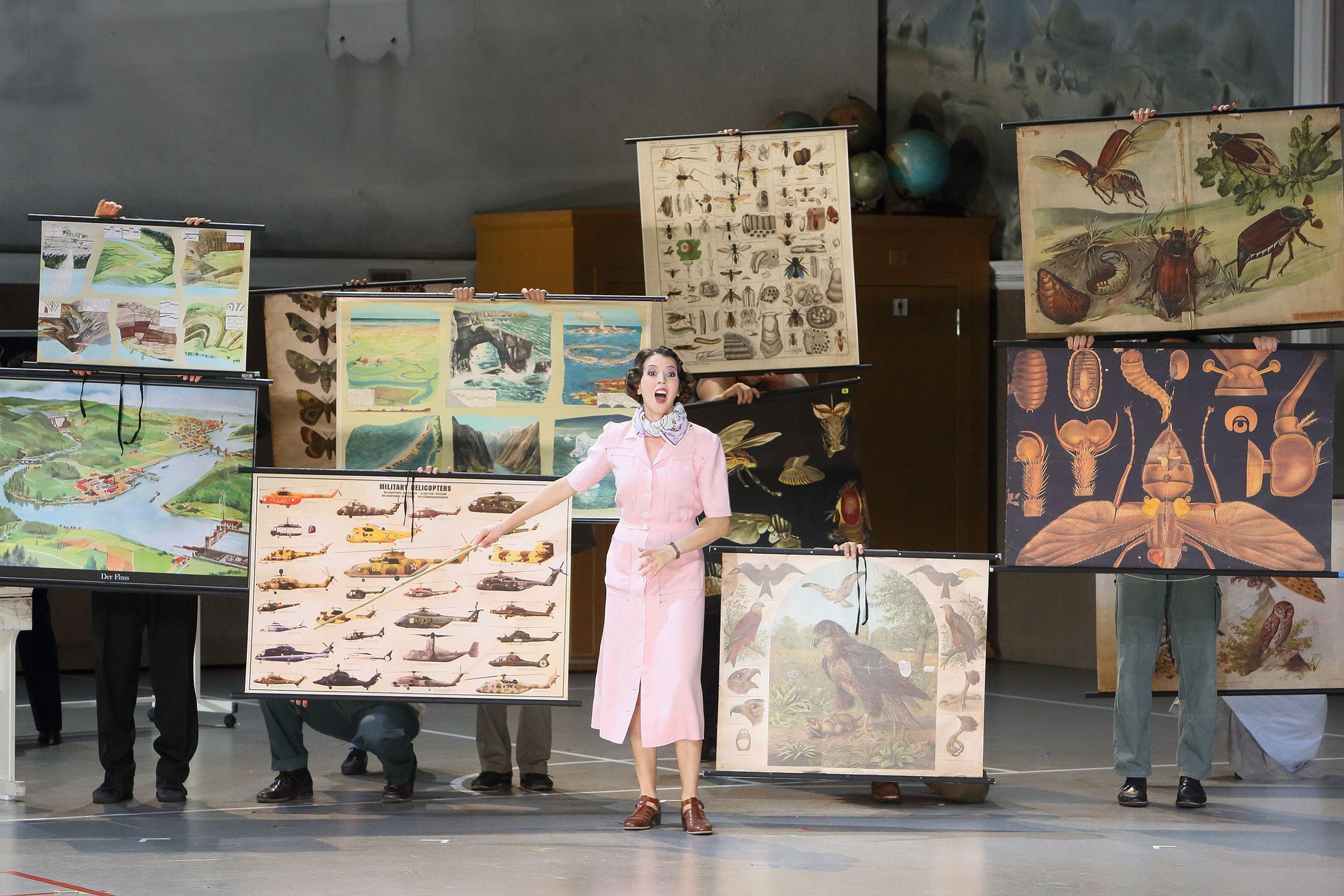
Musicalement, quelques belles surprises, à commencer par l’Hébé/Zima de Lisette Oropesa, à la voix fraîche mais solide, et au français excellent, pour son personnage d’institutrice qui attire la sympathie et qui n’hésite pas à se mêler aux danseurs.

—  Laurent Bury  •  Forum Opéra

Mit der Liebe kehrt der Frieden zurück“

Ana Quintans (Zaire, L'Amour) und Lisette Oropesa (Hébé, Zima) begeistern mit glanzvollen Koloraturen, kraftvollem Volumen und schauspielerischem Charme.

—  Michaela Schabel  •  Onetz

Im Spagat verrenkt

Hebe, eindrücklich gestaltet von der bisher kaum barockerfahrenen Lisette Oropesa, erzählt den Schülern viel über Liebe und die menschliche Natur.

—  Marco Frei  •  Neue Zürcher Zeitung

"Les Indes galantes": Im Korsett verschnürt

Lisette Oropesa (Hébé/ Zima) startet zu nachdrücklich, singt sich jedoch locker und überstrahlt final das Personal.

—  Markus Thiel  •  Online Merker

Les Indes Galantes un magnífico espectáculo

La soprano americana Lisette Oropesa fue una deliciosa intérprete de la diosa Hebé en el Prólogo y de Zima en el acto de Norte América. Voz muy atractiva y estupenda cantante y actriz, como se pudo comprobar este mismo año en su Gilda del Teatro Real.

—  José Irurzun  •  Beckmesser

„Les Indes galantes“ unter Barockspezialist Ivor Bolton bei den Münchner Opernfestspielen

Makellos die Solisten: Herausragend agieren – in edlen Kantilenen und rasanten Koloraturen – Lisette Oropesa, Ana Quintans, Elsa Benoit und Anna Prohaska, von den Männern sei stellvertretend der kraftvolle Tenor Cyril Auvity genannt.

—  Otto Paul Burkhardt  •  Südwest Presse

Münchner OpernfestspieleMenuette wie Sommerhits

Die Reise auf der Bühne des Prinzregententheaters beginnt in der Schule, wo Hébé (Lisette Oropesa) den Grundton vorgibt. Ihr Sopran ist kristallklar, quirlig und lebendig, ihr darstellerisches Vermögen – wie übrigens auch das der anderen Sänger – grandios und voller Humor.

—  Isabel Winklbauer  •  Stuttgarter Nachrichten

Ballettoper “Les Indes galantes” als feinsinniges, selbstironisches Multikultispektakel

Unter den vorzüglichen Solisten, die fast alle in Doppelrollen zu erleben waren, stachen Anna Prohaska als Phani/Fatime und Lisette Oropesa als Hébé/Zima mit leuchtendem Sopran und nie steril wirkenden Koloraturen hervor.

—  Georg Etscheit  •  Musik Heute

Concert

Opernarien statt Börsenkrach

Auch Lisette Oropesa ist von der Allerheiligen-Hofkirche schließlich herübergekommen. Sie und ihre beiden amerikanischen Kollegen, Matthew Grills und John Moore, geben Arien und Duette von Donizetti, Leoncavallo, Puccini und Rossini zum Besten. Besonders Lisette Oropesa singt sich mit ihrer glasklaren Sopranstimme in die Herzen des Publikums.

—  Jennifer Gaschler  •  Süddeutsche Zeitung

Mass in C Minor

Mozart Mass inspires in May Festival opener

“Oropesa performed the lovely solo, “Et incarnatus” with radiant beauty, and her stunning trills, leaps and embellishments were in perfect tandem with the winds of the CSO”

“In the evening’s first half, Oropesa displayed impressive vocal flourishes and flexibility in the soprano showpiece, “Exsultate, jubilate.”

—  Janelle Gelfand  •  Cincinnati Enquirer

Faure Requiem

Parco della Musica, tris di compositori e di opere. Al violino Michael Barenboim per la direzione di

Eccellenti e straordinari tutti gli interpreti, dall’ineguagliabile Pappano e dai due solisti, il baritono Vito Priante e, soprattutto, il soprano Lisette Oropesa

—  Sergio Prodigo  •  Focus Italy

Recital

Review: Lisette Oropesa Scales Down Her Voice but Not Her Presence

Ms. Oropesa and Mr. Churchwell brought uncommon freshness to this music, which somehow hovers on the divide between breathless desire and spiritual calm.

Ms. Oropesa combined vocal refinement with articulate delivery of the texts. It’s impressive that all of the English translations printed in the program (the recital spanned Italian, German, French and Spanish) were by Ms. Oropesa herself. Clearly, she involves herself deeply in the words she sings.

—  Anthony Tommasini  •  New York Times