Reviews

Press for every engagement since 2005, newest first. The full record, with or without reviews, is under Career.

2019

Hamlet (Ophélie)

Opera All Over the Map

Lisette Oropesa also achieved a musical and theatrical triumph as Ophelia, finding the part’s hurt and pathos as well as the terrific staccati and chromatic scales; she has become an excellent interpreter of French opera.

—  David Shengold  •  Gay City News

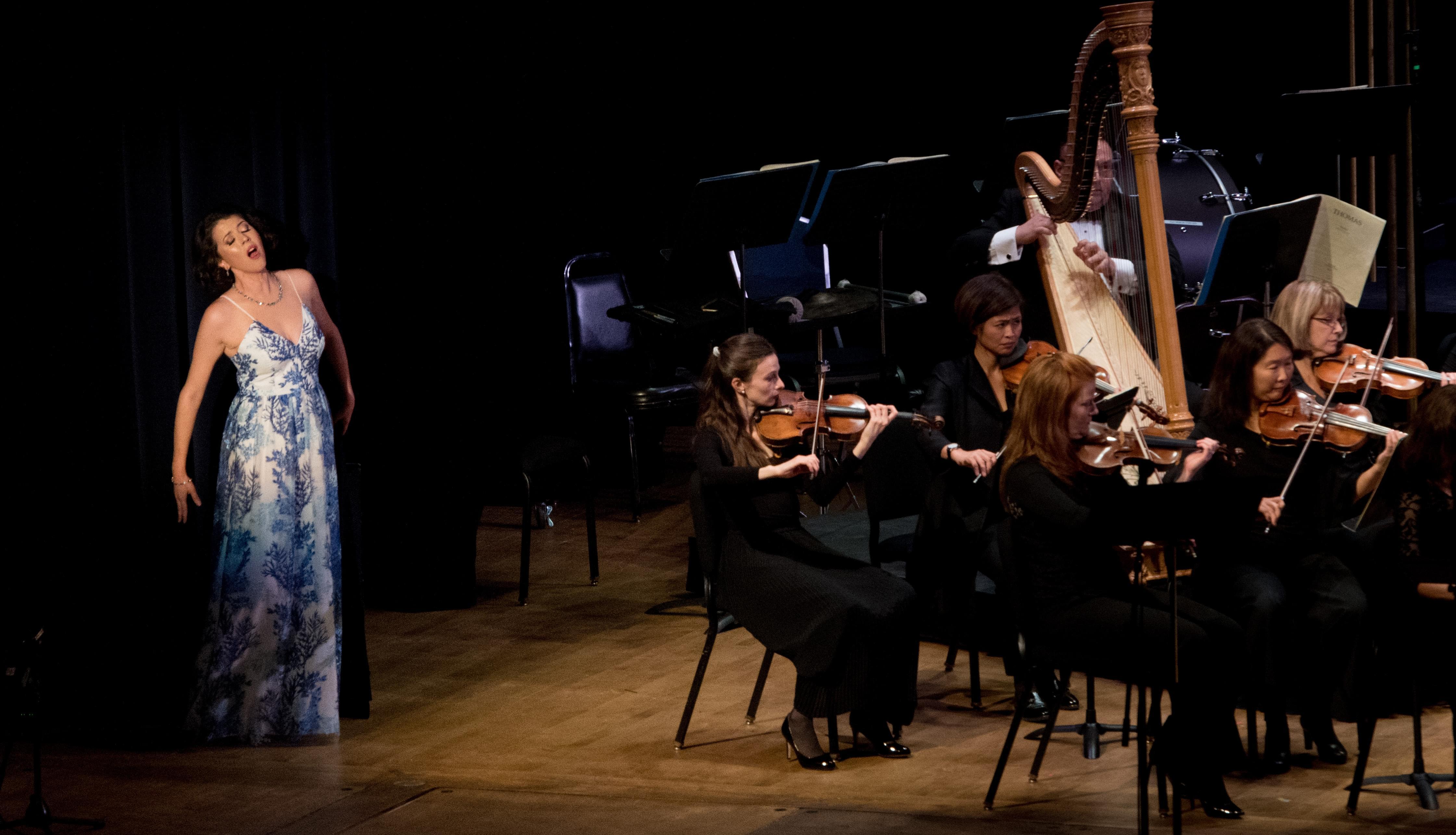
WCO’s superlative casting lights a fire amid the gloom of Thomas’s “Hamlet”

Exemplary in this demanding coloratura role was soprano Lisette Oropesa, whose voice seems to grow richer and more refined with each appearance. She has sung the role on stage before, and the sense of a specialist’s knowledge came through from her love duet in Act I and Act II scene onward.

Oropesa’s coloratura exploits, especially in the show-stopping mad scene that encompasses all of Act IV, revealed consummate control and grace. Incendiary high notes floated, chromatic runs slid downward with clarity, and trills glimmered. Particularly convincing were the runs that rocketed upward, ending abruptly as high as the E off the staff, incarnating the character’s mad outbursts.

—  Charles T. Downey  •  Washington Classical Review

In this ‘Hamlet,’ the Danish prince is proclaimed king

He was well-matched by his Ophélie, Lisette Oropesa, who melded dramatic sensitivity with a clean, pearly soprano. The technically demanding mad scene, the conclusion to the opera’s broad-strokes depiction of Ophélie’s fragility, was delivered with a delicate effortlessness.

—  Harry Rose  •  Washington Post

Manon

A ravishing and heart-rending evening: Massenet's Manon from the Met, Live in HD

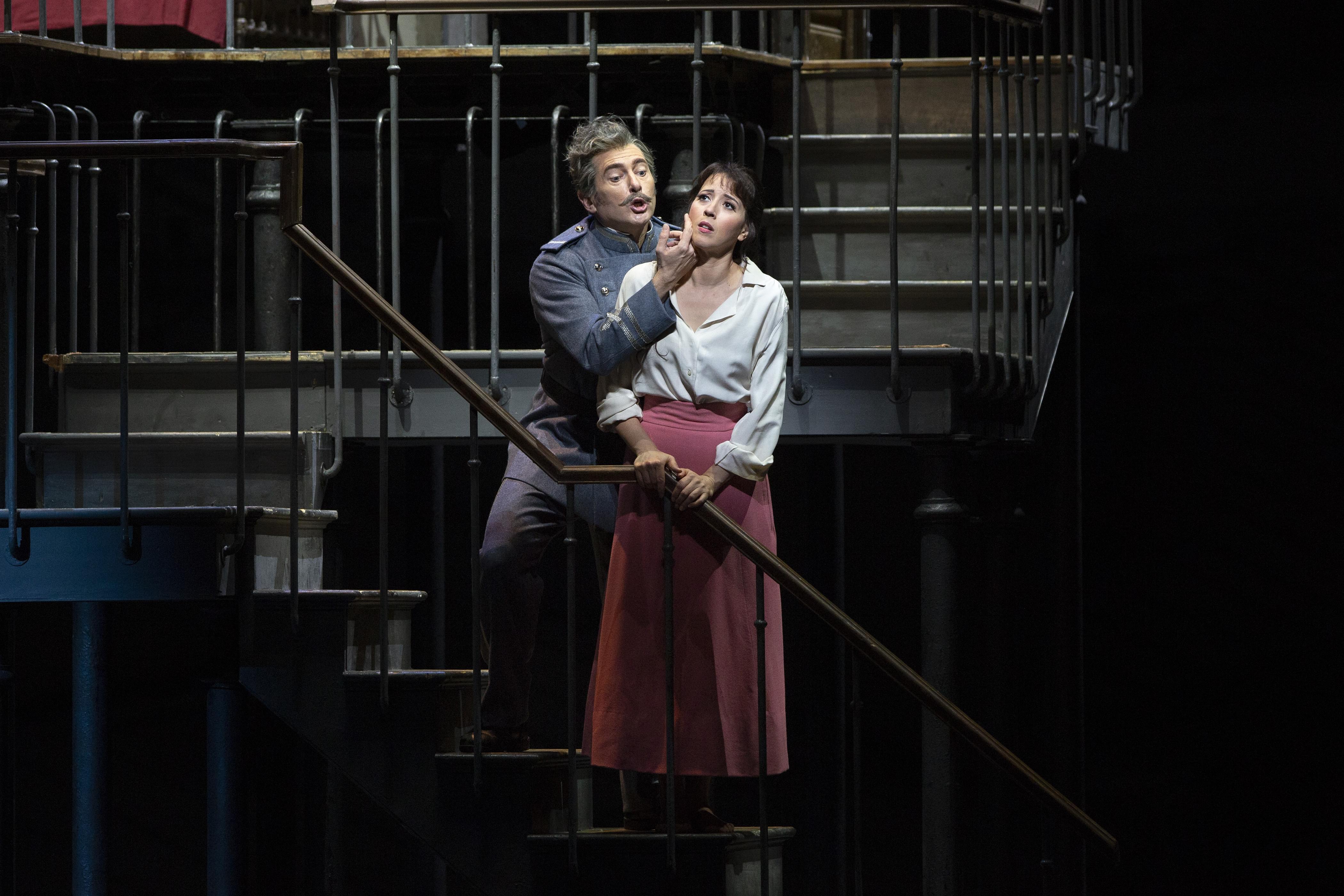
It was the towering performance of Lisette Oropesa as Manon [last seen in Meyerbeer's Les Huguenots at the Paris Opera, see Robert's review] though that swept all before. It’s a rare thing to vocally and physically convince us of this story’s verisimilitude – and on a screen the size of a house there’s nowhere to hide. So totally did she embody her character that she had me from the get-go. Just one look into those sweet wilful impish eyes was enough. Nothing about her interpretation seemed to have been left to chance. Every thought and move seemed connected to the next. A performance of supreme self-control and insight. Every finessed and exquisite phrase pushed her inexorably towards her fate. A ravishing and heart-rending evening.

—  Planet Hugill  •  Planet Hugill

Review: Feasting on the New York Met’s extravagent four-opera weekend getaway

The role almost seems to have been written just for Lisette Oropesa, whose performance combined overwhelming charisma and movie star looks. Her flexible light soprano has the fluttering sound of another era, familiar now mostly from old wax recordings. She has a perfect trill. The role of Des Grieux was sung by Michael Fabiano, a fascinating American tenor with a resonant voice, good looks and dramatic intensity. Conductor Maurizio Benini's pacing was a bit too spacious for me, but he drew elegant sounds from the orchestra.

—  James L. Paulk  •  Arts ATL

La pétillante Manon de Lisette Oropesa en direct du Metropolitan Opera

Manon pimpante et espiègle, Lisette Oropesa chante et interprète le rôle-titre avec une aisance déconcertante. Évoluant avec légèreté sur le plateau, la soprano déroule son chant avec naturel, d’un médium coloré à des aigus souples et sonores. Elle passe avec évidence de l’adolescente indécise à la femme du monde et ses qualités d’interprète s'affirment dès les premiers instants où elle entonne avec juvénilité « Je suis encor toute étourdie » jusqu’aux derniers où, livide, elle semble réellement quitter la vie en titubant. Avec son partenaire masculin, elle est accueillie triomphalement aux saluts, de même que l’ensemble de la distribution.

—  Jeanne Auffret  •  Olyrix

En direct de New-York, la consécration de Lisette Oropesa

Lisette Oropesa enfin est la grande triomphatrice de la soirée, Elle fait sien le personnage de Manon avec une aisance désarmante. Son apparition timide au premier acte, avec son regard innocent, évoque la jeune Adjani dans L’Ecole des femmes. Elle chante « Je suis encore tout étourdie » avec une timbre pur et cristallin. Au II, elle propose une « Petite table »  tout en émotion contenue avant d’apparaître, au début du troisième acte, dans sa féminité, troublante et provocante. Sa voix se fait sensuelle dès les premières notes de « Suis-je gentille ainsi ? » et se pare d’accents nostalgiques dans la gavotte. Sa scène finale enfin est particulièrement poignante, tant sur le plan scénique avec sa démarche épuisée et son visage blafard, que vocal.  Cette Manon se hisse d’emblée au niveau des meilleures interprètes du rôle.

—  Christian Peter  •  Forum Opéra

MANON (METROPOLITAN OPERA, NEW YORK)

Manon is her finest role to date, her clear, flexible soprano perfectly suited to Massenet’s blend of text-driven lyricism with the occasional burst of coloratura. From her breathless first entry full of wide-eyed charm to her final desperate gasp in the middle of Thomas’s endless highway to hell, she charts a clear path that ensures our engagement even as we vacillate between sympathy and condemnation. Each of her arias is a carefully contrasted gem, from the ditzy chit of Act I’s Je suis encore tout étourdie, to the double whammy of her Act III showpiece Je marche sur tous les Chemins with its following coloratura gavotte. By contrast, her famous Adieu, notre petite table is simple, yet profound.

—  Clive Paget  •  Limelight Magazine

Lisette Oropesa y Michael Fabiano brillan en la Manon del Met

La Manon de Lisette Oropesa destacó por la naturalidad de la proyección y la eficacia dramática que supo imprimir al personaje. La técnica de la soprano cubanoamericana está muy por encima de las dificultades vocales de la heroína de Massenet. Ello le permitió centrarse en perfilar psicológicamente una Manon de referencia, tan delicada como torrencial, tan inocente como sensual. La energía que despliega la soprano en escena es inaudita, una oleada artística que refresca el personaje y hace que lo redescubramos de nuevo. La voz, con un vibrato siempre al límite, mantiene la flexibilidad que la ha hecho famosa, pero ya se adivinan meandros líricos que, de ensancharse, pueden dar lugar a una tipología vocal más asentada, que apenas se adivina hoy. Oropesa cantará esta temporada Violeta en Madrid y Nueva York, Rosina en París y Lucia en Munich. 

—  Carlos J. López Rayward  •  Opera World

At the Met, Lisette Oropesa shines as Manon

Most importantly, the chemistry between singers lit a match that didn’t burn out until standing ovations were long over. Arias stood out just enough to punctuate the narrative with moments of reflection. Most notably, Oropesa sang Act II’s famous ‘Goodbye, our little table’ with a mix of determination, nostalgia, innocence — and guilt. Each duet sung by Oropesa and Fabiano blended with a texture that perfectly matched the story’s momentum. As innocent lovers, they sang a youthful, touching love duet in their stolen-away Left Bank studio (complete with slanted roof). By Act IV, they have reunited — in Grieux’s priestly quarters, and both tainted by the ravages of modern life — for the St. Sulpice duet, arguably the highlight of the night. Even more than in Act II, Oropesa and Fabiano pulled out sustained and powerful phrases, evoking a no-longer innocent but highly complex love. Both singers captured intimacy so mature and raw that audience members were transformed into voyeurs, as the two characters fell into an embrace on a bed.

—  Daniele Sahr  •  Seen and Heard International

Manon at the Met—a marvelous revival keeps Massenet fresh

Still, the performers made this Wednesday evening something special. All the principal singers were, as of the previous week, new to their roles at the Met; and for Lisette Oropesa, as the lovably fallible heroine, it was an actual role debut. I’d never have guessed it from the performance she gave: vocally and dramatically Manon fit her like a perfectly tailored Parisian glove, full of lovely detail but never fussily so. The voice, with its seductive silvery glimmer, has enough colour to give it texture and depth and enough power to make Massenet’s musical points without straining. It’s been gratifying to see Oropesa, so long underappreciated at what for years was her home house, being given her local due: both as the dual winner of this year’s Richard Tucker Award and the Met’s Beverly Sills Award, and in her twin starring roles this season at the Met (Violetta in La traviata awaits her in February). As slow as Peter Gelb has been—again!—to recognize what’s right under his nose, it’s a pleasure to welcome this very special singer back to New York. She’s the finest Manon I’ve heard since the glory days of Beverly Sills.

—  Patrick Dillon  •  Opera Canada

BWW Review: The Met's MANON a Showcase for the Charms of Tucker Award-Winner Lisette Oropesa

Lisette Oropesa, where have you been all my life?

Of course, I've heard her before--she's appeared 100 times or so at the Met so one could hardly miss her--but never in a showpiece like the title role of Jules Massenet's MANON, opposite tenor Michael Fabiano's Chevalier des Grieux, on the second night of the Met's new season.

As Manon, Oropesa showed off her voice's clear, clean, pretty top...but make no mistake: She is not simply a songbird. The voice has some heft to it (ok, she's no Brunnhilde in the making). And she's also a fine actress: Oropesa is about the only one I've heard as Manon (or its step-sister, MANON LESCAUT by Puccini), who could pull off the girlish 16-year-old of Acts I & II and not seem frumpy or ridiculous. When librettists Meilhac and Gille say "no voice could be sweeter...no face more enchanting," they could have had Oropesa as their model.

In the famed Cours-la-Reine scene that starts Act III--staged something like Cecil Beaton's Ascot Gavotte in the original MY FAIR LADY--it's interesting to see the change in Oropesa's demeanor: there isn't much. Usually, the Manons I've seen have become grand dames by this point--I particularly recall the portrayals of Beverly Sills and Anna Netrebko--but in Oropesa's account, she is still the teenager at heart with an eye on pleasure, but despite the fancy clothes, it's like she's wearing her older sister's gown.

This seems more in character in a story that appears to unfold over very few years, even though, by Act III, the girl can wrap any man she wants around her finger, with Oropesa singing gorgeously about the joys of love and wealth in "Obeissons quand leur voix appelle." Oropesa is a pleasure to hear and see, even when she expires at the end of Act V on a road that looks like a stretch of an LA freeway. (This Manon never gets to America, to expire in the desert of Louisiana as in MANON LESCAUT.)

—  Richard Sasanow  •  Broadway World

Strong singing as The Met revives Massenet’s Manon

Lisette Oropesa, making her role debut as Manon, sang with an elegance and style that was perfect for a heroine with little control over her fate. Her French diction was incisive and clear, and her high notes soared into a long and sustained arc. As much as she thrilled with her beautiful singing.

—  Ako Imamura  •  Bachtrack

Manon shines musically

But musically this Manon shines. Lisette Oropesa makes a truly touching title figure, especially in the plaintive parts. 

—  John Rockwell  •  Financial Times

Metropolitan Opera 2019-20 Review: Manon

Speaking of Lisette Oropesa, she had a major success in her first Met “Manon.” The title role is a mammoth undertaking and has proven a touchstone role for many famed divas of the past. Moreover, Pelly’s production requires a singer who can also dominate as an actress, navigating the complex world that the director created for the opera and character.

There is no denying Oropesa’s vocal purity and assurance and she wove an elegant legato line throughout “Je suis encore tout étourdie,” with the high A naturals at the apex of main melody statement gleaming. It was one of the few times where the speedier tempi worked well with Oropesa’s fierce coloratura, the unpronounced rallentandoes, and even the breezy take on the sixteenth note descents on “Pardonez à mon bavardage” allowing for a portrayal of Manon as a hurricane of energy ready to be unleashed.

—  David Salazar  •  Opera Wire

Oropesa shines brightly in Met’s lethargic “Manon”

Lisette Oropesa gave a performance as Manon that confirmed she is fully ready for leading roles at the Met. Her voice has grown in size and color since the days when she primarily appeared in soubrette parts: she has developed into a formidable lyric soprano, her voice filling out into a luscious instrument without losing any of its flexibility or tartness. 

Moreover, Oropesa proved to be the rare soprano who can be entirely convincing in both sides of a complex role. In the first two acts she approached the role with a lovely, bright innocence, charming with a rendition of “Je suis encore tout étourdie” that combined spacious phrasing and breathless excitement, then channeling quiet but intense sadness in “Adieu, notre petite table.”

—  Eric C. Simpson  •  New York Classical Review

Review: In ‘Manon,’ a Soprano Charms Her Way to the Top

Lisette Oropesa's performance in Massenet's opera at the Met is alone worth the price of admission.

Ms. Oropesa slips into the title role as if it were custom couture. In her first aria, “Je suis encore tout étourdie,” sung with enunciation so clear it could be transcribed, she has an innocent lightness that gives way to intoxicating joy as it becomes apparent that Manon is already too grand for her humble packaging at the start: slight frame; childish hat and ponytail; plain outfit in muted blues.

As the opera continues — with Massenet’s effervescent and eclectic score, eager to please and utterly pleasing under the baton of Maurizio Benini — Ms. Oropesa’s musicality becomes even more layered.

It can be easy to play Manon as a ruthless femme fatale, for example, as she becomes the toast of Paris, and Ms. Oropesa was suddenly big-voiced, glamorously tossing off high notes with insouciant sprezzatura. But hear also how she shrinks her sound to a stark mournfulness in “Adieu, notre petite table,” pained yet chilly as she prepares to leave des Grieux for another man’s luxury.

—  Joshua Barone  •  New York Times

La traviata (Violetta Valery)

TRAVIATA, GIUSEPPE VERDI – REPLICA DI GIOVEDI' 8 AGOSTO 2019 ALL’ ARENA DI VERONA

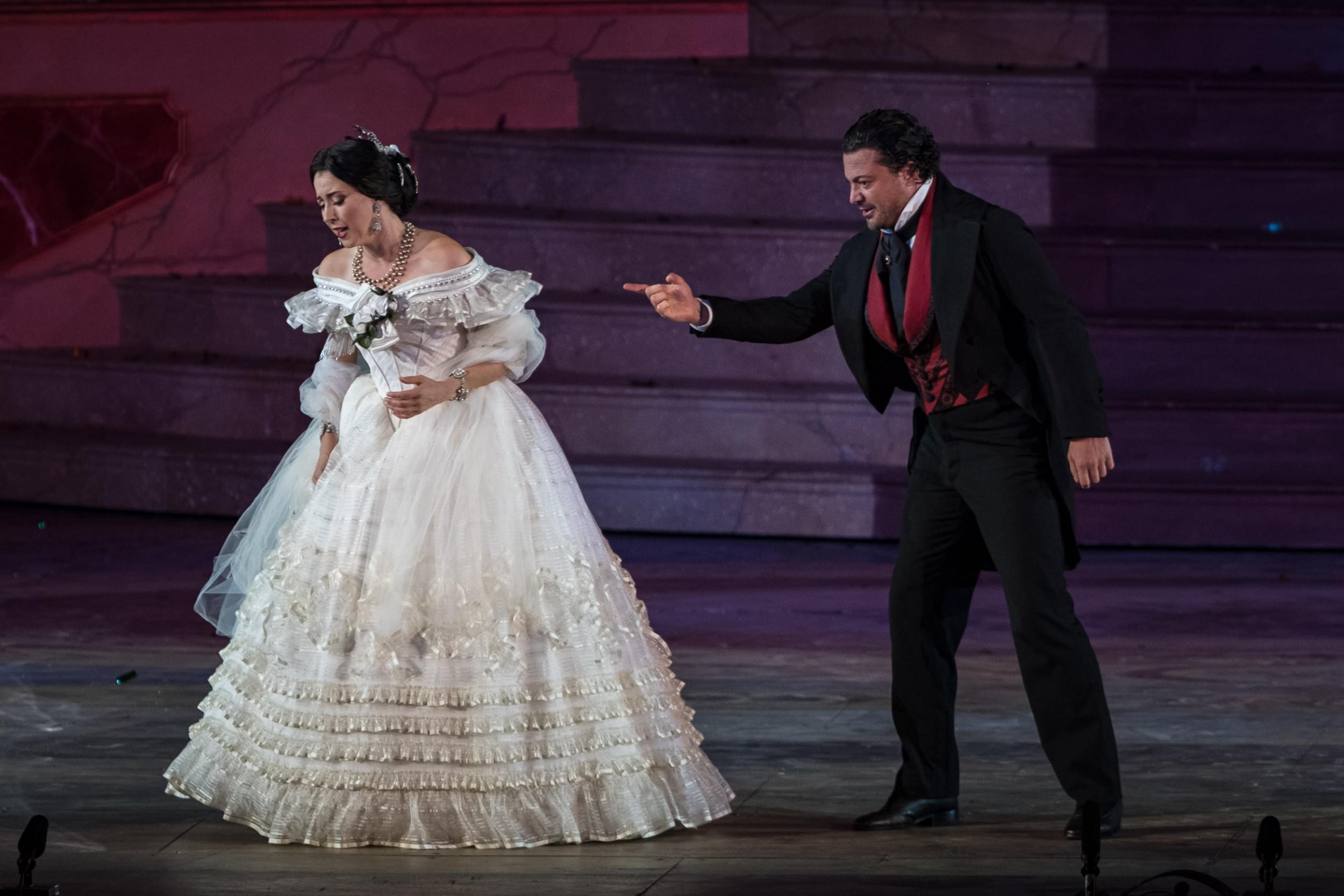
Rimpasto nel cast della serata che vede nel ruolo di Violetta per la seconda recita in Arena Lisette Oropesa che disegna una ragazza particolarmente fragile sin dall’inizio nel suo desiderio effimero di evadere dal suo destino, dalla voce tecnicamente malleabile e parecchio efficacie nelle note più alte del suo registro, capace di rifinire un suono delicatissimo fino all’impercettibile, sempre con grande precisione.

—  Maria Teresa Giovagnoli  •  MTG Lirica

Tutto Domingo per i suoi cinquant’anni in Arena

con la Violetta di Lisette Oropesa – squisita per eleganza del canto, precisione nel virtuosismo, sensibilità espressiva, toccante in particolare nell’ ultimo atto

—  Silvia Poletti  •  DelTeatro

97° ARENA DI VERONA OPERA FESTIVAL: “LA TRAVIATA”

Nel ruolo della sfortunata protagonista c’era una straordinaria Lisette Oropesa, voce bella e sostenuta da un’invidiabile tecnica che le ha consentito di superare il nodo “delle tre Violette” che, come noto, richiede altrettante tipologie di soprano (leggero, lirico e drammatico), che sottolineano con lo svolgersi della vicenda il declino della donna e l’incedere inesorabile della malattia. Una bella linea di  canto la sua, con legati espressivi e un pieno controllo del suono.

—  Gianpaolo Dal Dosso  •  GB Opera Magazine

TRAVIATA DI GALA ALL’ARENA DI VERONA – 1 AGOSTO 2019

Accanto a lui Lisette Oropesa è una Violetta delicata, diremmo quasi angelicata. Il soprano mette in luce le sue carte migliori nel canto lirico di “Ah, fors’è lui” e del duetto con Germont del II atto. Convince in ogni caso anche nel virtuosismo del primo atto, “Sempre libera”, coronata da un preciso Mib. Il personaggio risulta ben delineato in tutte le sue sfaccettature, anche se nell’ultimo atto un velo di stanchezza metteva alla prova la cantante. Sicuramente con le prossime recite la sua interpretazione crescerà, prendendo più confidenza con l’imponenza del palco e di questo spettacolo.

—  Francesco Lodola  •  Ieri Oggi Domani Opera

La Traviata des mythes

Lisette Oropesa était Violetta, un rôle qu’elle chanta il y a quelques années et qu’elle a interprété l’espace d’un soir à Athènes quelques jours avant, histoire de se le remettre en voix. Ce qui étonne toujours chez Oropesa et qui ravit, c’est d’abord son phrasé italien quasi parfait, son sens de la couleur, l’impeccable contrôle de la voix et la tenue du souffle. On lui a reproché quelquefois une sorte de supériorité de la technique sur l’émotion ; on a au contraire ici l’union d’une technique impeccable et le sens donné à chaque mot, le poids de l’expression (quel deuxième acte ! quelle intensité dans amami Alfredo !) et l’intériorité, un mot étrange dans une représentation devant 15000 personnes, où elle est une petite tache blanche sur l’immensité de la scène. Lisette Oropesa, aux origines cubaines, a une évidente familiarité avec un phrasé latin, et une vraie sensibilité, outre une technique de fer acquise dans la formation américaine. C’est d’emblée une Violetta avec laquelle il va falloir compter, car m’est avis qu’elle va les multiplier. Son Addio del passato est exemplaire, et même sa lecture de la lettre, si claire. Et en plus elle a les notes qu’il faut, dans les agilités (ses gioir du premier acte) comme dans les moments plus lyriques du deuxième (dite alla giovine bouleversant et sans doute aussi décuplé par l’émotion distillée par son partenaire Domingo).

—  Guy Cherqui  •  Wanderer

La Traviata (Violetta Valery)

Herodion bowed to "Traviata" directed by Rigos

The Power of Nature Lizette Oropesa
And it was fortunate for Lizette Oropesa to be called to play a leading role in this vision. A true power of nature. The 35-year-old New Orleans-based soprano from Cuba, the marathon runner with the vigorous body and the overwhelming voice and body strength, has cut the public's breath. So much so that we forgot the heat and sweat in our necks as we were crammed into the crowded Herodion and held our breath until we burst into applause again and again. Not at all comme il faut according to the codes of the audience at the opera, but the eagerness to express the chills that permeated the bodies listening to her voice was stronger. With a body of fever and a lyric-like stalk, Oropesa moved to the stage, to the black stage party.

—  Katerina I. Rise  •  IefiMerida

The triumph of a "Traviata" of smart choices and great protagonists

Born to the romantic bell-cadet, the 36-year-old lyricist demonstrated her great class: her medium-sized, well-placed, luminous voice - obviously more suited to her more moving last two acts than to her crafty requirements - her huge Roman amphitheater, her aesthetic and the good taste of her song (trillions, ornamentations) constantly reminded the early Verdi's Bell-Candid debts, the stage presence was ethereal, emotional and emotional j with correct passion doses. Athens was lucky enough to enjoy - and rightly so! - a singer who has all the backgrounds (youth, beauty, voice, stage displacement) to shine worldwide in the role of tragic partner!

—  Eutychios D. Choriatakis  •  Athinorama

I Masnadieri (Amalia)

Les Brigands de Verdi en haut de l’échelle : La Scala triomphe à Savonlinna

Lisette Oropesa s’attaque au rôle à l’origine conçu pour Jenny Lind (dont le bicentenaire sera sans doute commémoré l’année prochaine en Suède). Ce seul personnage féminin se révèle le plus attentionné de tous. L’Amalia d’Oropesa n’a pas que le cœur sur la main, mais également sa respiration et ses palpitations, qui deviennent pratiquement physiques d’une manière qui évoque le souffle audible d’une Violetta ou d’une Gilda. Oropesa sait profiter au maximum de l’écriture vocale : plus ses coloratures et ses sauts impeccables entre les registres montent vers les niveaux stratosphériques, plus son timbre chaleureux et teinté de mélancolie gagne en beauté et en sûreté. Lorsqu'elle apprend que Carlo est en vie, elle effectue un changement soudain d'intention, touchant à la folie, qui offre un instant irrésistible. Les spectateurs ravis s’unissent pour la récompenser, elle, ses collègues et tout l’orchestre (qui vient sur le plateau), d'une ovation debout.

—  Andreas Wahlberg  •  Olyrix

I Masnadieri (Amalia)

TEATRO ALLA SCALA: I MASNADIERI – GIUSEPPE VERDI, 7 luglio 2019

Di Lisette Oropesa, Amalia, precedentemente udita solo in un’aria eseguita negli studi della RAI di Roma in occasione della celebrazione dei trenta anni de “La barcaccia”, ci si è innamorati immediatamente: oltre all’interprete trepidante e sensibile, ha incantato la facilità e bellezza del canto, dove il soprano riesce a dominare tutte le dinamiche, a svettare con limpidezza in acuto e ad essere quanto mai espressiva nel fraseggio e seducente nell’accento della giovane innamorata. Perfetta già nella sortita “Lo sguardo avea degli angeli” ha raggiunto l’apice nella scena del cimitero cesellando un’aria e la cabaletta, ovviamente col da capo squisitamente variato, che apre il secondo atto. Ci si augura di riaverla presto in Scala e, in generale, in Italia.

—  Andrea Merli  •  I Teatri dell Est

Verdi a ferro e fuoco

L’opera intera è ben sorretta dal cast, a partire dai due protagonisti, Lisette Oropesa, al debutto scaligero, pienamente superato data la naturale espressività e lo spessore dato al personaggio di Amalia

—  Carlo Emilio Tortarolo  •  Teatri Online

«I masnadieri», il Verdi più innovativo e spregiudicato

Amalia, ancor immersa nel belcanto e Lisette Oropesa ideale (soprattutto quando alleggerisce il vibrato stretto) perfetta nel registro etereo, nella delicata fermezza. Simbolo della fanciullezza innocente, ma anche coraggiosa, nell'affrontare per amore il lato brutale del mondo maschile che la circonda.

—  Carla Moreni  •  Il Sole 24

I Masnadieri di Verdi al Teatro alla Scala

A Lisette Oropesa spetta la palma di migliore della serata. La voce ottimamente proiettata è sonora, di bel timbro; il fraseggio elegante e la coloratura è ineccepibile. L’interprete ha anche un bel portamento e, a dispetto delle posture convenzionali riservatele da McVicar, si dimostra una valida attrice.

—  Blogartpost  •  The.blogartpost

Lisette Oropesa Shines In Troubled Verdi Opera

The Superstar Stands Out

Even among such an superb cast, Lisette Oropesa stood out: her striking performance as Amalia demonstrated that she has graduated fully from soubrette roles to more demanding lyric ones without losing any of the astonishing flexibility of her voice. Equally comfortable in arias and cabalettas, she moved effortlessly between nimble, fluttering coloratura and arching lyrical phrases.

“Lo sguardo avea degli angeli,” her gorgeous Act one aria, showed a shining instrument, buttery in her middle register and full at her top, with a lively vibrato and elegant diction.

—  Eric C. Simpson  •  Opera Wire

La Scala telle qu'en elle‐même : I masnadieri musicalement exemplaires

Lisette Oropesa (qui reprend le rôle tenu par la légendaire Jenny Lind à la création) montre par son succès auprès du public qu’elle a immédiatement séduit.  Ce qui frappe c’est d’abord une technique parfaitement maîtrisée et un contrôle de tous les instants sur une voix d’une grande ductilité. Elle possède cette préparation technique qui caractérise l’école américaine, mais avec en plus une intelligence et une intuition rares. À peine entend‐on ici quelques notes aiguës un tantinet courtes ou un léger abus de vibrato, mais dans un ensemble tellement maîtrisé et tellement ressenti, tellement émouvant et engagé, que ce ne sont que détails : dans ce répertoire, Lisette Oropesa est en train de conquérir une place de choix dans les sopranos américaines à côté des Angela Meade ou des Sondra Radvanovski.

—  Guy Cherqui  •  Wanderer

I MASNADIERI, LO STURM UND DRANG DI VERDI+SCHILLER IN SCENA AL PIERMARINI

Venendo al cast, trionfo meritato per Lisette Oropesa, voce fresca e limpida, che debutta alla Scala nella parte tutta cabalette e agilità che fu di Jenny Lind. E se nelle prime due arie i virtuosismi convincono più dei cantabili, già a partire dal duetto col baritono del secondo atto i due piani si riallineano e la Oropesa riesce a fare di Amalia un personaggio tutt’altro che inesistente, a dispetto di quanto sostengono critici e musicologi più e meno illustri.

—  Mattia L. Palma  •  CultWeek

L’eleganza del Verdi minore(?)

Senza rivali l’Amalia di Lisette Oropesa, finalmente una virtuosa con carte in regola per una parte che esige tanta esuberante risonanza quanta esterrefazione lirica, fino a trilli e passaggi che implicano – e qui trovano – il capolavoro tecnico. 

—  Francesco Lora  •  L'ape musicale

LISETTE OROPESA IMPRESSIONNE À LA SCALA DANS I MASNADIERI

Le casting vocal repose sur un quatuor principal solide dominé par l’impressionnante prestation de Lisette Oropesa pour sa première apparition sur la scène de la Scala. Amalia est un rôle qu’elle connait bien pour l’avoir pratiqué régulièrement depuis sa prise de rôle à Washington, il y a cinq ans. Alliant ramage et plumage (en référence au « rossignol suédois » pour qui fut écrit le rôle) elle donne au personnage d’Amalia un relief rarement atteint, tant vocalement que scéniquement, assumant avec vaillance et sans outrage la composante belcantiste du rôle. Son timbre magnifique de pureté sait se durcir en fonctions des exigences dramatiques, son agilité vocale impressionne dans les vocalises et des aigus stratosphériques, la ligne de chant séduit par son élégante souplesse.

—  Patrice Imbaud  •  ResMusica

MILANO, TEATRO ALLA SCALA: “I MASNADIERI”

Brilla tanto sul piano vocale che interpretativo l’Amalia di Lisette Oropesa, semplicemente perfetta nell’unico ruolo da autentico soprano leggero scritto da Verdi. Belcantista di razza, la Oropesa unisce un timbro morbido e setoso, senza le asprezze che a volte ritroviamo in questo tipo di voci con una tecnica fenomenale. Un canto leggero ed etereo ma sempre sostenuto da un perfetto controllo del fiato che le permette di volteggiare sicura anche nei più impervi passaggi di bravura – le colorature sono ineccepibili da ogni punto di vista – senza mai perdere l’assoluto controllo della linea. La Oropesa non è però solo splendida cantante ma anche interprete attenta e sensibile: il virtuosismo non è mai fine a se stesso ma sempre calato in un’attenta dimensione espressiva che dà vita alla radiosa esplosione di “Carlo vive?”, alla sincera commozione delle scene con Massimiliano o all’impeto di rivolta in “Ti scosta o mal nato”.

—  Giordano Cavagnino  •  GB Opera Magazine

McVicars Masnadieri stelt teleur bij de Scala

Ook muzikaal voelde de voorstelling erg dubbel. Aan de positieve kant was er Scala-debutante Lisette Oropesa, die de rol van Amalia met een heerlijk warme, maar enigszins groot aangezette sopraan uitvoerde. De sympathieke zangeres slaagde erin precies de juiste balans te vinden tussen de lichte coloraturen van Amalia en de meer dramatische uitbarstingen.

—  Mordechai Aranowicz  •  Place de l'Opera

Milano: I masnadieri “military style”

Spicca il soprano Lisette Oropesa che incarna perfettamente il ruolo di Amalia, figura della semplice perseguitata in chiave romantico-verdiana, vittima della sventura a prescindere, donna temperamentosa che non si arrende e cerca di cambiare le sorti del proprio destino.

Scrupolosamente attenta al diktat verdiano, la Oropesa dimostra di essere musicista oltre che cantante, mantenendo sempre un notevole equilibrio stilistico fra le parti cantabili e di agilità senza mai eccedere in accenti esasperati. Non poderosa nel registro medio-grave, ha trovato il giusto compromesso per mantenere un’emissione uniforme e chiara nella dizione.

—  Gian Francesco Amoroso  •  Le Salon Musicale

«I masnadieri» incendiano la Scala

Eccellente debutto alla Scala per Lisette Oropesa, che del resto è da tempo una garanzia in tutto il mondo. Verdi cucì la parte di Amalia su Jenny Lind, che doveva essere una frigida coloratura: Oropesa risolve con facilità e con eleganza tutti i coccodé, ma riesce anche a renderli espressivi e, insomma, crea un personaggio. 

—  Alberto Mattioli  •  La Stampa

I masnadieri: “Verdi's ugliest opera” returns to La Scala with mixed results

In the role created for Jenny Lind, Lisette Oropesa, in her La Scala debut, demonstrated a magnificent silvery voice, beautiful vibrato and impeccable coloratura. Her performance was cheered by the public.

—  Renato Verga  •  Bachtrack

I masnadieri at La Scala — channelling the vitality of Verdi’s opera

As so often under Pereira, casting was the strongest element here. Lisette Oropesa made a rapturous house debut, investing Amalia with depth, authenticity and allure, and streaming through this fluttering Jenny Lind role with disarming ease. As a result, this usually drab heroine became the production’s unlikely pillar.

—  James Imam  •  Financial Times

Milano - Teatro alla Scala: I masnadieri

Chi ha invece messo tutti d’accordo è stata la prestazione di Lisette Oropesa, una straordinaria Amalia, salutata da scroscianti applausi già alla fine della cabaletta “Carlo vive?...O caro accento” e da un’ovazione finale. Soprano dal timbro delicato, dall’emissione controllata, tutta sul fiato, che le consente di legare i registri con una musicalità rara. Colorature leggere, con picchiettati, scale, volatine e trilli di alta scuola. Ed interprete che mette in luce i lati più nascosti di una fanciulla innamorata e soggetta alla rabbiosa e ottusa mascolinità dei Moor. La cavatina “Lo sguardo avea degli angeli” è intrisa di tenerezza, di rimpianti per la felicità perduta, di estasi soave e rarefatta. L’innocenza trasfusa in un canto trasfigurato e consolatorio la vede protagonista nel duettino e nel quartetto del finale primo. Commovente e patetica, morbida ed espressiva nell’aria “Tu del mio Carlo” ma altrettanto brava nel mostrare entusiasmo e brio nella difficile cabaletta citata sopra, dove un prolungato trillo sul Sol acuto è stato poi suggellato da una scalata al Do di pregnante efficacia. Ma efficace è stata anche in tutti i concertati, in cui è svettata per penetranza e luminosità. Nel duetto con Francesco ha sottolineato la ripugnanza, il disprezzo e il furore verso il demoniaco fratello di Carlo, mentre con l’innamorato si è lasciata andare ad un’entusiastica esplosione di gioia, ma anche ad una delicatissima, brillante e saltellante stretta conclusiva. L’attrice è stata poi in grado di tener testa agli aggressivi masnadieri, nonché stoica nel consegnare la sciabola a Carlo perché l’uccidesse nel grandioso finale d’opera.

—  Ugo Malasoma  •  Opera Click

Milano, Teatro alla Scala – I masnadieri

Grande attesa circondava il debutto scaligero del soprano americano Lisette Oropesa, che è stata lungamente applaudita. La voce è luminosa e timbrata, il colore molto bello, la linea di canto sempre sorvegliata e ricamata con grande gusto. Il meglio di sé mi pare che Oropesa lo abbia dato nei cantabili, ove la dimensione malinconica della melodia trovava singolare espressione, mentre una qualche imprecisione si è fatta registrare nei passaggi virtuosistici.

—  Fabio Larovere  •  Conessi all'Opera

Don Pasquale (Norina)

PITTSBURGH OPERA’S DON PASQUALE: ONE PART DONIZETTI, ONE PART OROPESA…STIR

How do you brew a great opera experience?  Mixing Donizetti and Oropesa is a great start.  Operas are not a one-person show, ever.  They are the result of many talented, dedicated contributors.  So, I feel guilty raving about one team member in particular, but I am going to rave about Lisette Oropesa, right now, right up front for everybody to see.  She is already a veteran of the Metropolitan Opera and has spent the last couple of years perfecting her craft working in Europe. I previously saw her perform live in 2016 at the Kennedy Center and was impressed.  She recently won the Richard Tucker Award, the top opera award.  When she appeared for the first time Saturday night in Pittsburgh Opera’s Don Pasquale, the impact was even greater than the change from black/white scenery to color suggested; like a light bulb, the life in the performance came on, Donizetti meets star power.  There were other excellent performances and other important good stuff to talk about, but let’s get the ‘why you must not miss this performance’ out of the way up front.  Pittsburgh, go see and hear Lisette Oropesa while you can.

—  OperaGene  •  OperaGene

Pittsburgh Opera’s “Don Pasquale” a Clever, Campy, Comic Delight

Lisette Oropesa is the production’s Norina. She delivered exactly what was expected; perhaps the finest performance of a soprano heard in the Benedum since the last time she was here. She knows how to modulate her large, brilliant voice to the requirements of the part without slighting the role in any way, and acts with a comic flair equal to the dramatic intensity which has been winning her increasingly glowing acclaim in heavier roles. She has astonishing control of a pitch-perfect trill which she can sustain almost to the length of the train on one of the gowns she wore last night – and that flounce stretched half the width of the stage, turned a corner in the wings and came back on again. Her every tone, every gesture, were operatic magic at its best.

—  George B. Parous  •  PGH in the Round

Review: Pittsburgh Opera revisits silent Hollywood in waggish season finale production

There are some voices in opera that are so sublimely expressive that they stand out like a Michelangelo fresco in a black and white film. Pittsburgh Opera’s season finale production of Donizetti’s “Don Pasquale” features such a voice.

Soprano Lisette Oropesa, no stranger to the Benedum Center stage, was recently granted the prestigious Richard Tucker Award, granted annually to an American singer on the precipice of a dazzling career. Her performance on Saturday showcased impeccable clarity of tone and articulation coupled with exquisite lyricism.

Ms. Oropesa, for her part, was enchanting, moving swiftly from coquettish to incendiary as the plot to humble Pasquale coalesces. With her rising prestige confirmed by the Richard Tucker Award (other winners include Renee Fleming and Joyce DiDonato), Ms. Oropesa’s career is likely poised to blossom in the coming seasons.

—  Jeremy Reynolds  •  Pittsburgh Post Gazette

Robert le Diable (Isabelle)

ROBERT LE DIABLE À BRUXELLES : UN RYTHME INFERNAL

En premier lieu, la reine de la soirée, Lisette Oropesa dans le rôle d’Isabelle ; elle y développe toute la suprématie vocale qu’elle possède sans faille, étant à l’apogée de ses moyens : sons filés, aigu victorieux, colorature mathématique, tout y est absolument à sa place. De plus, sa qualité suprême est de parvenir à créer des lignes superbes dans le phrasé, créant de réelles tensions dramatiques à des moments plus faibles de l’ouvrage. L’équilibre était difficile à obtenir avec le second rôle féminin, qui est finalement celui qui a bénéficié des nombreuses innovations musicales de Meyerbeer à l’époque de l’écriture de l’œuvre : trios a capella, tessiture hybride, urgence dans l’action.

—  Alain Attyasse  •  ResMusica

Robert le Diable de Meyerbeer ressuscité au Palais des Beaux-Arts de Bruxelles

Etourdissante Marguerite de Valois dans la production des Huguenots précitée, la soprano étasunienne Lisette Oropesa (Isabelle) enthousiasme à nouveau grâce à sa miraculeuse technique et son grain de voix d’une séduction renversante. Au brio de sa première scène « En vain j’espère » suivie d’une cabalette ornée d’un goût très sûr, elle oppose l’intensité et la grâce, l’émotion de l’accent et la beauté de la ligne dans l’air « Robert, toi que j’aime ». 

—  Emmanuel Andrieu  •  Opera Online

Meyerbeer, prophète au plat pays

Aucune réserve en ce qui concerne l’Isabelle de Lisette Oropesa. Dans la droite ligne de sa Marguerite de Valois à Bastille en octobre, elle continue de stupéfier, et le public bruxellois lui a réservé un triomphe. Ce qu’on entend sortir de sa gorge tient du miracle. Une voix belle, incroyablement belle, une technique souveraine, une égalité jamais prise en défaut quels que soient les redoutables intervalles imposés par Meyerbeer, des réserves de puissance qui paraissent inépuisables, un français qu’on dirait appris à la naissance. De quoi perdre la tête.

—  Dominique Joucken  •  Forum Opéra

A Bruxelles, la beauté du Diable de Meyerbeer

Après sa triomphale prise de rôle en Elisabeth de Valois à l’Opera de Paris, Lisette Oropesa faisait ses débuts à Bruxelles dans un autre rôle de Meyerbeer, la princesse Isabelle, dont elle avait déjà brillamment interprété en récital le grand air « Robert, toi que j’aime ».

Une nouvelle fois, la soprano américaine maitrise sans aucun effort apparent les difficultés de la partition, tant dans ses airs et leurs cabalettes que dans les duos et autres redoutables finales d’acte. Toujours très expressive et en interaction avec ses partenaires et le chœur, elle réussit même, malgré la version de concert et grâce à un français remarquable, une belle caractérisation du personnage. L’air du 4ème acte est un concentré de toutes ses qualités : émotion, longueur de souffle, légato parfait, aisance dans les coloratures et magnifiques nuances y compris dans le suraigu. Elle y obtient une longue et légitime ovation du public bruxellois conquis.

—  Denis Peyrat  •  Toute la culture

Robert le diable in het PSK

De ontegensprekelijke ster van de avond was de Isabelle van Lisette Oropesa. Ik heb haar al een paar keer in cinemavoorstellingen gehoord, meest recent als Marguerite vanuit Parijs, maar dit was mijn eerste live ervaring. De cinema-versie van Oropesa is maar een schaduw van hoe ze in het echt klinkt. Meteen met haar openingsaria "En vain j'espère" zit haar stem juist. Ze zingt met een pakkende frasering, haar hoge noten klinken fantastisch met daarenboven mogelijkheid tot dynamiek van piano tot forte, coloraturen hebben diepgang en met dat alles kan ze nog eens ontroeren ook. Haar paradestuk komt in het vierde bedrijf met de cavatina "Robert, toi que j'aime". Dat zou een saaie aria kunnen worden met een paar honderd herhalingen van "grâce pour toi", maar bij Oropesa blijf je luisteren naar alle smekende nuances die ze weet op te roepen, maar telkens met een ondertoon van het hartzeer dat ze voelt. Het einde van de aria geeft ze een voorwaartse stuwing mee die onvermijdelijk leidt tot een minutenlange ovatie.

—  Inquisitor  •  Il Grand' Inquisitor

Oropesa steelt de show in Robert le Diable

Alles wat deze Cubaans-Amerikaanse sopraan aanraakt, verandert in goud. In Amsterdam hoorde we haar eerder als een fenomenale Nannetta in Falstaff (De Nationale Opera) en Gilda in Rigoletto (De Nationale Opera en de NTR ZaterdagMatinee). Haar krachtige lyrische sopraan klonk als een warm bad.

Oropesa’s eerste aria werd onthaald met langdurig applaus. Haar tweede aria, ‘Robert, toi que j’aime’ in de vierde akte, was een showstopper pur sang. Wat een prachtaria, en wat een prachtsopraan. Trillers, coloraturen, legatolijnen, dictie: alles klopt bij Oropesa. Hopelijk houdt ze het hoofd koel en weet ze zich te hoeden voor rollen die ze wijselijk moet afhouden. Dit is een stem die niet vaak voorkomt heden ten dage.

—  Lennaert van Anken  •  Place de l'Opera

Rodelinda

Recuperación triunfal

Lisette Oropesa cantó con una gran musicalidad, estuvo segura en los ornamentos, con un gran dominio del estilo, una expresión muy convincente, aguantando con brillantez la complejidad y duración de su papel.

—  Albert Vilardell  •  Ritmo

Sorpresa barroca en el foso

La soprano Lisette Oropesa trunfó con una interpretación de Rodelinda de coloratura espetacular, bellas ornamentaciones y una calidez y riqueza expresiva cautivadoras. Guth la mantiene en escena casi toda la ópera, en un trabaja extenuante como actriz que, de forma admirable, muestra las agitadas emociones de una mujer enamoradad y fiel, que sufre, se resigna y se rebela con furia.

—  Javier Pérez Senz  •  Scherzo Magazine

‘Rodelinda’ debuta al Gran Teatre del Liceu

Doble debut de Lisette Oropesa: al Liceu i com a Rodelinda. La soprano estatunidenca és especialista en belcanto romàntic i el timbre i la projecció de la veu ho delaten, però Oropesa s’emmotlla a l’estil händelià i se’n surt amb nota gràcies a passatges exquisidament resolts, com ara l’ària Ombre, piante, urne funeste del primer acte.

—  Jaume Radigales  •  Ara.cat

De la estimulante puesta de largo de Rodelinda en el Liceo

Lisette Oropesa dio vida a una Rodelinda sin mácula. La joven soprano estadounidense, una de las sensaciones del panorama lírico actual, debutaba en el teatro barcelonés y cosechó un merecido triunfo. Oropesa exhibió una voz bien proyectada en todo momento, de bello timbre, cálido, elegante, de acentos mórbidos y homogéneo en todos los registros. Una voz aunada a una técnica sin debilidades, que permitió a la joven soprano afrontar con inapelable solidez el virtuosismo de sus arias. Teatralmente, la soprano de Nueva Orleans se desenvolvió con espontaneidad y magnetismo en todo momento, completando una actuación redonda. Sin lugar a duda, la estrella de Oropesa está llamada a brillar con intensidad en el repertorio lírico durante los años venideros.

—  Xavier Borja Bucar  •  Codalario

The captivating league of Rodelinda in the Liceu. Lisette Oropesa and Bejun Mehta

La Rodelinda de Lisette Oropesa recogió claramente el guante protagonista en un voraz debut; voraz en las indecisiones del personaje, en las aceptaciones, en las negativas, voraz en los aplausos en los que insistió el público.

—  Opera World  •  Opera World

Rodelinda al Liceu: London after midnight

El Liceu ha pogut comptar per aquestes representacions amb el talent emergent de la soprano Lisette Oropesa, una cantant de tracte proper i exquisit (res a veure per tant amb el “dimoni” Cuzzoni). La veu lírico-lleugera d’Oropesa pateix en algun moment d’una partitura extenuant i excessivament greu, però amb la seva tècnica impol·luta i uns imaginatius ornaments acaba portant el personatge a la seva tessitura, component una interpretació absolutament colpidora i fascinant. Si haguéssim de triar un fragment (arriba a cantar fins a 8 àries!) ens quedaríem amb el bell lament de l’acte tercer, “Se’il mio duol”. La soprano debutava al teatre i en el rol; no podem més que desitjar noves visites per la seva part.

—  Dani Cortés Gil  •  Núvol

LISETTE OROPESA Y BEJUN MEHTA PROTAGONIZAN "RODELINDA" DE HAENDEL EN EL LICEU

Händel exige un enorme despliegue vocal a la soprano y Lisette Oropesa encarnó una reina de Lombardía de gran factura dramática, con aplomo en el despliegue de la multifacética Rodelinda, vulnerable y desafiante, tierna y agresiva... Dotada de un centro esplendoroso, haciendo uso de un magnífico legato y de una voz fresca y bien impostada redondeó un debut brillante en el Liceu. Con momentos emocionantes como una conmovedora “Ombre, piante” –soberbias las flautas en el diálogo– se metió en el bolsillo al público.

—  Diego A. Civilotti  •  Platea Magazine

Una 'Rodelinda' de lujo en el Liceu

Un lujo, tanto como el que ofreció el impresionante y auspicio debut de Lisette Oropesa en el papel titular, quien impuso una voz de gran belleza y esmalte, dominio estilístico y sentido teatral, fascinando con las arias a su cargo y poderosa en el ornamento.

—  Pablo Meléndez-Haddad  •  El Periódico

‘Rodelinda’ enamora al Liceo

Con fantasía y buen gusto en las ornamentaciones y una coloratura espectacular, Lisette Oropesa es una Rodelinda de ensueño. La voz es bella, cálida, rica en colores, tan fascinante como su riqueza expresiva. Siempre en escena —y eso que la ópera dura más de tres horas— muestra de forma admirable las agitadas emociones de una mujer enamorada y fiel, que sufre, se resigna y se rebela con furia.

—  Javier Pérez Senz  •  El Pais