:format(webp)/https://lisetteoropesa.com/media/gallery/2026/royal-opera-house-i-puritani/01-puritani-royal-opera-house_header.jpg)
Lucia di Lammermoor
:format(webp)/https://lisetteoropesa.com/media/gallery/2017/royal-opera-house-lucia-di-lammermoor/09-lisette-oropesa-rachel-lloyd.jpg)
Lucia di Lammermoor - Opera Magazine
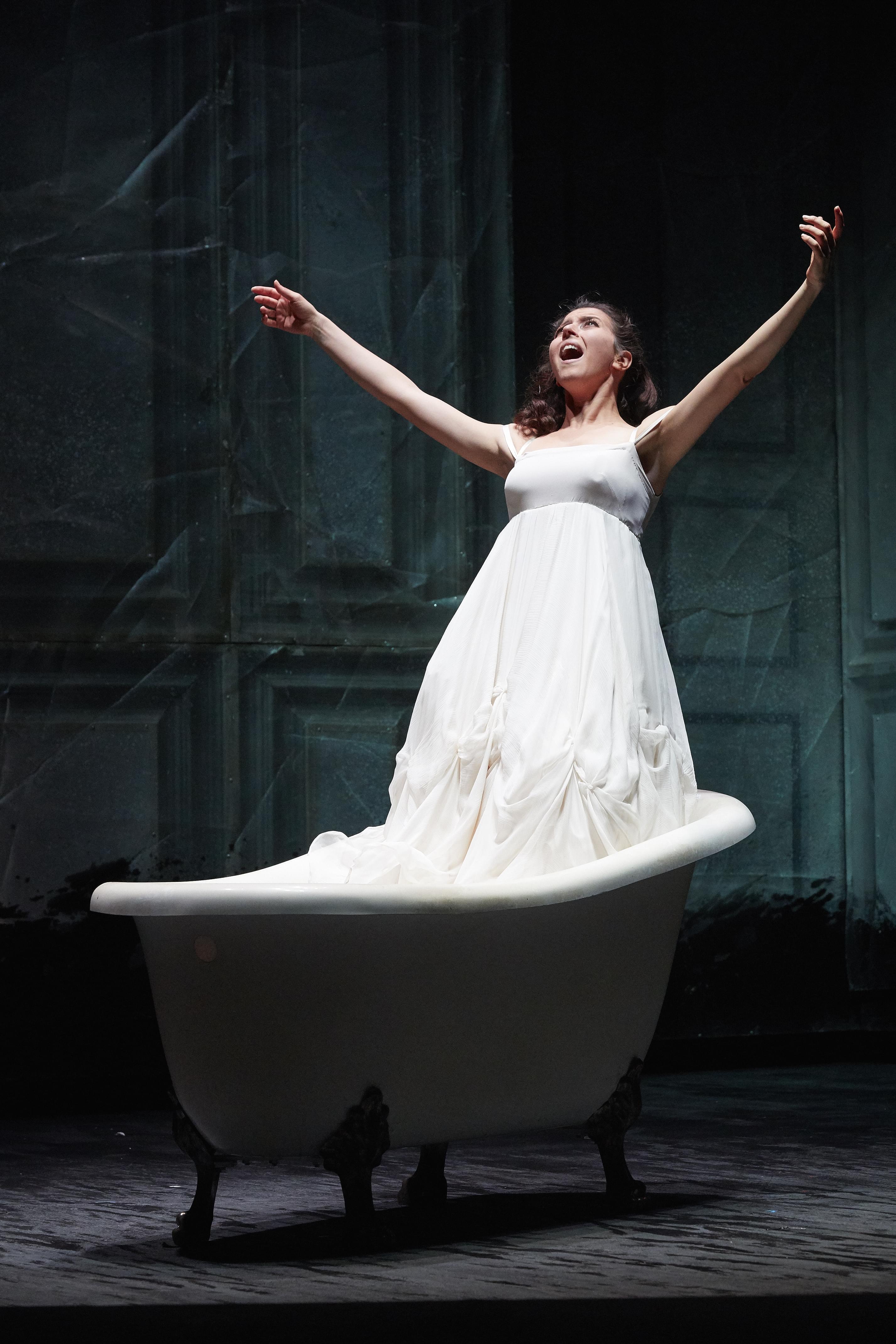
Matching him in all respects was the Lucia of Lisette Oropesa. She excelled in all aspects of the role (the rigours of which were made more severe in this production by the fact that she is onstage for practically the entire duration), acting affectingly throughout, dispatching the ornamentation fearlessly and with a security one very rarely experiences. Most affecting of all was her pianissimo singing at the start of ‘Alfin son tua’: a feat of vocal daring that had the entire house in hushed awe.
—
Roger Parker
•
Opera MagazineOpera is a high-wire act that can go badly wrong.
The real star, though, was the young Cuban-American soprano Lisette Oropesa, who is making her Royal Opera debut. Not just for her singing, which probably won’t be bettered in Britain this year, but for her acting. Even when she wasn’t singing, I found it impossible to take my eyes off her. I was not alone. Oropesa got a lengthy standing ovation from the entire audience. Even if you think you don’t like opera, try to get to one of the remaining performances if you can. It might be life-changing.
—
John Grace
•
The GuardianLucia di Lammermoor
To match such a revelation in storytelling and character there is Lisette Oropesa who is a revelation by herself. Prior to, and after seeing this production I listened to Maria Callas and Joan Sutherland’s performances and I can genuinely tell you, as someone who has now seen Oropesa in the role three times, she sings it better. There is no straining in her voice, she is relaxed and her range, her ability is staggering. The Mad Scene in particular has Oropesa singing in a way that I didn’t think possible. Oropesa can’t just sing though, her acting is just as important in this production, being on stage the entire time (with a few seconds break going from one side of the set to the other) and she can really act.
—
Stuart
•
The Stuart ReviewLucia di Lammermoor en Londres: Apoteosis de Lisette Oropesa en Londres
El reparto vocal estaba encabezado por la soprano cubano americana Lisette Oropesa. Oropesa se adaptó con maña a la propuesta escénica y su Lucia trasmitió la determinación feminista que la dirección escénica pedía. No obstante, lo más interesante de sus intervenciones estaba en el canto. Lisette Oropesa cuenta con un instrumento flexible y atlético que produce un sonido magro y fibroso, pero tremendamente versátil. En el primer acto, la soprano espesó el canto con un vibrato excesivo. No obstante, su manejo de la respiración, la solidez en el apoyo y la articulación de la voz hacen de su canto una herramienta de exquisita precisión, lo que le permite navegar a placer las aguas más agitadas del belcanto donizettiano. Así, Oropesa epató con larguísimas frases a media voz, agudos recogidos pero ricos y bien proyectados, trinos carnosos y expresivos y un buen surtido de delicadezas dinámicas que emocionaron al público inglés. La escena de la locura, de elevada factura estética, fue interrumpida con ovaciones, mientras que sus intervenciones en dúos y concertantes no admiten peros.
The vocal cast was led by Cuban-American soprano Lisette Oropesa. Oropesa skillfully adapted to the staging proposal and her Lucia conveyed the feminist determination that the staging direction called for. Nevertheless, the most interesting aspects of her performance were found in her singing. Lisette Oropesa possesses a flexible and athletic instrument that produces a lean and fibrous sound, but tremendously versatile. In the first act, the soprano thickened the song with excessive vibrato. However, her breath control, the solidity in the support and the articulation of the voice make her singing a tool of exquisite precision, which allows her to navigate at will through the most turbulent waters of Donizetti's bel canto. Thus, Oropesa impressed with very long half-voice phrases, collected yet rich and well-projected high notes, meaty and expressive trills, and a good assortment of dynamic delicacies that thrilled the English audience. The mad scene, of high aesthetic quality, was interrupted with ovations, while her interventions in duets and concertante are beyond reproach.
—
Carlos J. López Rayward
•
Opera WorldTremendous revival of Katie Mitchell's Lucia at the ROH
Oropesa’s glinting soprano is fairly light but it grew warmly and expansively as Lucia’s distress deepened, and the crystalline precision and limpidness which I had admired at Glyndebourne this summer were again in notable evidence. As the sometimes cruel Norina in Mariame Clément’s Don Pasquale, Oropesa was a woman firmly in control of her own destiny but despite Mitchell’s avowal to make Lucia more feisty than faint-hearted, however much she wishes to challenge Enrico’s callousness Lucia’s destiny is undeniably ordained. She can ‘escape’ only into madness. In the ‘mad scene’, Oropesa was utterly broken but, to the soprano’s and Mitchell’s credit, this Lucia’s melodic meltdown was not an abstraction of disembodied madness but the terrible disintegrated of a real woman for whom we, and the stage witnesses, feel terrible sadness. Oropesa’s vocal purity returned Lucia to childlike vulnerability and victimhood.
—
Claire Seymour
•
Opera TodayMourning Sickness
The thrilling new Cuban-American soprano Lisette Oropesa is a decided plus on last year.
Her Lucia is young and fragile but defiant, while the famous mad scene is superlatively played.
Her pure crystal voice soars to the heights.
—
Leslie Jones
•
Sunday ExpressLucia di Lammermoor at the Royal Opera House, London
Lisette Oropesa dazzles in the title role as her soprano is powerful enough to pierce our very hearts, yet never feels extravagant or overblown. It is paradoxical that her lines in ‘Il dolce suono’(from the famous ‘mad scene’) seem almost as if they could evaporate into thin air, and yet, because of the underlying strength of technique and precision, feel rock steady.
—
Sam Smith
•
Opera OnlineLucia di Lammermoor | Opera Review | The Arbuturian
Lisette Oropesa whose performance is simply magnificent. The role is famously demanding. Forced into a marriage against her will to save the family fortune, for Lucia the second half of the opera runs through murder, miscarriage and madness. Oropesa is not only a thrilling singer, she is a thoroughly convincing actor caught in a finely judged physical and mental downward spiral.
—
Anna Selby
•
The ArbuturianLucia di Lammermoor REVIEW: A real gem in the tragic opera repertoire
Best of all, however, was the performance of Cuban-American soprano Lisette Oropesa in the title role which was simply sensational.
In fact, it is one of the best performances I have ever seen at Covent Garden. Her crisp, clear voice added to true dramatic acting ability make her perfect for the role, with her high notes particularly piercing and effective and her soft notes even more gripping.
Her performance in the mad scene was particularly riveting and even silenced the usual coughing from the audience.
—
William Hartston
•
Sunday ExpressA LUCIA WITH AGENCY AND INDEPENDENCE AT THE ROYAL OPERA HOUSE
Lisette Oropesa sang her Royal Opera House debut as a was tender, sincere Lucia. Her voice was easiest in the top and she navigated the role with ease. ... There was nothing but bravery from Oropesa as she navigated the emotional turmoil of the second half of the opera.
—
Vivian Darkbloom
•
SchmoperaAn Extraordinary Covent Garden Lucia from Oropesa, Castronovo, Maltman and Mariotti
The Cuban-American soprano Lisette Oropesa, making her Royal Opera debut, starts strongly and just continues to get stronger, inhabiting the part both in her actions and in her voice. No surprise she has taken on Gilda (Dutch National Opera), Violetta (Opera Philadelphia) and Marie (Donizetti’s La fille du régiment in Washington); without hearing these, it would be completely believable if this Lucia were the climax of this particular handful of select roles. With Katie Mitchell taking a part that already goes through the emotional wringer and tightening the screw to almost unbearable heights, the challenges are clear. As clear as Oropesa’s virtuosity, nowhere more than in the moments in the Mad Scene where she interacts with the flutes, her pitching impeccable.
—
Colin Clarke
•
Seen and Heard InternationalA devastating revival of Katie Mitchell's Lucia di Lammermoor
Oropesa made a strong impression at Glyndebourne this year in a far more light-hearted Donizetti opera. Here, she was fine vocal form, with those trills that you crave from the role generous and fluid. High notes felt a little worked for in the very early scenes, but they were always accurate and certainly by the climactic mad scene, she was in total control of the voice, floating the notes, spinning phrases and generally showing off a vocal technique that’s ripe for further bel canto exploration. She showed an engaging stage presence as well, embodying Mitchell’s feminist spin on the work in her scene with Enrico prior to the wedding when her sparky Lucia is sacrificed for the politics of men.
—
Dominic Lowe
•
BachtrackLucia di Lammermoor, opera review: Touch of madness works wonders
Lisette Oropesa, making her Royal Opera debut, is a revelation as Lucia. She acts with conviction, hits the notes dead and controls the dynamics. Her “mad scene” is 20 minutes of exquisite devastation.
—
Nick Kimberly
•
Evening StandardThe Royal Opera – Donizetti’s Lucia di Lammermoor – Lisette Oropesa, Charles Castronovo, Christopher
This revival has a new Lucia, and how! Lisette Oropesa was making her debut in the House. Hers is not the ample agile voice of a Sutherland, not the bright glassy dazzle of Gruberová, but is an instrument full of interesting dark colours and technical mastery put at the service of communication and the drama. Her first appearance was notable for the inflection and colouring of the text, as was evident by the sudden quiet in the auditorium. The ‘mad scene’ – here more a post-miscarriage hallucinatory nightmare – had exactly the same effect, almost painful to listen to and observe. She is a truthful actress. ... Oropesa and Castronovo should be heard live: they can easily and honourably bear comparison to those performers of distant memory and legend.
—
Alexander Campbell
•
Classical SourceDonizetti's Lucia di Lammermoor
As Lucia in this handsome and intelligent production, the birdlike American-Cuban soprano Lisette Oropesa, bubbly and light-hearted in Glyndebourne Festival Opera's Don Pasquale this summer, now conveys both aching fragility and determination, powering up to those famous high notes with the accuracy of a swift. The whole performance is shot through with a passion that makes Lucia capable of a calculating and overwhelmingly violent attack on her new husband.
—
Claudia Pritchard
•
Culture WhisperReview: Lucia di Lammermoor (Royal Opera House)
Having rescued Glyndebourne's Don Pasquale from mediocrity this summer, the Cuban-American soprano now elevates another Donizetti opera to the heights. Oropesa's subtle vibrato, fast, light and allied to a silvery-bright timbre, was a constant delight, and her account of the mad scene (accompanied this time by a solo flute rather than glass harmonica obbligato) had a transcendent beauty.
—
Mark Valencia
•
What's on StageLucia di Lammermoor, Royal Opera review - creepy, violent and intense
Lucia is sung by Lisette Oropesa, here making her house debut. Her voice isn’t large, but she is a true coloratura soprano. She has excellent support for the long fioratura lines, and ideal agility for the runs and ornaments. Her Mad Scene (flutes here, no glass harmonica) is more about dramatic conviction than vocal acrobatics, but is no less impressive for it.
—
Gavin Dixon
•
The Arts DeskLucia di Lammermoor review at Royal Opera House, London – ‘a triumph’
The cast is outstanding, especially the Lucia of Cuban-American soprano Lisette Oropesa. A consummate actor with a fresh, pearly sound and exquisite top notes, Oropesa creates a flesh-and-blood character out of Donizetti’s sketchy heroine. Her mad scene is beautifully judged, full of nuance and changes of pace – deeply disturbing rather than tragic – and her tender relationship with Alisa (superbly acted by Rachel Lloyd) is the most honest in this ghastly story.
—
Amanda Holloway
•
The StageOpera review: Lucia di Lammermoor at Covent Garden
Lisette Oropesa makes an exciting house debut. It’s not the largest voice, but the Cuban-American makes every phrase felt and sings with piercing vulnerability, whether in fragile trills or heart-searing high notes. Her “mad scene” is so sincerely done that it feels wrong to applaud — that’s a tribute. At least one man is supporting her: Michele Mariotti’s conducting is flexible and attentive, the epitome of good bel canto, and he draws wonderfully stirring playing from the orchestra.
—
Neil Fisher
•
The TimesLucia di Lammermoor review – bloody and convincing
But all are on Lisette Oropesa. Lucia is her first Royal Opera role, and the Cuban-American soprano is sensationally good. She makes the stratospheric vocal fireworks of her mad scene – accompanied by flute this time, not glass harmonica – sound easy; indeed, her every note is part of a convincing portrayal of a complex character. It’s a rare Lucia – and a rare production – that manages that.
—
Erica Jeal
•
The Guardian

:format(webp)/https://lisetteoropesa.com/media/gallery/2017/glyndebourne-don-pasquale/04-don-pasquale-glyndebourne-lisette-oropesa-andrey-zhilikhovsky.jpg)

:format(webp)/https://lisetteoropesa.com/media/gallery/2017/de-nationale-opera-rigoletto/07-lisette-oropesa.jpg)

:format(webp)/https://lisetteoropesa.com/media/gallery/2017/opera-de-lausanne-hamlet/lisette-oropesa-09.jpg)
:format(webp)/https://lisetteoropesa.com/media/gallery/2017/royal-opera-house-lucia-di-lammermoor/10-lisette-oropesa-charles-castronovo.jpg)
:format(webp)/https://lisetteoropesa.com/media/gallery/2017/royal-opera-house-lucia-di-lammermoor/06-lisette-oropesa.jpg)
:format(webp)/https://lisetteoropesa.com/media/gallery/2017/royal-opera-house-lucia-di-lammermoor/03-lisette-oropesa.jpg)
:format(webp)/https://lisetteoropesa.com/media/gallery/2017/royal-opera-house-lucia-di-lammermoor/07-lisette-oropesa-charles-castronovo-michele-pertusi-sarah-northgraves-sacha-plaige.jpg)
:format(webp)/https://lisetteoropesa.com/media/gallery/2017/royal-opera-house-lucia-di-lammermoor/08-lisette-oropesa-sarah-northgraves-rachel-lloyd-charles-castronovo.jpg)
:format(webp)/https://lisetteoropesa.com/media/gallery/2017/royal-opera-house-lucia-di-lammermoor/13-lisette-oropesa.jpg)
:format(webp)/https://lisetteoropesa.com/media/gallery/2017/royal-opera-house-lucia-di-lammermoor/01-lisette-oropesa.jpg)
:format(webp)/https://lisetteoropesa.com/media/gallery/2017/royal-opera-house-lucia-di-lammermoor/12-lisette-oropesa-sacha-plaige-rachel-lloud-sarah-northgraves.jpg)
:format(webp)/https://lisetteoropesa.com/media/gallery/2017/royal-opera-house-lucia-di-lammermoor/02-lisette-oropesa-sarah-northgraves.jpg)
:format(webp)/https://lisetteoropesa.com/media/gallery/2017/royal-opera-house-lucia-di-lammermoor/04-lisette-oropesa-charles-castronovo.jpg)
:format(webp)/https://lisetteoropesa.com/media/gallery/2017/royal-opera-house-lucia-di-lammermoor/11-lisette-oropesa-rachel-lloyd-sarah-northgraves.jpg)
:format(webp)/https://lisetteoropesa.com/media/gallery/2017/royal-opera-house-lucia-di-lammermoor/05-lisette-oropesa-rachel-lloyd.jpg)

:format(webp)/https://lisetteoropesa.com/media/gallery/2017/glyndebourne-don-pasquale/06-don-pasquale-glyndebourne-lisette-oropesa-renato-girolami.jpg)
:format(webp)/https://lisetteoropesa.com/media/gallery/2017/glyndebourne-don-pasquale/05-don-pasquale-glyndebourne-lisette-oropesa.jpg)
:format(webp)/https://lisetteoropesa.com/media/gallery/2017/glyndebourne-don-pasquale/07-don-pasquale-glyndebourne-lisette-oropesa.jpg)
:format(webp)/https://lisetteoropesa.com/media/gallery/2017/glyndebourne-don-pasquale/02-don-pasquale-glyndebourne-lisette-oropesa.jpg)
:format(webp)/https://lisetteoropesa.com/media/gallery/2017/glyndebourne-don-pasquale/01-don-pasquale-glyndebourne-lisette-oropesa.jpg)
:format(webp)/https://lisetteoropesa.com/media/gallery/2017/glyndebourne-don-pasquale/03-don-pasquale-glyndebourne-lisette-oropesa-andrey-zhilikhovsky.jpg)
:format(webp)/https://lisetteoropesa.com/media/gallery/2017/de-nationale-opera-rigoletto/09-lisette-oropesa.jpg)
:format(webp)/https://lisetteoropesa.com/media/gallery/2017/de-nationale-opera-rigoletto/04-lisette-oropesa-saimir-pirgu.jpg)
:format(webp)/https://lisetteoropesa.com/media/gallery/2017/de-nationale-opera-rigoletto/05-lisette-oropesa-saimir-pirgu.jpg)
:format(webp)/https://lisetteoropesa.com/media/gallery/2017/de-nationale-opera-rigoletto/02-lisette-oropesa.jpg)
:format(webp)/https://lisetteoropesa.com/media/gallery/2017/de-nationale-opera-rigoletto/01-lisette-oropesa-rafal-siwek.jpg)
:format(webp)/https://lisetteoropesa.com/media/gallery/2017/de-nationale-opera-rigoletto/08-lisette-oropesa-luca-salsi.jpg)
:format(webp)/https://lisetteoropesa.com/media/gallery/2017/de-nationale-opera-rigoletto/06-lisette-oropesa-luca-salsi.jpg)
:format(webp)/https://lisetteoropesa.com/media/gallery/2017/de-nationale-opera-rigoletto/03-lisette-oropesa-rafak-siwek.jpg)
:format(webp)/https://lisetteoropesa.com/media/gallery/2017/opera-de-lausanne-hamlet/lisette-oropesa-14.jpg)
:format(webp)/https://lisetteoropesa.com/media/gallery/2017/opera-de-lausanne-hamlet/lisette-oropesa-11.jpg)
:format(webp)/https://lisetteoropesa.com/media/gallery/2017/opera-de-lausanne-hamlet/lisette-oropesa-10.jpg)
:format(webp)/https://lisetteoropesa.com/media/gallery/2017/opera-de-lausanne-hamlet/lisette-oropesa-13.jpg)
:format(webp)/https://lisetteoropesa.com/media/gallery/2017/opera-de-lausanne-hamlet/lisette-oropesa-08.jpg)
:format(webp)/https://lisetteoropesa.com/media/gallery/2017/opera-de-lausanne-hamlet/lisette-oropesa-regis-mengus-05.jpg)
:format(webp)/https://lisetteoropesa.com/media/gallery/2017/opera-de-lausanne-hamlet/lisette-oropesa-regis-mengus-02.jpg)
:format(webp)/https://lisetteoropesa.com/media/gallery/2017/opera-de-lausanne-hamlet/lisette-oropesa-04.jpg)
:format(webp)/https://lisetteoropesa.com/media/gallery/2017/opera-de-lausanne-hamlet/lisette-oropesa-regis-mengus-01.jpg)
:format(webp)/https://lisetteoropesa.com/media/gallery/2017/opera-de-lausanne-hamlet/lisette-oropesa-07.jpg)
:format(webp)/https://lisetteoropesa.com/media/gallery/2017/opera-de-lausanne-hamlet/lisette-oropesa-15.jpg)