Reviews

Press for every engagement since 2005, newest first. The full record, with or without reviews, is under Career.

2021

Theodora

Extase et ravissement, Theodora de Haendel au Théâtre des Champs-Elysées

Si bien que le couple qu’il forme avec Lisette Oropesa gagne peu à peu en crédibilité pour atteindre des sommets lors des derniers duos. La soprano déjà célèbre sur les scènes rossiniennes les plus fameuses, met ici en oeuvre sa parfaite vocalité, son timbre fruité, son intériorité pour dresser un portrait à la fois beau, vrai et déchirant de cette jeune martyre capable de tutoyer les anges.

—  Bénédicte Palaux-Simonnet  •  Crescendo Magazine

Luxueuse Theodora de Haendel au Théâtre des Champs-Elysées

Le rôle de Theodora intervient dans des pages recueillies de prières, témoignages de sa foi inébranlable que vient magnifier la voix de Lisette Oropesa dans une homogénéité sans faille. Dans son cachot, elle se lamente sans théâtralité ostentatoire et l’air "With darkness deep, as is my woe" (Ombres de la nuit, enveloppez moi) révèle la beauté de son timbre agrémenté d’un vibrato touchant. Dans une maitrise constante, elle espère la mort par des vocalises et aigus émis dans une souplesse remarquée.

—  Frédérique Epin  •  Olyrix

Nous nous reverrons au Ciel

Tout oppose cette Irene flamboyante et sophistiquée à une Theodora sobre, pudique et pourtant lumineuse à sa façon, délicate, et en cela fidèle au drame de Morell et Haendel. Lisette Oropesa avait déjà abordé Haendel il y a quelques années (Serse, Giulio Cesare, Rodelinda, The Messiah), mais aucun emploi qui aurait pu la préparer à celui-ci. Sa concentration, sa précision nous saisissent dès son premier numéro, exempt de tout narcissisme vocal, et le reste de sa prestation sera à l’avenant. Lisette Oropesa confère à chaque mot son poids idéal et sa juste inflexion (« Fond, flatt’ring world adieu ! »), livrant d’emblée l’essence de Theodora : la jeune fille chrétienne renonce à un monde auquel elle n’a, en réalité, jamais véritablement appartenu. Le naturel de l’expression, la sincérité de l’artiste (« Angels, ever bright and fair ») caractérisent chaque station d’un inexorable chemin de croix, depuis son repli dans un abîme intérieur, après avoir imploré les ombres de la nuit de la dissimuler (poignant « With darkness as it my woe ») jusqu’à la délivrance quand, avec Didymus, elle aperçoit enfin ce Ciel (« Thither let our hearts aspire ») où, dans leur premier duo, ils promettaient de se revoir (« To thee, thou glorious son of worth »). 

—  Bernard Schreuders  •  Forum Opéra

“Theodora” transporte le public du Théâtre des Champs-Élysées

Theodora – qui trouve dans le timbre lumineux aux aigus délicats de Lisette Oropesa l’image idéale de la vierge martyre

—  Loïc Chahine  •  Díapason Magazine

A starry cast for Handel's Theodora in Paris

In the title role, Lisette Oropesa offered a straightforward sincerity and innocence. Oropesa’s voice is a perfect fit for the character, pure and unforced but with enough fullness to bloom in Handel’s long legato lines. As always, her vocal technique was a marvel, with perfectly integrated registers and fluent command of Handelian ornamentation. Her Act 2 prison scene was the highlight of the evening, marrying endless lines of pearly sound with disarming sincerity. As her lover Didymus, the young French countertenor Paul-Antoine Bénos-Djian sang with a beautiful, rich tone and excellent coloratura, particularly in his opening aria. His plummy sound, though, wasn’t ideally matched with Oropesa’s silvery purity in the final duet, and his English suffered in comparison to his Anglophone cast-mates.

—  Kevin Ng  •  Bachtrack

Theodora

La “nobile semplicità” di Theodora alla Scala

Il soprano Lisette Oropesa ha dato vita ad una Teodora — la nobile cristiana prima sottratta al martirio dall’amante, il soldato Didimo, e poi pronta a morire insieme a lui quando scopre che a sua volta l’uomo è stato condannato — piena di sofferenza e di incanti vocali. Lo si è apprezzato già nella prima aria e lo si è apprezzato nel corso dell’intero oratorio, in particolare nella celebre aria «in catene» con traversiere obbligato all’inizio della seconda parte, un vero e proprio colpo di genio della fantasia händeliana, con il traversiere che in alcune battute quasi sembra perdersi nel silenzio di tutti gli altri strumenti.

—  Luca Segalla  •  Revista Musica

Milano - Teatro alla Scala: Theodora

Lisette Oropesa è una protagonista a tutto tondo: la sua è una Teodora ben cantata, estatica, virginale, al tempo stesso timorosa e risoluta, tanto pronta a seguire i dettami della sua religione quanto disposta a salvare l’innocente Didimo dall’ingiusta condanna. Di grande spessore l’esecuzione della scena del carcere, “Oh thou bright sun… With darkness deep as is my woe”, complice lo stretto dialogo con il direttore e l’orchestra, e il duetto conclusivo con Didimo “Streams of pleasure… Thither let our hearts aspire”. 

—  Martino Pinali  •  Opera Click

Handel con Theodora infiamma la Scala

Theodora era Lisette Oropesa, voce con un vibrato stretto, sfrutta le caratteristiche del suo timbro posando a una Santa perennemente sul malinconico fisso, in estasi, dai pochi colori vocali, agìta sul volto la stilizzata recitazione. Nell’aria Fond flatt’ring world, gioca la carta del patetico, con suoni filati, in Angels, ever bright si fa astratta preghiera, mentre trova accenti accorati e “plaintive” nella più bella tra le arie della Theodora, quel With darkness deep che Handel addirittura riscrisse…Coro omogeneo e scattante, capace di smorzare e rendere percepibile la sublimazione della preghiera finale.

—  Brescia e Armisano  •  Corriere Dello Spettacolo

Theodora

WIEN / Theater an der Wien: THEODORA

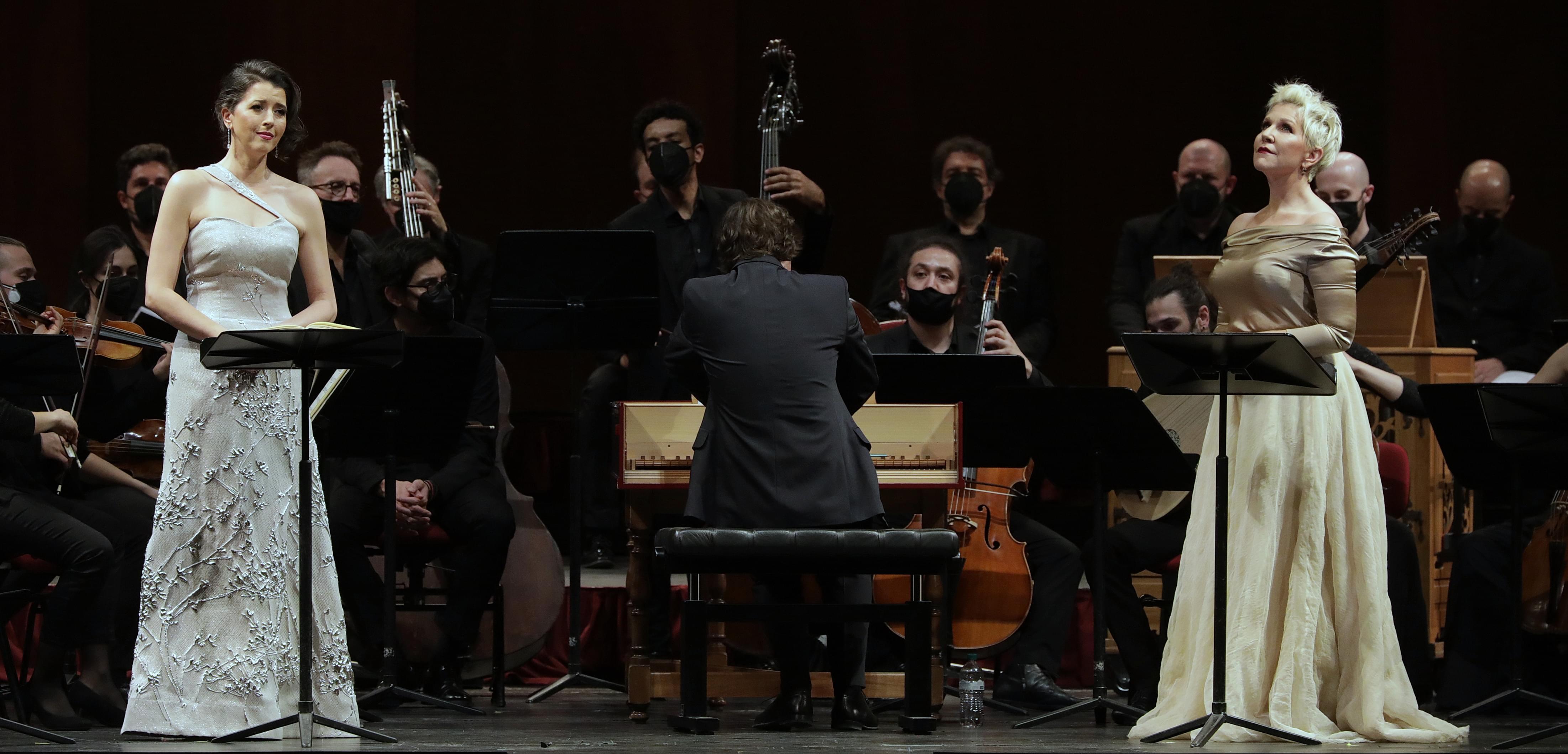
Lisette Oropesa, schwarze Locken, grau-silbriges Abendkleid, sang die Titelrolle. Sie hat mit ihrem Strahle-Sorpan als Konstanze in der Wiener Staatoper die Herzen des Publikums im Sturm erobert. Hier muss sie die „Tugendboldin“ (wie man Händels Heldin bezeichnet hat) interessant machen. Sie tut es so weit wie möglich mit Stimme, Technik und lebhaftem Minenspiel, dessen sich auch alle anderen Sänger bedienen: Wenn man das Ganze schon nicht spielen darf (das Programmheft kündigt allerdings eine szenische Aufführung mit dieser Besetzung irgendwann irgendwo an), dann muss man doch wenigstens zeigen, wie man fühlt und leidet. Leidet vor allem, denn Theodora wird verfolgt, soll zur Prostitution gezwungen werden, will das Opfer des Didymus, der sie retten möchte, nicht annehmen… kurz, selbst wenn man den englischen Text nicht mitliest, weiß man doch nach der Inhaltsangabe worum es geht. Tragisch.

—  Renate Wagner  •  Online Merker

La traviata (Violetta Valery)

I’ve rarely heard a Covent Garden crowd explode like they did at Royal Opera's latest Violetta

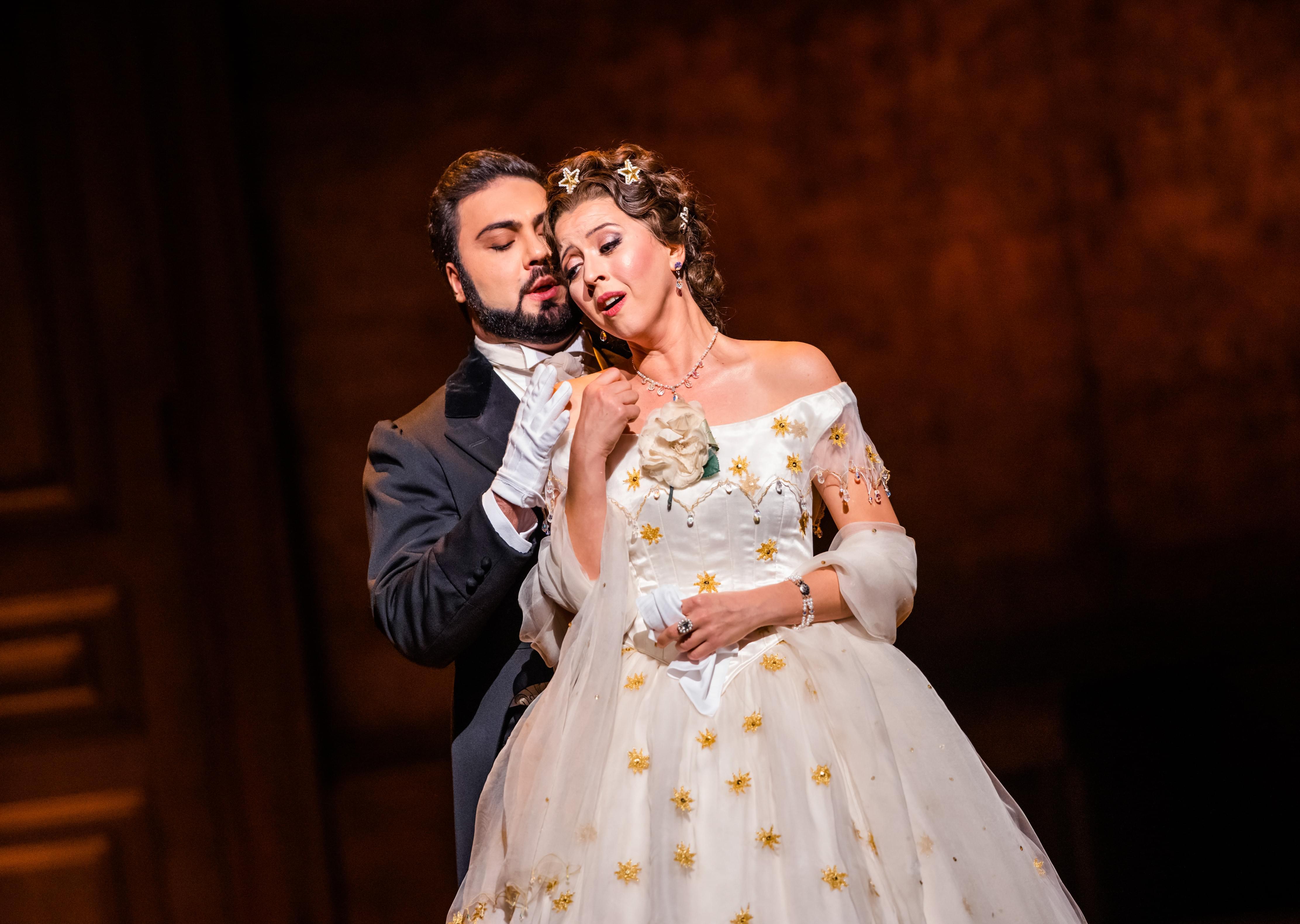
Lisette Oropesa is the Violetta of your dreams: spirited, dignified, and singing with the sweet, liquid lyricism of a blackbird before daybreak.  I’ve rarely heard a Covent Garden crowd explode like they did at the end of Oropesa’s ‘Sempre libera’, and even more rarely with such good reason.

—  Richard Bratby  •  The Spectator

The perfect Traviata in the Royal Opera House

Dabei wird es wohl schwierig sein, die makellose Leistung von Lisette Oropesa zu übertreffen. Die amerikanische Sopranistin ist ein Phänomen, Publikumsliebling und eine der großen Verdi-Sängerinnen der Gegenwart. Dies konnte sie bereits vor einigen Wochen als Gilda in Rigoletto beeindruckend demonstrieren.

Was zeichnet ihre Violetta aus? Eine atemberaubende Klarheit in der Höhe, technische Perfektion und die Fähigkeit, die Partie bis in die kleinsten psychologischen Verästelungen auszudeuten. Von der fliederhaften Leichtigkeit des Duetts „Un dì, felice, eterea“ bis zum letzten, schmerzhaften Aufbäumen im letzten Akt („Addio del Passato“) gelingt es ihr, Höhen und Tiefen ihrer Figur perfekt darzustellen.

—  Andreas Schmidt  •  Klassik Begeistert

Londra, Royal Opera House – La traviata (con Lisette Oropesa)

Ne risulta un ritratto completo dell’evoluzione del personaggio di Violetta, sicuramente una delle più efficaci nella lunga storia di questo allestimento. Nel primo atto, Oropesa mostra una bella padronanza tecnica dello strumento con un buon controllo del fiato e senza nessuno sforzo nel dispiegare le fioriture di “Un dì felice, etera”, così come le agilità della cabaletta “Sempre libera” dove centra il Mi bemolle sopracuto, mentre in “Follie! Follie! Delirio vano” Oropesa trasmette quella frenesia e quel turbamento latente che agitano il personaggio. Lasciatasi alle spalle le difficoltà tecniche del primo atto, la voce inizia ad acquisire maggior colore e spessore interpretativo. Dopo il confronto con Germont, Oropesa esordisce in “Ah, dite alla giovine” con una lunga e sostenuta mezzavoce in piano dal legato curatissimo (uno dei momenti musicali più belli della serata), a cui si oppone poi la disperazione di “Morrò! Morrò!”, enfatizzata da un battito di pugni sul tavolo.

—  Pietro Dall'Aglio  •  Conessi all'Opera

Lisette Oropesa Dazzles as Violetta in La traviata at the Royal Opera House, Covent Garden

Oropesa is a Violetta with everything as her intricate portrayal of the character is just as mesmerising as her superlative singing. The various situations, moods and states of health that Violetta finds herself in mean that the demands placed on the singing and acting are constantly changing, yet Oropesa remains thoroughly convincing from start to finish. In arias such as ‘Sempre libera degg’io’ the underlying sumptuousness in her sound is complemented by complete mastery of technique and phrasing so that it positively glistens and gleams. On the other hand, in ‘Addio, del passato bei sogni ridenti’, the inherent security in her voice is paradoxically used to convey the most convincing image of frailty. Her acting is also effective as even her arm gestures are in keeping with the wider picture, whether palms are facing outwards so that arms follow the curve of her dress, or hands are coming together as if the emotion she is feeling is so strong she can practically cradle it.

—  Sam Smith  •  Opera Online

La traviata @ Royal Opera House, London

Given that there are six sopranos scheduled to sing Violetta this run, that will be of paramount importance. Having caused a sensation with her superbly sung Gilda (Rigoletto), which opened the season, Lisette Oropesa returned to perform Violetta for the first time at Covent Garden, and rightly brought the house down. Most of the world’s most illustrious sopranos have graced this staging over the years, but you’d have to go back a long way to find one with such prodigious talents as Oropesa, who embodies the role so fully.

With a rock-solid technique, she sounded completely at ease across every facet of the role – thrilling coloratura in ‘Sempre Libera’, dispatched with pinpoint accuracy and perfectly tuned runs, wonderfully spun lines, perfect breath control – and acted the role as if her life depended on it. Deeply moving in her Act II ‘Dite alla giovine’, heart breaking in the final act’s ‘Addio del passato’, she capped her thrilling interpretation with an emotionally shattering ‘Parigi, o cara, noi lasceremo’, alongside her former lover, Alfredo, which left few, if any, dry eyes in the house. Without a doubt she is one of the finest, most complete Violettas to grace this staging in its almost 30 year history.

—  Keith McDonnell  •  Music OMH

Lisette Oropesa’s Violetta makes this umpteeenth revival of the Royal Opera’s La traviata unmissable

From then on there was greater warmth, emotion, passion, heartbreak and despair as Oropesa’s commitment to the character became evident and she totally won over the audience to deserve the standing and cheering there was at her curtain call. Her ‘Alfredo, Alfredo, di questo core non-puoi comprendere tutto l’amore’ at the end of Act II was dignified and deeply affecting. Later when she relinquishes her love for Alfredo to the girl he will eventually marry (‘Prendi: quest’è l’immagine’) it was heartrending. 

—  Jim Pritchard  •  Seen and Heard International

A standing ovation for Lisette Oropesa in the Royal Opera House’s revival of La traviata

In Act 2, Oropesa found a little more colour and warmth, making us feel, through her command of the legato line and her sensitivity to the text, her very human struggle to deny mortality and fate.  She paced the tension brilliantly, revealing the anguish of love relinquished and a heart broken.  Perhaps she cannot rely on an innate lyrical quality to convey Violetta’s passion and despair, but Oropesa is a natural singing-actress, and the pathos of Act 3 was heart-wrenching.  The expressive details were emphasised but not exaggerated, even if she looked as hollowed out and haunted as a phantom.  Indeed, this fragile Violetta was so evidently close to death that it was painful to endure her memories and her prayer, even as it was beautiful to hear them.  In ‘Addio del passato’, despite the stunning soaring lines, somehow Oropesa seemed to intimate a body on the cusp of breathless collapse.  Even the depiction of the momentary, delusory belief in recovery, known as spes phthisica, was more convincing than I remembered from previous performances, the surge of adrenaline sending the languishing Violetta spinning around the room, only to slump, lifeless, into Alfredo’s well-timed embrace.

—  Claire Seymour  •  Opera Today

La Traviata REVIEW: Lisette Oropesa breathes new life into Verdi's most popular opera

I cannot remember when I last saw the entire audience at the Royal Opera House rise to their feet to applaud a singer, but rarely can a full-house standing ovation have been better merited than the one given to Cuban-American soprano Lisette Oropesa on the opening night of Verdi’s La Traviata on 27 October.

This singer has everything: a beautiful voice, flexible enough to convey great extremes of emotion, superb acting ability, and the ability to dominate the stage and captivate the audience totally. Even more remarkably, this was the 17th revival of Richard Eyre’s glorious 1994 production of Verdi’s most popular opera, yet thanks to Oropesa’s stunning performance, it looked fresher than ever.

—  William Hartston  •  Daily Express

Le Royal Opera House continue de raviver La Traviata de Richard Eyre

Lisette Oropesa suspend le souffle du public chaque fois qu'elle ouvre la bouche et l'assistance aurait visiblement souhaité un bis pour "Sempre libera". Le contrôle des aigus et suraigus parachève celui de la ligne vocale au point de ne plus sembler surprendre. Mais ce rôle permet aussi d'apprécier le registre grave mélodieux de la soprano. Les deux rôles chantés par Oropesa cette saison à Covent Garden (Violetta et Gilda) ont en commun d'opérer une transition au cours de la soirée entre les qualités virtuoses et une concentration vocale à l'intensité du drame, moins brillante et plus tragique.

—  Mark Everist  •  Olyrix

La Traviata review – Oropesa and Avetisyan are exceptional in impassioned Verdi

As with her Gilda, Oropesa welds sound with sense to create a characterisation of great depth and subtlety. Vocally, Violetta holds no terrors for her: the reckless coloratura of Act I is admirably secure and capped with a dazzling high E flat; the lyricism with which she yields to the moral demands of Christian Gerhaher’s Germont is at once heartbreaking and exquisite; and the emotional and physical anguish of the final scenes are all the more powerful for being etched with such unsentimental restraint. Suggesting fragile beauty on stage, she realises the breathlessness of tuberculosis – and, tellingly, the panic that accompanies it – with unsparing vividness, and throughout we really do believe in the intensity of her feelings for Alfredo and their power to transform and overwhelm her.

—  Tim Ashley  •  The Guardian

Lisette Oropesa's Violetta proves to be one of the greats at Covent Garden

last night, we were to hear Lisette Oropesa, a soprano at the top of her game whose Violetta blew away audiences in Madrid last year as well as at The Met. She did not disappoint.

The keystone of her performance was a truly formidable level of technique. Whatever technical aspect you talk about – breathing, placement of vowel sounds, details of Italian diction, legato, timbre, emphasis of bel canto phrasing or many more – Oropesa had them all under control, with supreme confidence in her ability to make her voice do anything she wanted it to. Technique brings freedom: the freedom to choose the exact interpretation of every phrase and to know that it’s going to come out exactly the way she wants it to. Opera singers are constantly making difficult decisions and Oropesa seemed to make every one in a way that was musically and dramatically felicitous. I’ll give just one example: in “Addio, del passato”, when Violetta bids goodbye to the past from her deathbed, she gasps for breath between phrases. How loud to make the gasp? Too loud and you break the musical flow, maybe sounding contrived. Too soft and you sound too healthy. Oropesa nailed the balance exactly right – as she did in hundreds of other places.

With that musical freedom came an ability to make every word of the role count, whether it’s the glitter of Act 1, the cheerfulness turning to despair of Act 2 scene 1, the impossibility of an exit from her grief at the card playing scene or the inevitability of her terminal illness of Act 3. Her performance convinced at every point even as we enjoyed the music.

—  David Karlin  •  Bachtrack

La Traviata “Exhilarating performance by Lisette Oropesa”

Oropesa shows total command of her vocal instrument, thrilling with her expansive dynamic and expressive range. Dramatically, she is at her best in the heart-rending final act, as Violetta in the final stages of consumption, clinging to the hope of a final meeting with her beloved Alfredo (Liparit Avetisyan).

—  Inge Kjemtrup  •  The Stage

La traviata review — a star shines in the Royal Opera’s Verdi revival

Bob Crowley’s sets, famously marked by heavily architectural semi-circular structures choked with objects that get in the way (banquettes, a gambling table, hoop skirts), never seemed to pin Oropesa to the spot as it did with other performers. In Act I she vibrated with life and young innocence, hitting the coloratura heights in the climactic Sempre libera without the brilliance ever seeming forced. The open warmth of her tone, lack of affectation and gentle half-voice allowed her to easily display unfettered hurt and vulnerability, much needed as the libretto carved from the Alexandre Dumas play La Dame aux camélias presses on.

—  Geoff Brown  •  The Times

Rigoletto (Gilda)

Royal Opera London - a “rigoletto” like in the cinema

But the vocal sensation of the evening was undoubtedly the Gilda of the American soprano Lisette Oropesa. Her lyrical coloratura soprano sounded that evening with such impeccable purity and lived passion that the pampered Covent Garden audience was swept away to true storms of applause. She is perhaps the best Gilda I have ever admired worldwide.

—  Charles E. Ritterband  •  Klassik Begeistert

Cursed by man and nature

It is next to impossible to imagine a more affecting Gilda than Oropesa. The stylishness, sweetness, tenderness, flexibility and expressivity of her singing is breathtaking

—  Anna Picard  •  The Times Literary Supplement

London, Royal Opera House - Rigoletto

Lisette Oropesa is without a doubt the highlight of the cast. She is a never cloying and very credible Guild in communicating fragile curiosity, palpitating and naive love, violated innocence and unconditional sacrifice for the love of the father. Highlights are her "Caro nome" where the trills (which almost become one with her tight and so peculiar vibrato) truly capture the beating of Gilda's heart, "Tutte le feste" from the lyrical and vulnerable abandonment and the final duet with Rigoletto “Lassù in cielo”, very moving. One would have expected a much smaller live voice, especially in a large room like Covent Garden, but was pleasantly surprised. Despite some thinning in high notes, the voice is very well projected and perfectly audible in all moments of the ensemble, without ever being covered by the orchestra and colleagues. Oropesa takes care of the legato well and has a taste for phrasing, which is never boring.

—  Pietro Dall'Aglio  •  Conessi all'Opera

First New Production of Rigoletto in Twenty Years at the Royal Opera House, Covent Garden

 t is, however, Lisette Oropesa, with her beautifully toned sound, who stands as the first among equals as she presents a Gilda who is totally overwhelmed by her delusion that the Duke really loves her.

—  Sam Smith  •  Opera Online

Rigoletto at the Royal Opera House review

As Gilda, the American soprano Lisette Oropesa, one of today’s star coloraturas, is the most vocally convincing of the central trio with her needlepoint accuracy and penetrating high notes, easily riding the orchestral tumult of the climactic Storm trio.

—  Hugh Canning  •  The Sunday Times

Royal Opera House 2021-22 Review: Rigoletto

Lisetta Oropesa remains one of the leading lyric coloraturas working today. There is richness and oaky color in her lower register – redolent of Callas – which gives the character a power and gravitas that twittering glittering approaches rule out. Her “Caro nome” received a thunderous reception, and most of the passagework and high notes shone – particularly that trill

—  Benjamin Poore  •  Opera Wire

BWW Review: RIGOLETTO, Royal Opera House

Oropesa gets to the heart of Gilda's tragedy - that in protecting her, her father left her open to the first man to pay her any attention. Should he have trusted his intelligent and beautiful daughter to swim with the sharks in the palace? The time had to come, but "Tomorrow" is often the easiest answer for any parent when a child must be sent out into a hostile and risky world. Oropesa's huge reception at the curtain underlined how emotional was her connection to the audience and how magnificently she sang the role.

—  Gary Naylor  •  Broadway World

A striking Rigoletto opens Oliver Mears' account at The Royal Opera

Both Álvarez and Oropesa are great actors. Oropesa also happens to be the finest lyric coloratura in the world today. Her soprano is quite dark lower down – hers is no tweetie-pie Gilda – and “Caro nome” revealed rock solid technique including an excellent trill. She narrowed her voice daringly fine at the top, but just within the bounds of control.

—  Mark Pullinger  •  Bachtrack

Rigoletto

Lisette Oropesa has all Gilda’s notes at her command and manages the tricky task of conveying her character’s almost terrifying innocence.

—  George Hall  •  The Stage

Rigoletto, Royal Opera review - routine clouds the best in this season opener

Charismatic, though, he isn’t. Lisette Oropesa doesn’t have a huge amount to go on as the silly girl who loves her rapist to the end, but her lyric soprano – fuller than usual in this role – is engaged in a fascinatingly different “Caro nome” from the coloratura.

—  David Nice  •  The Arts Desk

Rigoletto, Royal Opera, review: thrilling music, ascetic sets and a truly grotesque doll

There is no doubt where the vocal triumph of the evening lies. This is Lisette’s Oropesa’s first Gilda on a British stage: girlish and unaffected, it is a wonderfully complete piece of singing, her “Caro nome” precise and emotional in every detail.

—  Nicholas Kenyon  •  The Telegraph

Rigoletto at the Royal Opera House review - worth the 30 year wait

In her celebrated aria Caro nome, Lisette Oropesa succeeds in showing us both the virtuous flower and, with a flash of bare legs and an innocent roll on her bed, the sensual attraction she feels for the duplicitous duke. The extravagant ornamentation of the aria is delivered superbly, complete with real trill, yet with delicacy and subtlety. 

—  Barry Millington  •  Evening Standard

Rigoletto review – Oropesa is a matchless Gilda in powerful new take on Verdi’s tragedy

Oropesa makes a matchless Gilda, singing with an extraordinary beauty of tone and understated depth of feeling: this really is one of the truly great performances.

—  Tim Ashley  •  The Guardian

Rigoletto, Royal Opera House, London, review: A wickedly effective new production

Cuban-American soprano Lisette Oropesa’s Gilda has a fullness of tone which simply grows in beauty as she duets with the Duke, then launches into her ecstatic reverie, ‘Caro nome’.

—  Michael Church  •  iNews

Great new production of ‘Rigoletto’ reopens the Royal Opera

Lisette Oropesa as Gilda was simply glorious, perhaps the finest coloratura soprano in the world today. 

—  Mark Ronan  •  The Article

The Royal Opera – Season Opening – Oliver Mears’s new production of Verdi’s Rigoletto

Lisette Oropesa gave Gilda everything: she was warm voiced with her father, later steely determined, and ultimately fragile as she implores Him in Heaven for guidance, showing us the real Gilda.

—  Classical Source  •  Classical Source

Time will tell if Oliver Mears’s new Rigoletto for the Royal Opera will reveal more

Let’s start from the one absolute stellar contribution: that of Lisette Oropesa. After she cancelled singing Elvira (I puritani) in Gstaad recently, one did wonder if she would (a) show and (b) be at her best. Show she did, and this was the best Gilda I, for one, have heard. Her voice is beautifully pure and agile yet has a fullness that carries right to the back of the theatre. Her ‘Caro nome’ was a showstopper; she has an innocence, and yet we feel that underneath that is a knowing which is powerful.

—  Colin Clarke  •  Seen and Heard International

Oliver Mears’ Rigoletto at Covent Garden: a superb drama of darkness and light

Oropesa communicates both Gilda’s youthful sensuality – as she reclines on her bed, stroking her legs as she dreams of her beloved ‘Gualtier Maldè’, it’s clear that she’s not as innocent as her father thinks – and traumatised disillusionment.  Oropesa is simply superb: ‘Caro nome’ was beautifully ornamented and bravely, brilliantly executed.  The coloratura soprano absolutely deserved her thunderous ovation. 

—  Claire Seymour  •  Opera Today

Rigoletto review — thrilling new production opens the Royal Opera season

Lisette Oropesa is simply the most believable Gilda I have seen; not the most voluptuous voice, but used to devastatingly expressive effect. Her mixture of fragility and self-sacrifice, transferred from one controlling monster to another, is heart-rending.

—  Richard Morrison  •  The Times

La Traviata (Violetta Valery)

La Fantôme de l'Opéra

Reste Lisette Oropesa. Nous suivons depuis très longtemps cette chanteuse éblouissante et de nouveau elle fascine par la facilité technique, par l’éclat d’une voix d’une fraicheur insolente sans aucune faille. Nous avions déjà admiré sa Violetta bien plus traditionnelle à Vérone. Dans cette production et avec cette direction elle est au rendez-vous en adaptant la manière de chanter à la vision du personnage. Son chant illumine toute la représentation : le premier acte éperdu et haletant, le deuxième désespéré, y compris musicalement car Gatti refuse de se complaire dans le lyrisme insistant mais plutôt le "précipité" (au sens chimique) du drame : elle est dépassée, presque empêchée de chanter « comme on l’attend » et c’est aussi déchirant. Les plus désespérés sont les chants les plus beaux2…
Son troisième acte est absolument exemplaire dans son rôle de jeune femme massacrée par la vie, la voix a une fraicheur tragique, et du coup presque inutile – de cette voix cristalline il ne sortira que la mort et le désespoir. Elle sait aussi se plier à une nouvelle approche, moins démonstrative et plus « vécue », plus réaliste que d’habitude.

—  Wanderer  •  Wanderer

Violetta filmada entre bambalinas

Lisette Oropesa tiene el phisique du rôle y viste perfectamente a su Violetta; su técnica vocal es inmaculada y, si se puede detectar en ella alguna ligera vacilación, ello es debido a las continuas repeticiones o interrupciones impuestas por el propio rodaje que obstaculiza el mantenimiento de la necesaria concentración. Fundamentalmente se trata de una soprano lírico-ligera que sin embargo consigue afrontar los momentos más dramáticos con una interpretación basada más en lo sutiles matices psicológicos que en los grandes efectos dramáticos.

—  Mauro Mariani  •  Opera Actual

Oltre un milione di applausi per la “Traviata” di Martone

Lisette Oropesa, statunitense diorigine cubana, é l’incarnazione di Violetta. Vocemagnifica, aderisce totalmente al personaggio, élibera di muoversi, di danzare. La sua Violetta é disperata, carnale, gigante. L’amante a cui dedica quell’“amami Alfredo”, che commuove fino alle lacrime chi ascolta.

—  Fabiana Dallavalle  •  Messaggero Veneto

Il turbine e il vuoto

Ascoltare una tale sapienza nel tratteggiare il personaggio di Germont è una rarità che non pone comunque in ombra l’ammirazione per la Violetta di Lisette Oropesa. Canta bene, non forza mai l’emissione, che suona naturale, duttile, capace di esprimere una sincera partecipazione e un palpito personale anche nell’incalzare suggerito da Gatti. Anzi, proprio il fatto che non ci sia spazio per effetti e abitudini, che tutto si asciughi, pone in evidenza la fragilità iniziale, quella vibrazione nervosa che poi si fa sempre più intensa, consapevole, determinata e dolorosa anche nella recitazione, franca ed efficace. Alla frenesia degli eccessi segue il trasporto sincero senza artificio, mentre il trucco, le luci e la fotografia mettono bene in evidenza le espressioni del volto, tutt’uno col canto.

—  Roberta Pedrotti  •  L'ape musicale

La Traviata dell’Opera su Rai3: esperimento di creatività premiato da un milione di telespettatori

Violetta è interpretata in modo superbo dal soprano Lisette Oropesa che ha dato anima, voce e corpo questo film.

—  Simona Antonucci  •  Il Mattino

Violetta nel traffico di Roma Traviata, bellezza senza eta

Violetta é interpretata in modo superbo dal soprano Lisette Oropesa che ha dato anima, voce e corpo questo film.

—  Leonetta Bentivoglio  •  La Repubblica

Un/altra Traviata nel vuoto del teatro

La complessita della protagonista viene esaltata dal canto recitato di Lisette Oropesa

Lisette Oropesa, statunitense di origini cubane, é una Violetta da manuale: recita con il canto. Le sfaccettature di un personaggio complesso prendono vita momento per momento.

—  Dino Villatico  •  Il Manifesto