
:format(webp)/https://lisetteoropesa.com/media/gallery/2020/teatro-alla-scala-a-riveder-le-stelle/06-lisette-oropesa_header.jpg)
Career
Every engagement since 2005, newest first. Upcoming performances are on the Schedule.
2021


Theodora

Extase et ravissement, Theodora de Haendel au Théâtre des Champs-Elysées
Si bien que le couple qu’il forme avec Lisette Oropesa gagne peu à peu en crédibilité pour atteindre des sommets lors des derniers duos. La soprano déjà célèbre sur les scènes rossiniennes les plus fameuses, met ici en oeuvre sa parfaite vocalité, son timbre fruité, son intériorité pour dresser un portrait à la fois beau, vrai et déchirant de cette jeune martyre capable de tutoyer les anges.
The couple formed with Lisette Oropesa gradually gains credibility, reaching new heights in the final duets. The soprano, already famous on the most notable Rossinian stages, here displays her perfect vocal skills, her fruity timbre, her innermost feelings to paint a portrait that is at once beautiful, true and heartbreaking of this young martyr capable of communing with the angels.
—
Bénédicte Palaux-Simonnet
•
Crescendo Magazine
Theodora
:format(webp)/https://lisetteoropesa.com/media/gallery/2021/teatro-alla-scala-theodora/02-lisette-oropesa-joyce-didonato.jpg)
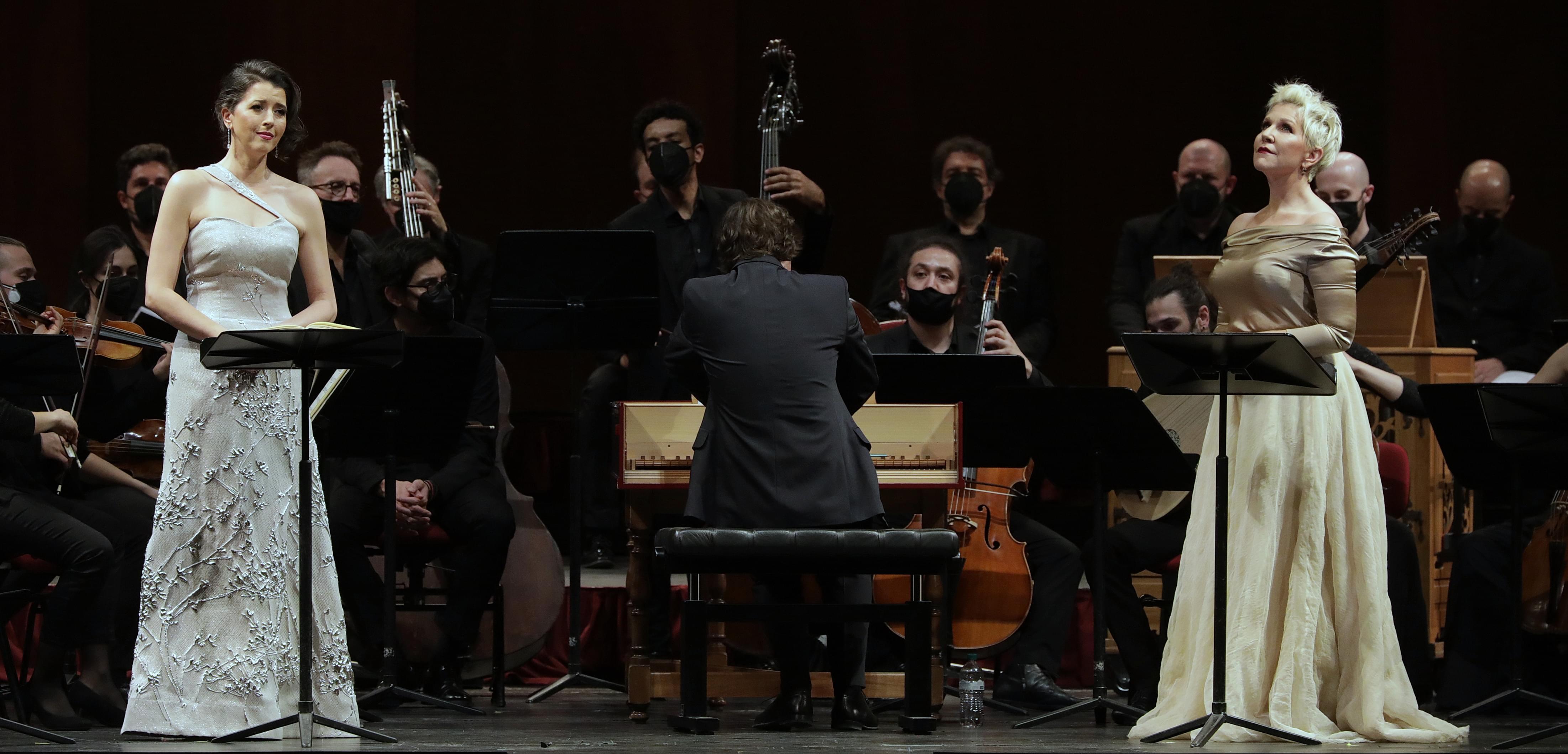
La “nobile semplicità” di Theodora alla Scala
Il soprano Lisette Oropesa ha dato vita ad una Teodora — la nobile cristiana prima sottratta al martirio dall’amante, il soldato Didimo, e poi pronta a morire insieme a lui quando scopre che a sua volta l’uomo è stato condannato — piena di sofferenza e di incanti vocali. Lo si è apprezzato già nella prima aria e lo si è apprezzato nel corso dell’intero oratorio, in particolare nella celebre aria «in catene» con traversiere obbligato all’inizio della seconda parte, un vero e proprio colpo di genio della fantasia händeliana, con il traversiere che in alcune battute quasi sembra perdersi nel silenzio di tutti gli altri strumenti.
Soprano Lisette Oropesa brought to life a Theodora — the Christian noblewoman first saved from martyrdom by her lover, the soldier Didymus, and then ready to die with him when she finds out he has been condemned in turn — full of suffering and vocal enchantments. This was appreciated from her very first aria and was enjoyed throughout the entire oratorio, particularly in the famous "in chains" aria with obligatory flute at the beginning of the second part, a true stroke of genius from Handel's imagination, where in some measures, the flute seems to almost get lost in the silence of all the other instruments.
—
Luca Segalla
•
Revista Musica
Theodora

WIEN / Theater an der Wien: THEODORA
Lisette Oropesa, schwarze Locken, grau-silbriges Abendkleid, sang die Titelrolle. Sie hat mit ihrem Strahle-Sorpan als Konstanze in der Wiener Staatoper die Herzen des Publikums im Sturm erobert. Hier muss sie die „Tugendboldin“ (wie man Händels Heldin bezeichnet hat) interessant machen. Sie tut es so weit wie möglich mit Stimme, Technik und lebhaftem Minenspiel, dessen sich auch alle anderen Sänger bedienen: Wenn man das Ganze schon nicht spielen darf (das Programmheft kündigt allerdings eine szenische Aufführung mit dieser Besetzung irgendwann irgendwo an), dann muss man doch wenigstens zeigen, wie man fühlt und leidet. Leidet vor allem, denn Theodora wird verfolgt, soll zur Prostitution gezwungen werden, will das Opfer des Didymus, der sie retten möchte, nicht annehmen… kurz, selbst wenn man den englischen Text nicht mitliest, weiß man doch nach der Inhaltsangabe worum es geht. Tragisch.
Lisette Oropesa, with her black curls and grey-silver evening dress, sang the title role. She captured the hearts of the audience with her beaming Soprano as Konstanze in the Vienna State Opera. Here she must make the “Tugendboldin” (as Handel's heroine has been described) interesting. She does it as much as possible with her voice, technique, and lively facial expressions, which all the other singers also use: If you are not allowed to play the whole thing (however, the programme does announce a staged performance with this cast at some point somewhere), you must at least show how you feel and suffer. Suffer above all, because Theodora is being persecuted, is to be forced into prostitution, does not want to accept the sacrifice of Didymus, who wants to save her... in short, even if you don't read along with the English text, you still know from the synopsis what it's all about. Tragic.
—
Renate Wagner
•
Online Merker
La traviata (Violetta Valery)
:format(webp)/https://lisetteoropesa.com/media/gallery/2021/royal-opera-house-la-traviata/05-lisette-oropesa-liparit-avetisyan.jpg)
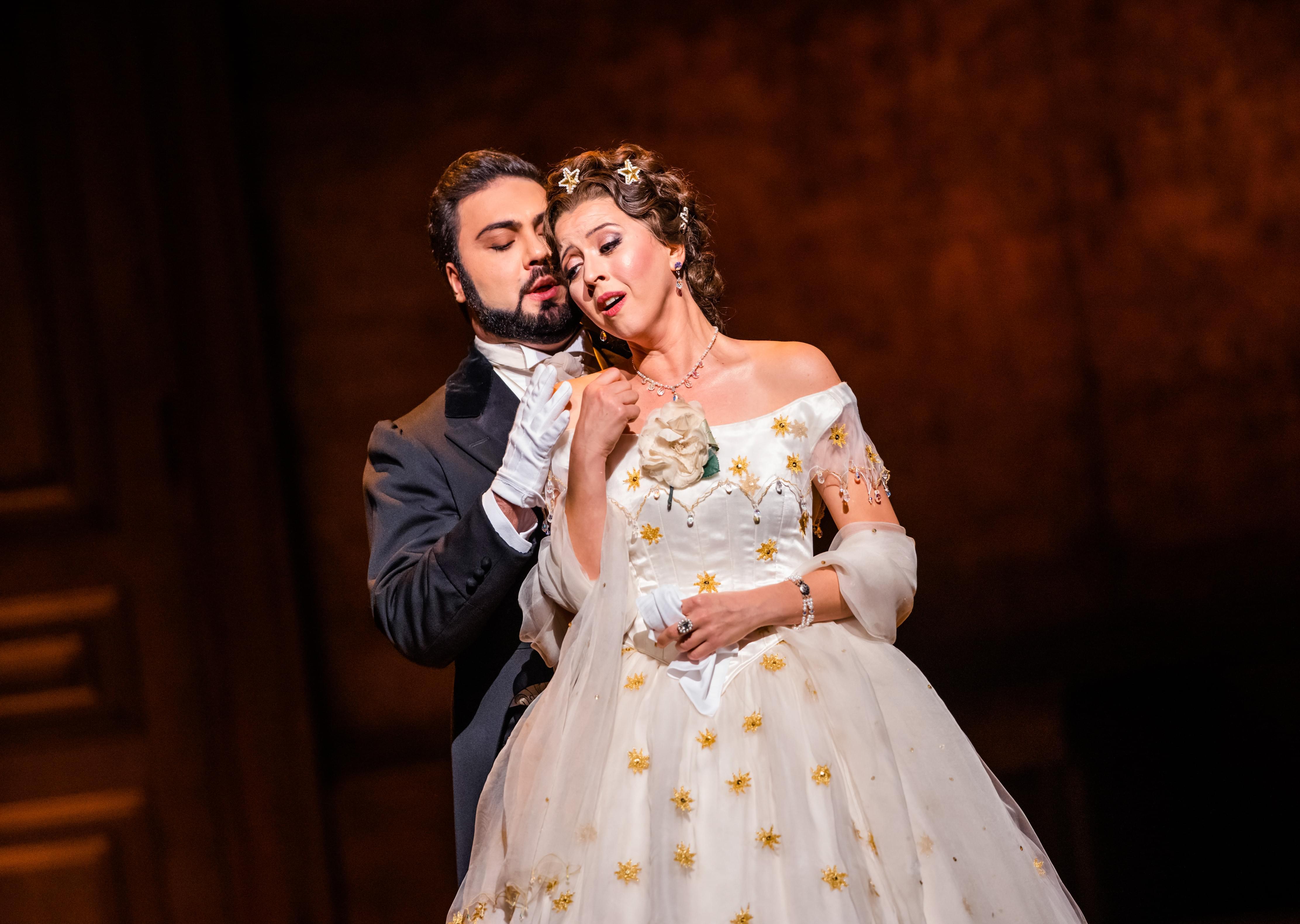
I’ve rarely heard a Covent Garden crowd explode like they did at Royal Opera's latest Violetta
Lisette Oropesa is the Violetta of your dreams: spirited, dignified, and singing with the sweet, liquid lyricism of a blackbird before daybreak. I’ve rarely heard a Covent Garden crowd explode like they did at the end of Oropesa’s ‘Sempre libera’, and even more rarely with such good reason.
—
Richard Bratby
•
The Spectator
Rigoletto (Gilda)
:format(webp)/https://lisetteoropesa.com/media/gallery/2021/royal-opera-house-rigoletto/03-lisette-oropesa-carlos-alvarez.jpg)
Royal Opera London - a “rigoletto” like in the cinema
But the vocal sensation of the evening was undoubtedly the Gilda of the American soprano Lisette Oropesa. Her lyrical coloratura soprano sounded that evening with such impeccable purity and lived passion that the pampered Covent Garden audience was swept away to true storms of applause. She is perhaps the best Gilda I have ever admired worldwide.
—
Charles E. Ritterband
•
Klassik Begeistert
La Traviata (Violetta Valery)
:format(webp)/https://lisetteoropesa.com/media/gallery/2021/teatro-dell-opera-di-roma-la-traviata/01-lisette-oropesa.jpg)
:format(webp)/https://lisetteoropesa.com/media/gallery/2021/teatro-alla-scala-theodora/01-lisette-oropesa-joyce-didonato.jpg)
:format(webp)/https://lisetteoropesa.com/media/gallery/2021/teatro-alla-scala-theodora/04-lisette-oropesa-joyce-didonato.jpg)
:format(webp)/https://lisetteoropesa.com/media/gallery/2021/teatro-alla-scala-theodora/03-lisette-oropesa-joyce-didonato.jpg)
:format(webp)/https://lisetteoropesa.com/media/gallery/2021/royal-opera-house-la-traviata/03-lisette-oropesa.jpg)
:format(webp)/https://lisetteoropesa.com/media/gallery/2021/royal-opera-house-la-traviata/14-lisette-oropesa.jpg)
:format(webp)/https://lisetteoropesa.com/media/gallery/2021/royal-opera-house-la-traviata/15-lisette-oropesa-liparit-avetisyan.jpg)
:format(webp)/https://lisetteoropesa.com/media/gallery/2021/royal-opera-house-la-traviata/16-lisette-oropesa-liparit-avetisyan-renata-skarelyte.jpg)
:format(webp)/https://lisetteoropesa.com/media/gallery/2021/royal-opera-house-la-traviata/17-lisette-oropesa-christian-gerhaher.jpg)
:format(webp)/https://lisetteoropesa.com/media/gallery/2021/royal-opera-house-la-traviata/04-lisette-oropesa.jpg)
:format(webp)/https://lisetteoropesa.com/media/gallery/2021/royal-opera-house-la-traviata/08-lisette-oropesa-stephanie-wake-edwards-blaise-malaba.jpg)
:format(webp)/https://lisetteoropesa.com/media/gallery/2021/royal-opera-house-la-traviata/07-lisette-oropesa-stephanie-wake-edwards-yuriy-yurchuk.jpg)
:format(webp)/https://lisetteoropesa.com/media/gallery/2021/royal-opera-house-la-traviata/06-lisette-oropesa.jpg)
:format(webp)/https://lisetteoropesa.com/media/gallery/2021/royal-opera-house-la-traviata/09-lisette-oropesa-renata-skarelyte.jpg)
:format(webp)/https://lisetteoropesa.com/media/gallery/2021/royal-opera-house-la-traviata/10-lisette-oropesa-renata-skarelyte-blaise-malaba.jpg)
:format(webp)/https://lisetteoropesa.com/media/gallery/2021/royal-opera-house-la-traviata/12-lisette-oropesa.jpg)
:format(webp)/https://lisetteoropesa.com/media/gallery/2021/royal-opera-house-la-traviata/11-lisette-oropesa.jpg)
:format(webp)/https://lisetteoropesa.com/media/gallery/2021/royal-opera-house-la-traviata/13-lisette-oropesa.jpg)
:format(webp)/https://lisetteoropesa.com/media/gallery/2021/royal-opera-house-la-traviata/01-lisette-oropesa.jpg)
:format(webp)/https://lisetteoropesa.com/media/gallery/2021/royal-opera-house-la-traviata/02-lisette-oropesa.jpg)
:format(webp)/https://lisetteoropesa.com/media/gallery/2021/royal-opera-house-rigoletto/04-lisette-oropesa-carlos-alvarez.jpg)
:format(webp)/https://lisetteoropesa.com/media/gallery/2021/royal-opera-house-rigoletto/07-lisette-oropesa.jpg)
:format(webp)/https://lisetteoropesa.com/media/gallery/2021/royal-opera-house-rigoletto/01-lisette-oropesa-carlos-alvarez.jpg)
:format(webp)/https://lisetteoropesa.com/media/gallery/2021/royal-opera-house-rigoletto/02-lisette-oropesa-carlos-alvarez.jpg)
:format(webp)/https://lisetteoropesa.com/media/gallery/2021/royal-opera-house-rigoletto/06-lisette-oropesa.jpg)
:format(webp)/https://lisetteoropesa.com/media/gallery/2021/royal-opera-house-rigoletto/05-lisette-oropesa-liparit-avetisyan.jpg)

La Fantôme de l'Opéra
Reste Lisette Oropesa. Nous suivons depuis très longtemps cette chanteuse éblouissante et de nouveau elle fascine par la facilité technique, par l’éclat d’une voix d’une fraicheur insolente sans aucune faille. Nous avions déjà admiré sa Violetta bien plus traditionnelle à Vérone. Dans cette production et avec cette direction elle est au rendez-vous en adaptant la manière de chanter à la vision du personnage. Son chant illumine toute la représentation : le premier acte éperdu et haletant, le deuxième désespéré, y compris musicalement car Gatti refuse de se complaire dans le lyrisme insistant mais plutôt le "précipité" (au sens chimique) du drame : elle est dépassée, presque empêchée de chanter « comme on l’attend » et c’est aussi déchirant. Les plus désespérés sont les chants les plus beaux2…
Son troisième acte est absolument exemplaire dans son rôle de jeune femme massacrée par la vie, la voix a une fraicheur tragique, et du coup presque inutile – de cette voix cristalline il ne sortira que la mort et le désespoir. Elle sait aussi se plier à une nouvelle approche, moins démonstrative et plus « vécue », plus réaliste que d’habitude.
Then there's Lisette Oropesa. We have been following this dazzling singer for a very long time, and once again, she captivates with her technical ease and the brilliance of a voice of brazen freshness without any flaws. We had already admired her much more traditional Violetta in Verona. In this production, and with this direction, she meets the expectations by adjusting her singing style to the vision of the character. Her singing enlightens the entire performance: the first act, frantic and breathless; the second, one of despair, including musically as Gatti refuses to indulge in insistent lyricism but rather focuses on the "precipitation" (in the chemical sense) of the drama: she is overwhelmed, almost prevented from singing "as expected," and this is also heart-wrenching. The most desperate songs are the most beautiful ones...
Her third act is absolutely exemplary in her role as a young woman ravaged by life, her voice has a tragic freshness, and thus almost pointless—for from this crystalline voice, only death and despair will emerge. She also knows how to adapt to a new approach, less demonstrative and more "experienced," more realistic than usual.
—
Wanderer
•
Wanderer