Reviews

Press for every engagement since 2005, newest first. The full record, with or without reviews, is under Career.

2024

Mozart Requiem

Requiem de Mozart recueilli au Théâtre des Champs-Elysées

Enfin, Lisette Oropesa déclame avec un solide legato, une prononciation impeccable et une égalité dans les registres, de longues phrases incarnées et défendues avec une émotion palpable, notamment son entrée et sa partie conclusive où la salle frémit avec elle de l’intensité du moment et de la gravité d’un texte musical aussi impérissable.

—  Philippe Scagni  •  Olyrix

Hamlet (Ophélie)

Hamlet, jak má být. V Salcburku koncertně včetně jednoho ‚showstopperu‘

V koncertním provedení této opery triumfovala v loňském ročníku Salcburského festivalu americká sopranistka Lisette Oropesa. Lze se tedy divit, že letos si vedení letní přehlídky objednalo hvězdnou pěvkyni do další „šílené role“? Určitě ne. Oropesa ve svém pěveckém projevu dokonale spojuje hlasovou lehkost a ohebnost, skvělou techniku a schopnost přesvědčit posluchače, že dokáže pracovat s hlasovým rozsahem a dynamikou, jakkoliv se jí zamane. Sympatická pěvkyně evidentně dělala vše proto, aby v roli Ofélie působila jako disciplinovaná členka celkově velmi vyrovnaného ansáblu, ale málo platné, právě ona vždy dění na jevišti doslova rozsvítila. A její scéna šílenství „Et maintenant écoutez ma chanson … Le voilà! Je crois l´entendre“, kterou si vychutnala sice v koncertní róbě, ale pomuchlaná, rozcuchaná a bosá, to byl skutečný „showstopper“, po němž následoval několikaminutový nadšený aplaus publika. Není divu: tak brilantní kaskádu koloratur, za níž není jen smysl pro efekt, ale i pro drama a celkovou gradaci hudebního čísla, dnešní milovník belcanta opravdu často neslyší.

—  Robert Rytina  •  Klasika Plus

Hamlet konzertant

Die gesamte Aufführung war fulminant und lief durchweg auf höchstem Niveau ab. Musiker und Sänger im Chor und solistisch lieferten Hervorragendes ab. Wenn eine Künstlerin herausgehoben werden sollte, dann wäre dies Lisette Oropesa als Ophélie: Nach ihren Arien gab es nicht nur tosenden Applaus und Bravos, wie bei den anderen Sängern, bei ihr tobte die Felsenreitschule in einer ehrlich-ausgelassenen Begeisterung. Ihre lyrischen Koloraturen, die Flexibilität ihrer Stimme, die Schönheit des Klangs trotz der hohen musikalisch-gesanglichen Anforderungen – besonders in ihrer Wahnsinns-Arie im vierten Akt – berührten tief und waren unglaublich mitreißend.

Da das Publikum nach einigen Minuten nicht mit seinen Beifallsbekundungen aufhören wollte, gab der Dirigent dem Chor das Zeichen zum neuen Einsatz und setzte die Aufführung mit dem fünften Akt fort. Nicht enden wollender Applaus auch zum Schluss.

—  Brigitte Janoschka  •  Berchtesgadener Anzeiger

Salzburger Festspiele verhandeln die großen Fragen

Wenn eine Künstlerin herausgehoben werden sollte, wäre dies Lisette Oropesa als Ophélie: Nach ihren Arien gab es nicht nur tosenden Applaus und Bravos wie bei den anderen Sängern, bei ihr tobte die Felsenreitschule in einer ehrlich-ausgelassenen Begeisterung. Ihre lyrischen Koloraturen, die Flexibilität ihrer Stimme, die Schönheit des Klangs trotz der hohen musikalisch-gesanglichen Anforderungen – besonders in ihrer Wahnsinns-Arie im vierten Akt – berührten tief und waren unglaublich mitreißend.

—  Brigitte Janoschka  •  Mittelbayerische

An all-round triumph

Not surprisingly, Lisette Oropesa’s Ophélie has become one of her operatic calling cards in recent years, with numerous productions to her credit - including last year’s Paris Opera event, in which she starred opposite this evening’s Gertrude, Ève-Maud Hubeaux. The ideal combination of Oropesa’s limpid timbre, technical finesse, and a warmly-winning presence brought anticipated furore and a fully-deserved triumph for the soprano. In keeping with her Hamlet, Oropesa’s interpretation is wonderfully-balanced, moving from her opening Act 1 duet  Doute de la lumière  through Ophélie’s Act 2  lament, Sa main depuis hier n'a pas touché ma main!  to a wonderfully-shaped  Act 2 garden scene, Adieu, dit-il, ayez-foi!  - and further rising to the great drama of Act 3’s trio with Hamlet and Gertrude. The celebrated mad sccene is a natural show-stealer, and Oropesa brought to it quite consummate stage work to compliment an ideal filigran sweep in vocal range and dynamics - deservedly crowning her evening with a thundering ovation from the house.

—  Moore Parker  •  The Opera Critic

THOMAS, Hamlet – Salzbourg

Vrtuosité, légèreté, agilité, bien entendu, mais aussi couleurs dramatiques, endurance, et une grande facilité pour les vocalises, Lisette Oropesa possède tout cela et bien plus encore. Née et formée à la Nouvelle-Orléans en Louisiane, elle sera de retour à Paris dans les Puritains en janvier prochain. Son plaisir d’être en scène, très communicatif et stimulant pour ses partenaires, ajoute encore à sa popularité auprès du public, et c’est incontestablement elle qui, à la fin du spectacle, recueillera les plus spectaculaires faveurs de l’applaudimètre.

—  Claude Jottrand  •  Forum Opéra

Salzburger Festspiele: „Hamlet“ – Eindrucksvolle konzertante Wiedergabe

Unglaublich, welche Koloratur-Akrobatik Lisette Oropesa im besten vokalen Sinne bei ihrer großen Arie im 2. Teil hören ließ! Das Publikum geriet aus dem Häuschen.

—  Klaus Billand  •  Opern Magazin

Was für ein Wahnsinn

„Aus allen Logen prasselten Blumensträuße und Kränze wie Hagel.“ Hätte das Publikum der Salzburger Festspiele die Blumendeko vom Abendessen mitgenommen, auch Lisette Oropesa wäre wohl unter Blumen begraben worden, statt als Ophelia ins Wasser zu gehen, wie es der zugrundeliegende Stoff von Shakespeares „Hamlet“ vorsieht. Mitten in der Wahnsinnsszene des vierten Akts beginnt man in der Felsenreitschule mit den Füßen zu trampeln, muss sich Oropesa verbeugen, der Dirigent Bertrand de Billy die Fortsetzung der Vorstellung schließlich erzwingen.

Denn die Szene ist in der Tat irre, in den vokalen Anforderungen, die ihr Ambroise Thomas einkomponiert hat, nachdem sich Wahnsinn in der Oper gern in verrückten Koloraturen ausdrückt. Aber auch, weil Oropesa der Wahnsinn ist. Die Amerikanerin ist die momentan führende Sängerin im seltenen Fach des lyrischen Koloratursoprans. Was nichts anderes heißt, als dass sie einfach alles kann: Triller, Skalen, repetierte Spitzentöne von sensationeller Präzision – und dabei auch noch lyrisch klingen, herzwärmend, ergreifend. Faszinierend, wie weich ihre Höhen anfluten, noch faszinierender, wie sie die für die Uraufführungssängerin „nordisch“ angehauchte Ballade eindunkelt, ihr die schillernde Düsternis eines tiefen Sees gibt.

—  Michael Stallknecht  •  Süddeutsche Zeitung

Wo singen doch denken heißt

Anders als Soprane vom oft geschmähten Typus der „Ziersängerinnen“ hat die amerikanische Sopranistin Lisette Oropesa einen samtigen Sopran mit einem dunklen, matt-silbernen Timbre. Ophélies Klage über die erkaltete Liebe Hamlets – „Adieu dit-il, ayez foi“ – tauchte sie einen falb-fahlen, wie von einem matten Schleier umhüllten Klang von Schmerz und Trauer. In der Konfrontation mit Hamlet überzeugte sie durch dramatisches Agieren mit den Mitteln des verbalen Espressivo. Die zehn Minuten lange Szene, in der die in den Wahnsinn geflüchtete (oder getriebene) Ophélie von einer Wassernymphe singt, die Männer in den Tod lockt, gehört zu den berühmtesten Beispielen der Wahnsinns-Arie im 19. Jahrhundert. Welch expressive Spannung in dieser scheinbar dekorativen Musik verborgen ist, hat Maria Callas offenbart. Lisette Oropresa zeigte sich, ohne jede manieristische Anpassung, von ihr inspiriert. Sie führte ihre Stimme ebenso sicher durch Regionen, in denen die Stimme bis zum B und Cis gelangt, wie durch die ohne Zwitscherklänge verniedlichten Koloratur-Kaskaden des Walzer-Abschnitts.

—  Jürgen Kesting  •  Frankfurter Allgemeine Zeitung

Wahnsinnsfrau

Schon lang eine große Fangemeinde hat hier Lisette Oropesa, die nach ihrer umjubelten „Lucia di Lammermoor“ nun eine weitere legendäre Wahnsinnsszene der Opernliteratur gestalten darf. Und auch als Ophelia spart sie nicht mit perlenden Koloraturkaskaden und hell strahlenden Spitzentönen, die das Publikum in einen frenetischen Taumel versetzen und ihr bereits während der Aufführung nicht enden wollende Ovationen bescheren.

Da gibt es keinen Kniff in der Diven-Trickkiste, den Oropesa nicht beherrscht. Und doch würde es zu kurz greifen, ihr Porträt allein auf effektvolle Stimmakrobatik zu reduzieren. Weil sie auch die emotionale Seite Ophelias nie aus den Augen verliert und deren jugendliche Schwärmerei ebenso glaubhaft spüren lässt wie die Verzweiflung in der Todesszene, die sie in zart gehauchte Piano-Phrasen hüllt.

—  Tobias Hell  •  OVB Heimatzeitungen

Shakespeare als große Oper: Umjubelter „Hamlet“ in Salzburg

So wie auch, und ganz besonders, Lisette Oropesa. Wenn sie die Ophélie gibt, dann bleibt die Figur nicht bloß eine gläsern-zerbrechliche Femme fragile: Stattdessen erfüllt die Koloratursopranistin ihre einmal schlichten, dann wieder reich verzierten Kantilenen mit der Fülle und der Wärme einer Liebenden, die auf für sie unbegreifliche Weise enttäuscht wird und daraufhin in den Tod geht. Ein Hauch Cotrubas klingt da im Timbre an, eine Prise Gheorghiu – und doch ist Oropesa eine Diva eigenen Ranges, die ihre leuchtenden Spitzentöne in zartes Piano zurücknehmen kann: Das provozierte Jubelstürme schon nach ihrer Wahnsinnszene. 

—  Walter Weidringer  •  Die Presse

Konzertanter "Hamlet" in der Felsenreitschule: Der Dänenprinz auf Rachefeldzug

Die anspruchsvolle Rolle der Ophélie, die als Hamlets Braut unschuldig in dessen Rachepläne verwickelt wird und als "Verstoßene" im emotionalen Chaos Suizid begeht, liegt Lisette Oropesa gut. Von ihrer einsamen Wahnsinns-Szene mit Wechseln von Liebe zu Zweifeln und Verzweiflung, "À vos jeux, mes amis" als Höhepunkt der Oper konnte man nicht unberührt bleiben. Da hat man sich doch eine szenische Fassung herbeigewünscht, welche der hervorragenden Koloratursopranistin mehr Spielraum geboten hätte. Dennoch: das Publikum tobte.

—  Ernst P. Strobl  •  Salzburger Nachrichten

Triumph der Grand Opéra

Königin des Abends: Lisette Oropesa

Und eine überragt sie alle: die amerikanische Sopranistin Lisette Oropesa überflutet als Ophelia Orchester wie Ensembles mit ihrem glitzernden, berückend schönen Sopran, den sie mit atemverschlagender Perfektion in die höchsten Höhen führt.

Beim ohrenbetäubenden Jubel nach ihrer Wahnsinnsarie fürchtet man kurz um die Statik des Hauses und um den Fortgang der Oper.

—  Michael Atzinger  •  BR Klassik

Sein oder nicht sein? Wenn Oper zum musikalischen Thriller wird

Was Lisette Oropesa in dieser Partie leistet, ist fulminant. Virtuos perlen ihre Koloraturen. Das wie goldener Honig leuchtende Timbre ihres Soprans betört in den lyrischen Passagen. Da fehlt nichts. Ihre mit höchster Intensität vorgetragene Wahnszene versetzt das Publikum in Euphorie.

—  Kurier  •  Kurier

Concert

Lisette Oropesa, una estrella en Mallorca

Desde el inicio, la interpretación de Lisette Oropesa fue un despliegue de virtuosismo vocal y técnica impecable; la soprano estadounidense de origen cubano dejó una impresión indeleble en el público, mostrando gran capacidad para abordar tanto la coloratura compleja propia del bel canto como los repertorios más líricos, con una maestría propia del primer nivel operístico. En “Come dolce all’alma mia” de Tancredi de Rossini, demostró un control técnico evidente, con una coloratura cristalina y precisa que realzó la agilidad de su voz. Su gran dominio del fiato, permitiéndole mantener largas frases con una afinación perfecta, quedó especialmente patente en “Oh! Quante volte” de I Capuleti e i Montecchi de Bellini. En el aria “Oh nube! Che lieve per l’aria” de Maria Stuarda de Donizetti, la soprano brilló con una línea de canto elegante y un color vocal homogéneo. Su interpretación de “En vain j’espère” de Robert le diable de Meyerbeer mostró su versatilidad y capacidad para transmitir la complejidad emocional del personaje, siendo recompensada con grandes aplausos por parte del público.

—  Eugènia Gallego  •  Opera Actual

Lisette Oropesa brilla con luz propia en la clausura del Festival Cap Rocat

Fue el preludio antes de acompañar, juntos, a la protagonista, una de las sopranos más solicitadas del mundo y que demostró el motivo de su apretada agenda. Hablamos de Lisette Oropesa, quien deslumbró a propios y extraños con un repertorio variado en el que obras maestras de grandes como Donizetti, Verdi, Bellini o Rossini desfilaban por su garganta moldeadas por una voz que une la suavidad del terciopelo y la agradable frescura de una brisa veraniega.

—  P. Pellicer  •  Ultima Hora

Salvas de virtuosismo en el Festival Cap Rocat: Lisette Oropesa reina en la fortaleza mallorquina

Entre todas estas piezas, todas interpretadas a un nivel sinigual que dejó fascinado a un publico totalmente entregado, destacó Oh, nube! Che lieve per l'aria, de la obra de Donizetti Maria Estuarda, que la soprano interpretará por primera vez en su carrera en el Teatro Real la próxima temporada.

Valga subrayar los bises con los que Oropesa concluyó una velada redonda. Después de volver sobre sus pasos, la soprano tomó la palabra para compartir una información de la que había sido conocedora días antes. Su bisabuela, nacida en la isla de Mallorca, era el último eslabón en unirse a un largo linaje de mujeres ligadas a tierras hispanoparlantes en la familia de la artista.

Con motivo de ese lazo, que continúan la cantante, de origen cubano, y su madre, española de nacimiento, interpreto como colofón final la Romanza de María la O, de la zarzuela del compositor cubano Ernesto Lacuona, Maria la O y, por último, Las carceleras de la zarzuela cómica española Las hijas de Zebedeo.

—  Ángel Mora  •  El Español

Zauber der Klassik: So war das Festival Cap Rocat auf Mallorca

Es war das Vorspiel zu dem Moment, als die Protagonistin des Abends, eine der gefragtesten Sopranistinnen der Welt, die Bühne betrat und bewies, warum ihr Terminkalender so voll ist. Lisette Oropesa verblüffte das Publikum mit einem abwechslungsreichen Repertoire, in dem Meisterwerke von Größen wie Donizetti, Verdi, Bellini und Rossini zu hören waren. Ihre Stimme vereinte die Weichheit von Samt und die angenehme Frische einer Sommerbrise.

—  Mallorca Magazin  •  Mallorca Magazin

Korea Concert

A singing orchestra that presents a feast of sound

The second songs were two Mozart concert arias by American soprano Lisette Oropesa. It was a superb performance combining Oropesa's flawless technique, rich tone, and wonderful accompaniment worthy of an opera orchestra. I thought it would have been great if yesterday's program consisted of only Mozart opera overtures and arias.

—  Gwangyeol Jeon  •  MBN (MSN.com)

Concert with the Metropolitan Opera

Review: Lisette Oropesa reappears at Carnegie Hall with the Met Orchestra

Soprano Lisette Oropesa then took the stage to perform two Mozart arias. The first, "Vado, ma dove?" K. 583, showed her ability to convey the fragility and emotional volatility of Lucilla, the character in the opera “ Il burbero di buon cuore” by the Spanish composer Martín y Soler. Oropesa, who continues to smooth out the rough edges of her vocal line and today offers a more refined and attentive singing, handled the flourishes of coloratura with enormous precision, without shortcuts or hiding places.

In “A Berenice… Sol nascente,” K. 70, the soprano exhibited great vocal control in the recitative, flying over the Met Orchestra, and navigating with ease the technical demands of the aria. The Met musicians, following a very communicative Nézet-Séguin, gracefully drew the brilliance of the “rising sun” that Mozart so vividly illustrated in his music.

Oropesa's interpretation of "A Berenice... Sol nascente," is perhaps superior to the version that was released on the album in 2021, perhaps more mature, and not only stood out for its technical skill, with splendid trills and scales, but also for its solid understanding of the text and music, doing justice to the work of a young Mozart. The singer was praised by the New York public, with four salutes, in an ovation that showed that Carnegie Hall was eager to hear Oropesa again.

—  Carlos J. López Rayward  •  Opera World

Lisette Oropesa shines radiantly in Mozart with the Met Orchestra at Carnegie Hall

With her lively and radiant lyric coloratura and formidable acting skills, Oropesa responded deftly to both the character and situation, sensitively conveying Lucilla’s confusion as well as her tenderness.

Displaying extraordinary expressiveness, flexibility, and richness of color, Oropesa created a refined and deeply emotional interpretation of the scena. Singing with intensity and a rich, warm tone that perfectly supported the dramatic situation, she gracefully voiced the long legato lines and effortlessly negotiated the coloratura runs and trills. 

—  Susan Stempleski  •  Bachtrack

Lisette Oropesa/MET Orchestra @ Carnegie Hall

From the moment she began to sing, it was evident that Lisette's is a perfect voice for Carnegie Hall. For some reason, the space is not that cordial to every voice, but Lisette sounded wonderfully vivid: it is a voice with great presence.

In "Vado, ma dove?" the soprano displayed a blooming middle range and low notes of warmth and colour without being pushed. The clarity of tone, her expressive dynamic palette, and some gorgeous piani made the aria a treat to the ear. And her flawless breath control gave aria's final measures an impressive sustained quality.

Mozart wrote "A Berenice...Sol nascente" at the age of 13. After a lively start comes a charming recitativo, followed by a long orchestra passage to introduce the aria proper, in which Lisette's fluency of coloratura was effortlessly displayed. A shift of mood leads on to one heavenly sustained tone and a delicious Oropesa trill.

—  Oberon  •  Oberon's Grove

Night of the Queen of the Night

In her early Mozart aria A Berenice, Ms. Oropesa changed colors, played with the words, ripped up and down the scale like a marathon sprinter, and offered a rainbow-colored gift to us all.

(By the way the story that A Berenice was the 13‑year‑old Mozart’s thank‑you letter to Aunt Berenice for a bar mitzvah gift is almost certainly fallacious.)

This was Queen of the Night stuff incarnate. Coloratura, yes, with scales darting past a high D. Yet also tender, with a sensuous legato. Trills worthy of any Classical diva, precise leaps over the octaves. But above all, a care for the words, a change of sounds, a miraculous merger of vocalism and verbal understanding.

—  Harry Rolnick  •  Concerto Net

Oropesa’s charm balances Brahms’ dark drama with Met Orchestra at Carnegie

Lisette Oropesa, who will join the Met forces on their Asian tour, last appeared at the Met as Gilda in Verdi’s Rigoletto in December 2022. Judging from the reception she received, the soprano has been greatly missed. Although this brief appearance singing two Mozart arias hardly sated her fans’ desire to hear more of her.

The first of the two arias was “Vado, ma dové,” K. 583, which Mozart composed in 1789 for soprano Louise Villeneuve. Little is known of the soprano, except that she was the first Dorabella in Così fan tutte; Mozart write this insertion aria for Villeneuve to sing int Martín y Soler’s Il Burbero di Buon Cuore.

Unsurprisingly, with the passage of time, Oropesa’s lyric coloratura soprano has grown in size and complexity. “Vado, ma dové” was less of a coloratura showpiece for Oropesa than an opportunity for her to display the beauty of her middle range. Her voice was especially creamy and rich in the second section of the aria in which she sang imploring for love to be her guide.

Mozart composed “A Berenice – Sol nascente” K. 70 when he was only 13 as a birthday present to Prince-Archbishop Sigismund von Schrattenbach. The young genius found a congenial patron in the archbishop, as opposed to his successor Hieronymus Colleredo, who famously dismissed him from his service.

“A Berenice – Sol nascente” is a licenza, as opposed to either a stand-alone aria or an insertion. Intended as an epilogue for Giuseppi Sarti’s opera-seria Vologeso, it opens with an extended recitative in praise of Prince Sigismund, which provided another opportunity for Oropesa to display the warmth of her middle register, as well as her flair for bringing words to life.

—  Rick Perdian  •  New York Classical Review

Celebrating 22 Years Of Antonio Pappano

Londra, gala celebrativo per l’addio di Antonio Pappano alla Royal Opera House

Lisette Oropesa ha mostrato grandi doti attoriali, duttilità di fraseggio e facilità nelle colorature in “Pronta io son” dal Don Pasquale, ma la vera sorpresa è stata sentirla cantare la parte di Sophie nel trio tratto da Der Rosenkavalier di Richard Strauss con grande consapevolezza stilistica e sensibilità musicale nel plasmare le arcate di suono.

—  Pietro Dall'Aglio  •  Conessi all'Opera

Antonio Pappano Celebration — the Royal Opera maestro’s regal sendoff

The soprano Lisette Oropesa showed brilliant vocal acting in her Don Pasquale nugget and later soared assuredly over the trio from Der Rosenkavalier. 

the ecstatic conclusion to Rossini’s William Tell, with Finley as the Swiss freedom fighter, Oropesa’s soprano glinting again and the chorus movingly imploring: “Reign over us once more!” 

—  Neil Fisher  •  The Times

Gala Concert

BARCELONA / Gala lírica del Liceu: una velada de afortunada trayectoria ascendente

Mejoró y mucho el nivel de la gala, hasta entonces algo renqueante, la soprano Lisette Oropesa, a la que hay que agradecerle la inquietud musicológica con la inclusión de la habanera “Madre de mis amores” de la zarzuela estrenada en 1939, Monte Carmelo, de Moreno Torroba. Dicción impecable, frescura y calidez en un centro no muy amplio pero suficiente y unos agudos espectaculares y bien emitidos, supusieron una excelente presentación y sin recurrir a lo trillado. La cadencia de flauta que incluye la pieza permitió a Oropesa interpolar trinos, notas picadas… con notorios guiños a Lucia di Lammermoor y la cabaletta de la reina Margarita de Les huguenots, de Meyerbeer, roles que le son bien familiares. 

—  Josep Subirá  •  Scherzo Magazine

Pour ses 177 ans, le Liceu fait briller quatre étoiles

En deuxième partie, Oropesa nous offrira une valse de Juliette miroitante à souhait : sa voix possède ce brillant orné de velours qui laisse jaillir une artiste élégante et noble. Ensuite Camarena attaquera « Ah, lève-toi, soleil » du même ouvrage. Magistral aussi, car l’éclat de son instrument est mis au service d’un interprète engagé, intelligent et sensible. 

—  Xavier Rivera  •  Crescendo Magazine

La Gala de Primavera del 177º aniversario del Gran Teatre del Liceu

Por su parte, Lisette Oropesa, no tan conocida por los liceístas, pero que dejó una huella importante en sus dos actuaciones previas con Händel y Verdi, demostró una vez más la calidad y amplitud de un instrumento que proyecta con insultante facilidad, de exquisita técnica, y el amplio repertorio que abarca, con una muy meritoria romanza de zarzuela “Madre de mis amores” de Monte Carmelo de Federico Moreno Torroba, una extraordinaria “Je veux vivre”  del Roméo et Juliette de Gounod y una cuidada y divertida escena de L’elisir d’amore junto a Camarena; es de esperar que la soprano estadounidense cuya bisabuela era de Barcelona, pueda a volver pronto al Liceu.

—  Fernando Sans Rivière  •  Opera Actual

El Liceu de las voces

Por último, la soprano Lisette Oropesa demostró ser la voz más en forma y fresca. Con una técnica cristalina, de dicción clara y coloraturas radiantes, fue una eléctrica Adina en su dúo con Camarena, grácil en su romanza de la zarzuela Monte Carmelo de Moreno Toronja y rutilante en su vals de Juliette. Dejó al público con ganas de un deseado regreso con un rol protagónico, ya que se encuentra en el mejor momento de su carrera.

—  Jordi Maddaleno  •  La Vanguardia

Concert

Oropesa e Bernheim alla Scala: quando la classe è doppia

Singolarmente la Oropesa ha giocato le sue carte migliori nell’aria dai Masnadieri (opera con cui aveva fatto il suo fortunato debutto nella sala del Piermarini), come nell’aria dei gioielli del Faust, in cui ha fatto valere tutta la sua souplesse virtuosistica come i trilli granitissimi,  per guadagnarsi poi il massimo successo nella struggente “Robert, toi que j’aime” dal Robert le Diable di Meyerbeer, magistralmente risolta con una levigatezza d’emissione, una fantasia nelle mezzevoci e nei pianissimi, una cadenza spettacolare per arditezza strumentale e precisione davvero superlative.

—  Davide Annachini  •  DelTeatro

Milano, Teatro alla Scala – Concerto di Lisette Oropesa e Benjamin Bernheim

Il succitato duetto ha consentito alla brava Lisette Oropesa di scaldare la voce prima di affrontare la difficile aria dei verdiani Masnadieri, durante la cabaletta della quale abbiamo potuto apprezzare il bellissimo trillo della cantante statunitense e i suoi affascinante acuti, se presi in pianissimo. Dopo l’esecuzione della Sinfonia tratta dalla stessa opera (che ha guadagnato calorose ovazioni al violoncello solista) si è passati all’impegnativo duetto del Rigoletto fra Gilda e il Duca durante il quale la voce del soprano, così ricca di armonici, si fondeva un poco a fatica con quella tendenzialmente frigida del tenore. Seconda parte del concerto tutta dedicata alla Francia, dove una Oropesa tecnicamente pregevole, ma stranamente priva di coquetterie, ha eseguito l’aria “des bijoux” dal Faust di Gounod e il perigliosissimo “Robert, toi que j’aime” da Robert le Diable di Meyerbeer.

—  Giancarlo Arnaboldi  •  Conessi all'Opera

Les Grandes Voix

Théâtre des Champs-Élysées, 26 avril

Plus rare, l’air « Tu del mio Carlo al seno » (I masnadieri), que la soprano attaque à son tour, avec un legato de rêve, sans le moindre déficit de virtuosité pour la cabalette « Carlo vive ? », éblouissante.

—  Pierre Flinois  •  Opera Magazine

Lisette Oropesa et Benjamin Bernheim chantent l'amour lyrique au Théâtre des Champs-Élysées

On ne pense à ces considérations que dans les rares moments où l’on n’est pas noyé dans la beauté, la théâtralité et la musicalité des merveilleuses voix qui captivent toute la salle. Disposant d’une amplitude sonore impressionnante dans tous les registres, la soprano peut enchainer des vocalises acrobatiques avec une netteté remarquable dans son interprétation de « Carlo vive ? » d'I masnadieri. On s’amuse du fait qu’en deuxième partie, pour l’air des bijoux, Lisette Oropesa n’a plus le collier qu’elle portait pour la partie italienne du programme. Qu’à cela ne tienne, sa voix éclatante de diamants en crée de somptueux de toutes pièces. C’est finalement dans son dernier air soliste que la chanteuse américaine étourdit le plus : un « Robert, toi que j’aime » de Meyerbeer dont les lamentations dramatiques touchent en plein cœur, bien loin des pirouettes virtuoses des interventions précédentes.

—  Pierre Michel  •  Bachtrack

Concert d’exception : Lisette Oropesa et Benjamin Bernheim enflamment le Théâtre des Champs-Élysées

L’Amalia verdienne, en revanche, n’a plus aucun secret pour la soprano américaine : très articulé, le récitatif prépare une cavatine angélique – quel legato !!! –, puis cabalette aux fioritures devant mettre en lumière toute la ductilité de son instrument. On connaît les affinités de Lisette Oropesa avec Meyerbeer. Ainsi son Isabelle impressionne-t-elle par la variété de ses teintes et ses notes filées.

—  Camillo Faverzani  •  Premiere Loge Opera

Récital de Lisette Oropesa et Benjamin Bernheim, tout s’accorde au TCE

Lisette Oropesa démontre sa maîtrise, avec subtilité, du répertoire italien, notamment dans la virtuosité et l'ornementation, parée en sus de trilles enivrants. Le répertoire français (Marguerite, Isabelle) reprend et épanouit ces couleurs, dans une gradation des sentiments et des demi-teintes rayonnantes de transparence. 

—  José Pons  •  Olyrix

Concert Lisette Oropesa, Benjamin Bernheim – Paris (TCE)

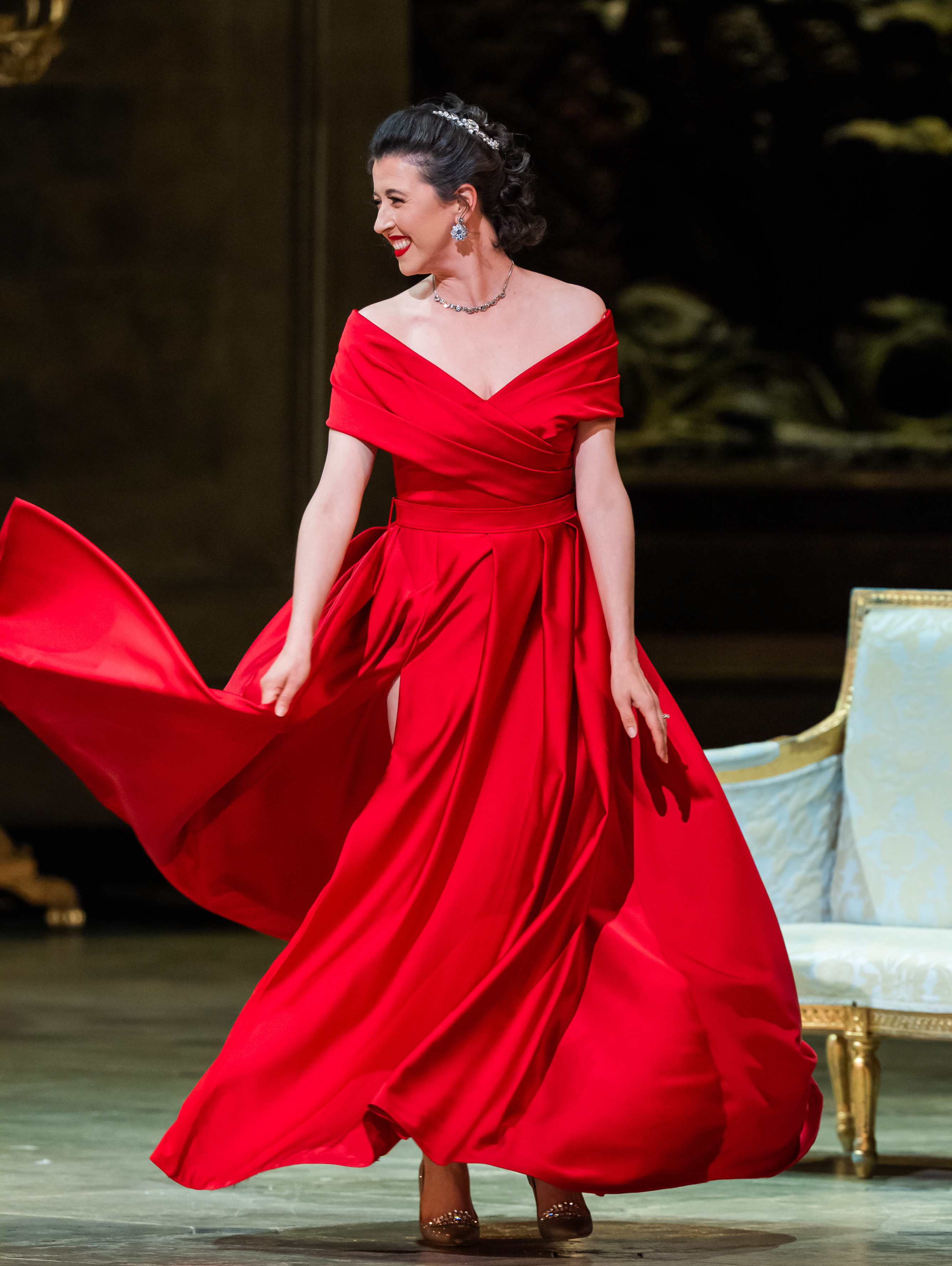
Lisette Oropesa que le public parisien a découverte dans Les Huguenots à Bastille en septembre 2018 propose ensuite « Robert, toi que j’aime », un extrait d’un autre opéra de Meyerbeer, Robert le diable. Son interprétation émouvante et nuancée, parsemée de demi-teintes exquises capte durablement l’attention en dépit de deux aigus légèrement stridents et un peu bas dans la dernière section de l’air qui n’ont pas empêché le public de l’applaudir chaleureusement. Cette partie, finalement plus captivante que la première, s’achève en beauté avec la grande scène de Saint Sulpice extraite de Manon. Bernheim propose un « Ah fuyez douce image » irréprochable vocalement et stylistiquement, mais dans le duo qui suit on aimerait percevoir davantage la fougue amoureuse qui anime le personnage. Oropesa est en revanche une Manon tout feu tout flamme, pleinement convaincante dans sa robe rouge fendue sur le devant. 

—  Christian Peter  •  Forum Opéra