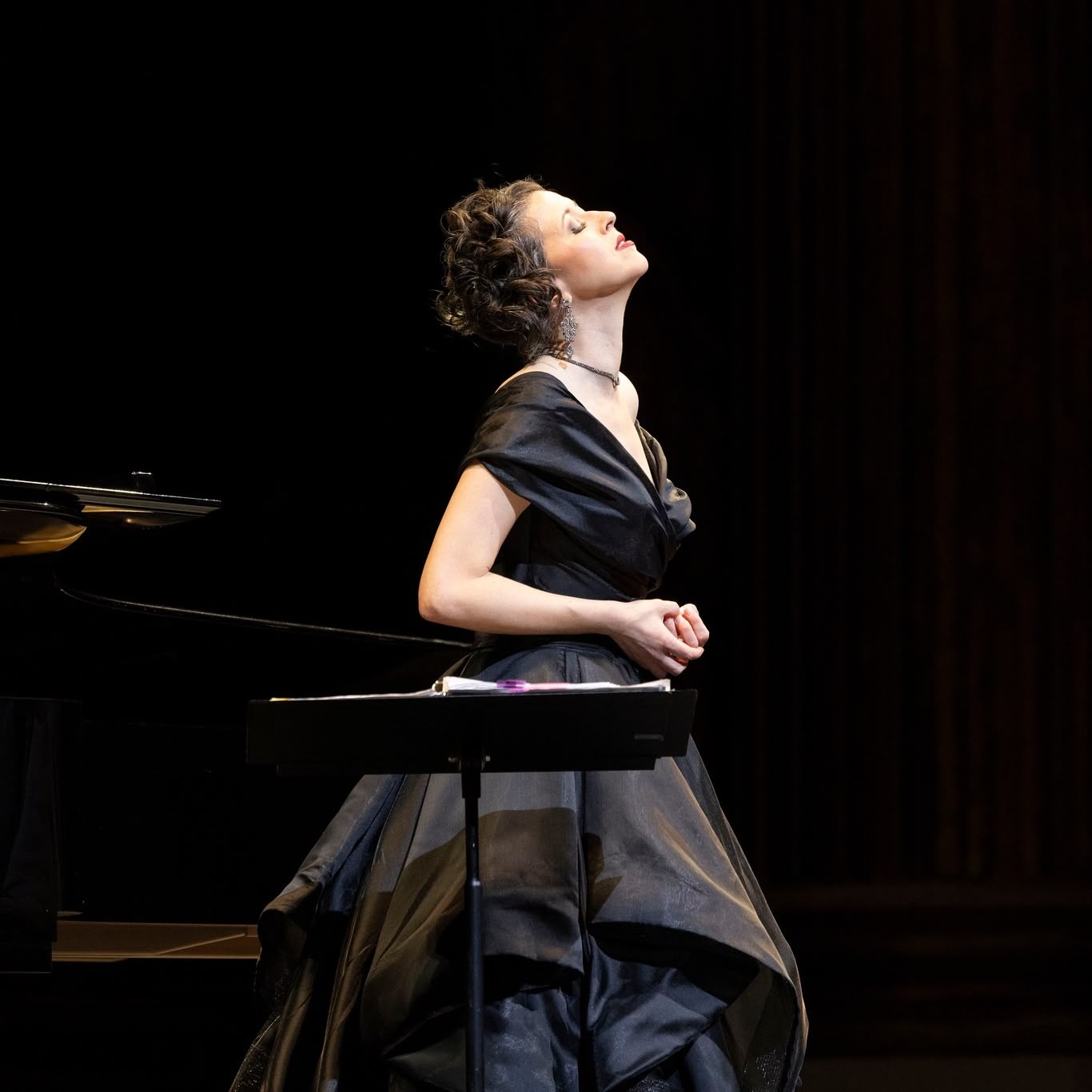
Più sobria ma marcata la bellissima aria da Soirées musicales, “L’invito” di Rossini, il discorso musicale scivola come fossero un unico strumento. In “La stella” e “La primavera” di Mercadante la forma sembra trasformata in un incantato virtuosismo tra sentimenti e voce, confidenziale, a tu per tu, come se fosse la prima volta che lo affronta. Mai un calo di tensione. Praticò dosa il volume distillando una serie di pianissimo, come sussurri che sfidano l'udito dei più nell’introduzione di “La Primavera”, magica. Qui il soprano era su timbri ideali, corposi, bruniti, come se Mercadante restituisse tutta l'espressività della voce della Oropesa, la sua genialità e bellezza. Conclude “Merci, jeunes amies” da Les vêpres Siciliennes di Verdi, preceduto da “È la vita un mar d’affanni”, “Stornello”, “Chi i bei dì m’adduce ancora”, “Perduta ho la pace” e si scardina ogni convenzione di interpretazione, di scansione ripetuta, dove scorre libero il fraseggio creando forme e prospettive mai osate prima.
The beautiful aria from Soirées musicales, “L'invito” by Rossini is more restrained yet distinctive, the musical discourse flows as though it were a single instrument. In Mercadante's “La stella” and “La primavera”, the form seems transformed into an enchanted virtuosity between feelings and voice, like a confidential, face-to-face conversation, as if it was the first time it's being addressed. The tension never drops. Praticò controls the volume, distilling a series of whispered pianissimos that challenge the hearing in the introduction to “La Primavera”, magical. Here the soprano was on ideal tones, full-bodied, tanned, as if Mercadante returned all the expressiveness of Oropesa's voice, her genius, and beauty. It concludes with “Merci, jeunes amies” from Verdi's Les vêpres Siciliennes, preceded by “È la vita un mar d’affanni”, “Stornello”, “Chi i bei dì m’adduce ancora”, “Perduta ho la pace” and shatters all conventions of interpretation, of repeated scanning, where the phrasing flows freely creating forms and perspectives never dared before.
—
Salvatore Morra
•
Giornale della Musica

:format(webp)/https://lisetteoropesa.com/media/gallery/2020/teatro-alla-scala-a-riveder-le-stelle/06-lisette-oropesa_header.jpg)

:format(webp)/https://lisetteoropesa.com/media/gallery/2025/teatro-di-san-carlo-recital/05-lisette-oropesa.jpg)
:format(webp)/https://lisetteoropesa.com/media/gallery/2025/teatro-di-san-carlo-recital/02-lisette-oropesa.jpg)
:format(webp)/https://lisetteoropesa.com/media/gallery/2025/teatro-di-san-carlo-recital/04-lisette-oropesa.jpg)
:format(webp)/https://lisetteoropesa.com/media/gallery/2025/teatro-di-san-carlo-recital/03-lisette-oropesa.jpg)
:format(webp)/https://lisetteoropesa.com/media/gallery/2025/teatro-di-san-carlo-recital/01-lisette-oropesa.jpg)