
:format(webp)/https://lisetteoropesa.com/media/gallery/2020/teatro-alla-scala-a-riveder-le-stelle/06-lisette-oropesa_header.jpg)
Career
Every engagement since 2005, newest first. Upcoming performances are on the Schedule.
2023

Lucie de Lammermoor

Le festival d’Aix se referme sur une mémorable LUCIE DE LAMMERMOOR
Si Lisette Oropesa est l’une des Lucia les plus renommées du moment, cette Lucie française constitue une prise de rôle pour la soprano américaine, qui délivre ici une prestation d’exception. La diction française est excellente : l’intelligibilité des paroles est quasi constante – mais aussi l’intelligence du texte : de toute évidence, Lisette Oropesa comprend parfaitement ce qu’elle chante, et cela s’entend. Vocalement, tout est au rendez-vous : agilité, suraigus superbes, mais surtout une émotion constante, avec une très belle progression dramatique. Sa scène de folie est absolument mémorable : elle commence dans une forme de sidération froide avant de basculer dans l’émotion hallucinée. Quand Lisette Oropesa entame « À toi ma vie… », le public, subjugué, semble carrément en apnée ! Elle nous gratifie d’ornements virtuoses (très) généreux, alterne à nouveau avec un détachement impassible (« Mais je ne suis point parjure »), et finit dans le délire et l’exaltation, le tout porté, toujours, par une technique infaillible (« Je vais loin de la terre » : variante de « Je vais quitter la terre » ?…). La chanteuse obtient un véritable triomphe, parfaitement justifié.
If Lisette Oropesa is one of the most renowned Lucias of the moment, this French Lucie is a role debut for the American soprano, who delivers an exceptional performance here. The French diction is excellent: the intelligibility of the words is almost constant - but also the understanding of the text: evidently, Lisette Oropesa fully understands what she is singing, and it shows. Vocally, everything is in place: agility, superb high notes, but above all, continuous emotion, with a very beautiful dramatic progression. Her mad scene is absolutely memorable: it begins in a form of cold shock before slipping into hallucinated emotion. When Lisette Oropesa begins "À toi ma vie...", the audience, captivated, seems to be completely breathless! She graces us with generously (very) virtuosic ornamentation, again alternating with a detached impassivity ("Mais je ne suis point parjure"), and ends in delirium and exaltation, the whole always supported by unfailing technique ("Je vais loin de la terre": a variation of "Je vais quitter la terre"...?). The singer achieves a real triumph, perfectly justified.
—
Pascal Lelièvre
•
Premiere Loge Opera
Brahms Requiem with the Metropolitan Opera
:format(webp)/https://lisetteoropesa.com/media/gallery/2023/carnegie-hall-brahms-requiem/01-lisette-oropesa.jpg)
:format(webp)/https://lisetteoropesa.com/media/gallery/2023/carnegie-hall-brahms-requiem/03-lisette-oropesa.jpg)
:format(webp)/https://lisetteoropesa.com/media/gallery/2023/carnegie-hall-brahms-requiem/02-lisette-oropesa.jpg)
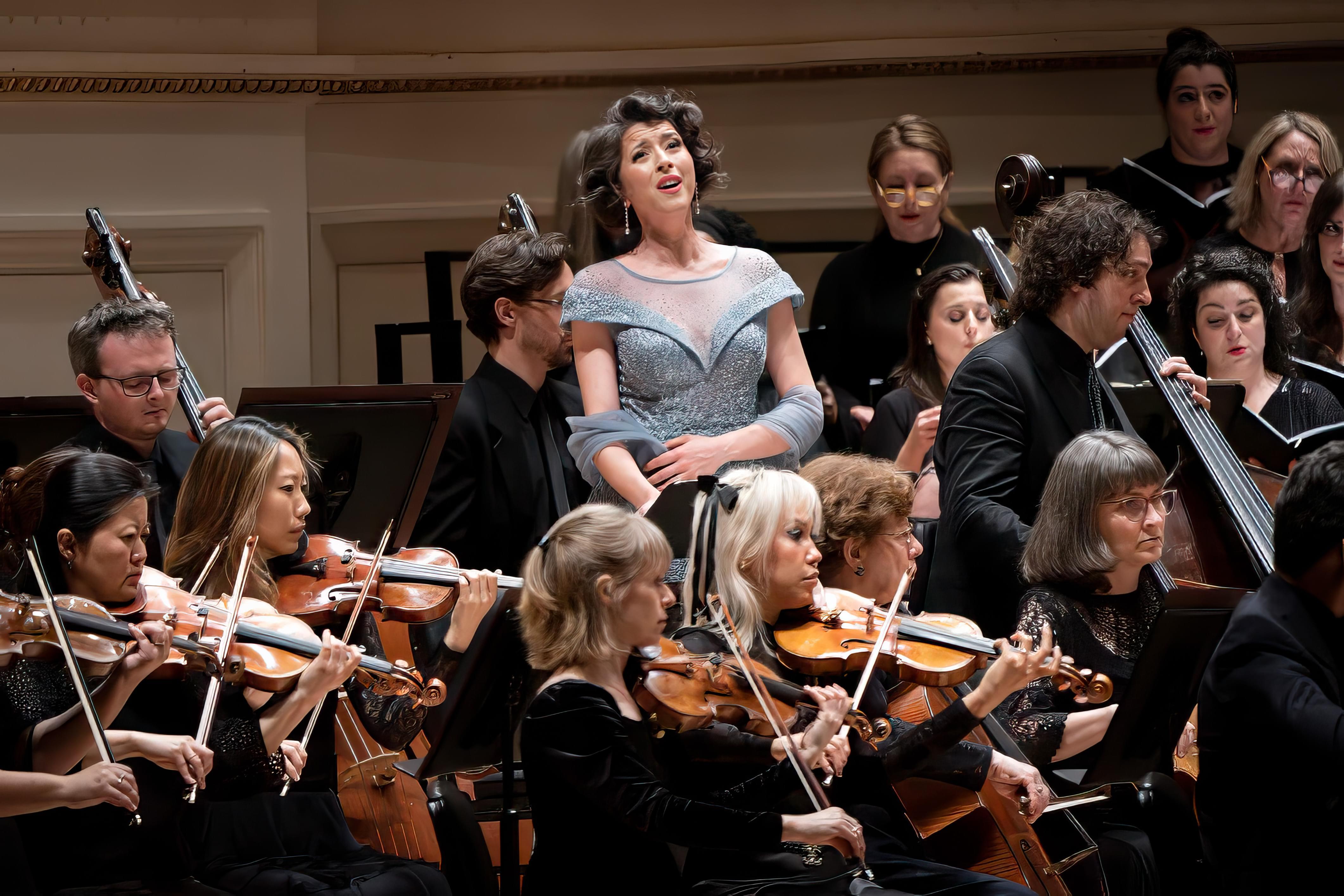
The Met Chorus shines radiantly in music of loss at Carnegie Hall
Oropesa’s “Ihr habt nun Traurigkeit.” ... she sang with a touch of rubato, her lines opening up and gliding above the orchestra. There was a feeling of joy in her singing.
Oropesa's "Ihr habt nun Traurigkeit"... she sang with a touch of rubato, her lines expanding and soaring above the orchestra. There was a sense of joy in her performance.
—
George Grella
•
New York Classical Review