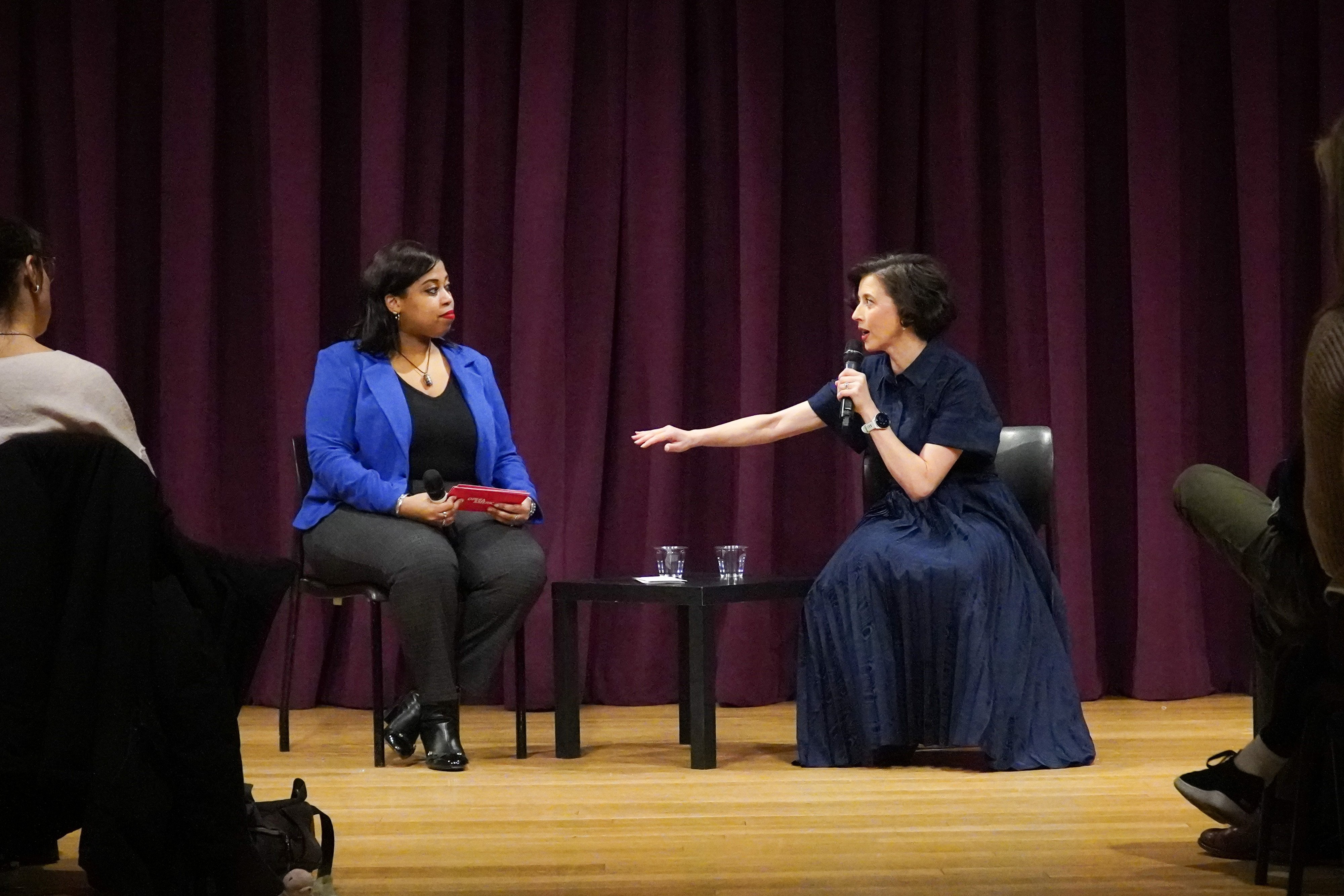
Lisette Oropesa in Conversation at Opera America
Lisette sat down with Jamelah Rimawi, Chief Programs Officer at Opera America, for a wide-ranging and deeply personal conversation as part of their On Stage at the Opera Center series. Over the course of an hour, she reflected on her journey from a young girl watching her mother sing Violetta in Baton Rouge to becoming one of the most sought-after sopranos on the international stage.
The conversation opened with Lisette recalling her very first opera experience—her mother performing La traviata with a local company in Louisiana. "My mother was the Violetta of the student cast," she said. "And I bawled and bawled because I was like, why is she dying? It was a horrible, horrible experience for me. Honestly, it was really traumatizing."
She spoke candidly about the challenges she faced early in her career, from losing friends due to competition in college to the pressures of the Met's Lindemann Young Artist Program. Having won the Metropolitan Opera National Council Auditions at just 21, she found herself isolated rather than celebrated.
"It's a lonely job. Even from early on, it's a lonely job. It's a lonely job at the top too. And that's something you have to kind of get used to."
One of the most powerful segments of the conversation addressed body image in opera. Lisette shared her experience of being told at the Met Young Artist Program that her physique and voice "didn't match," and being pressured to lose weight in order to be considered for roles. She was characteristically honest about the ongoing nature of that struggle, and firm in her stance on mentoring.
"I never tell young singers they need to lose weight. Never, ever. They know. How is that going to help that person? I didn't like hearing it. It hurt me really bad. So I don't do that. Health—vocal health, mental health, physical health, who you are as a person—is way more important than your dress size."
Lisette also discussed her creative process, revealing that she studies new roles entirely alone before bringing them to a coach. "I want my filter," she explained. "I want to literally clunk the notes and make all the mistakes and do the really slow, tedious process of phrase by phrase alone. No pressure. No corrections. Let me figure it out." She emphasized always starting from the score: "When in doubt, start with what the composer wrote."
On the business side of an opera career, she offered frank advice about the financial realities facing singers—from delayed payments in Europe to the ever-present risk of illness canceling performances and income. "If we get sick, we don't sing. We don't get paid. Anything," she said. "I think that's why singers are neurotic a lot of the time. Because our health is our livelihood."
Reflecting on her recent experience hosting the Metropolitan Opera's Laffont Competition, she was thrilled by the variety of repertoire the young competitors chose—from Poulenc to Heggie to a Verdi aria from Il Corsaro. "If we limit opera to the chestnuts when you're young and when you're studying, then you really are limiting the whole path," she said. "There's so much fantastic repertoire out there that needs to be championed."
Looking ahead, Lisette shared her excitement about upcoming projects: her first Norma in concert this summer, a debut as Liu in Turandot, a return to the Met as Maria Stuarda, and a new production of I Puritani in London. She closed the evening on an optimistic note about the future of opera:
"Opera is in great hands. The future of opera is fabulous because there are phenomenal singers out there. They had to add shows for a five-hour opera. So nobody could tell me the attention span is not there, the interest is not there. It is absolutely there. The quality has to come first."

:format(webp)/https://lisetteoropesa.com/media/news/lisette-reflux-vocal-health-2026.jpg "Lisette Oropesa speaking from her New York City apartment during an Instagram Live")
:format(webp)/https://lisetteoropesa.com/media/gallery/2024/portraits/202408-04-portrait-lisette-oropesa.jpg)





:format(webp)/https://lisetteoropesa.com/media/news/lisette-oropes-la-traviata-rome.jpg "Lisette is interviewed in Il Messaggero about her upcoming film of La traviata from the Rome Opera.")
:format(webp)/https://lisetteoropesa.com/media/news/lisette-return-met-opera-associated-press.jpg "Lisette is interviewed in the Associated Press")
:format(webp)/https://lisetteoropesa.com/media/news/lisette-oropesa-opera-online.jpg "Lisette Oropesa interviewed in Opera Online")