
:format(webp)/https://lisetteoropesa.com/media/gallery/2019/teatro-alla-scala-i-masnadieri/01-lisette-oropesa_header.jpg)
:format(webp)/https://lisetteoropesa.com/media/venue/teatro-real.jpg)
Teatro Real
Madrid, ES

2026
Tuesday
February
10
19:30
February
10
19:30
Saturday
February
14
19:30
February
14
19:30
Cast
| Amalia | Lisette Oropesa | |
| Massimiliano | Alexander Vinogradov | |
| Carlo | Piero Pretti | |
| Francesco | Nicola Alaimo | |
| Arminio | Alejandro del Cerro | |
| Moser | George Andguladze | |
| Rolla | Albert Casals |
Conductor
Francesco Lanzillotta
ChorusmasterJosé Luis Basso
About
The Teatro Real presents a concert version of I masnadieri, a little-known opera by Verdi, with Francesco Lanzillotta as musical director. Acclaimed soprano Lisette Oropesa leads a top-class cast in this powerful story that highlights a power struggle between members of the same family.
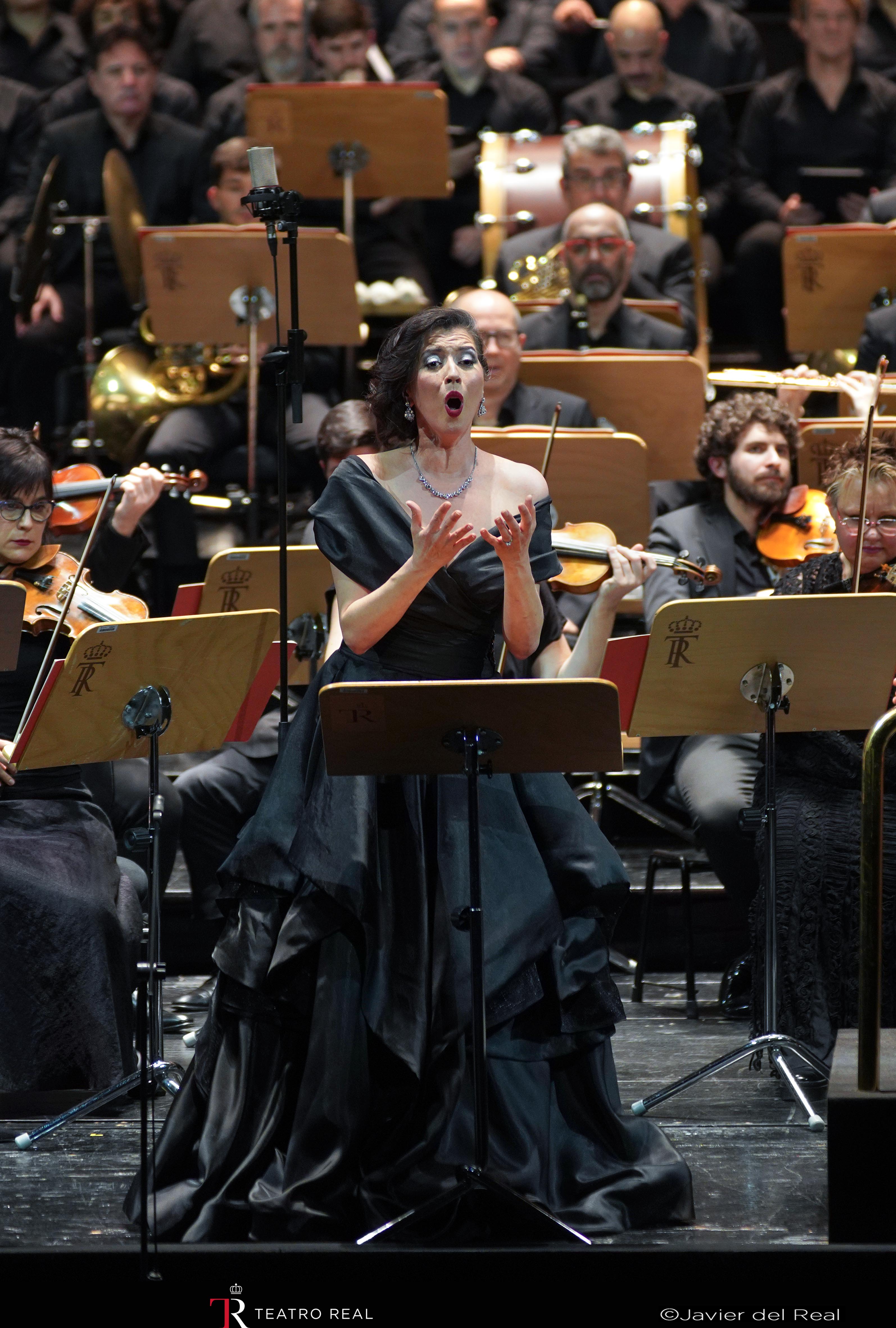
:format(webp)/https://lisetteoropesa.com/media/gallery/2026/teatro-real-i-masnadieri/04-lisette-oropesa.jpg)
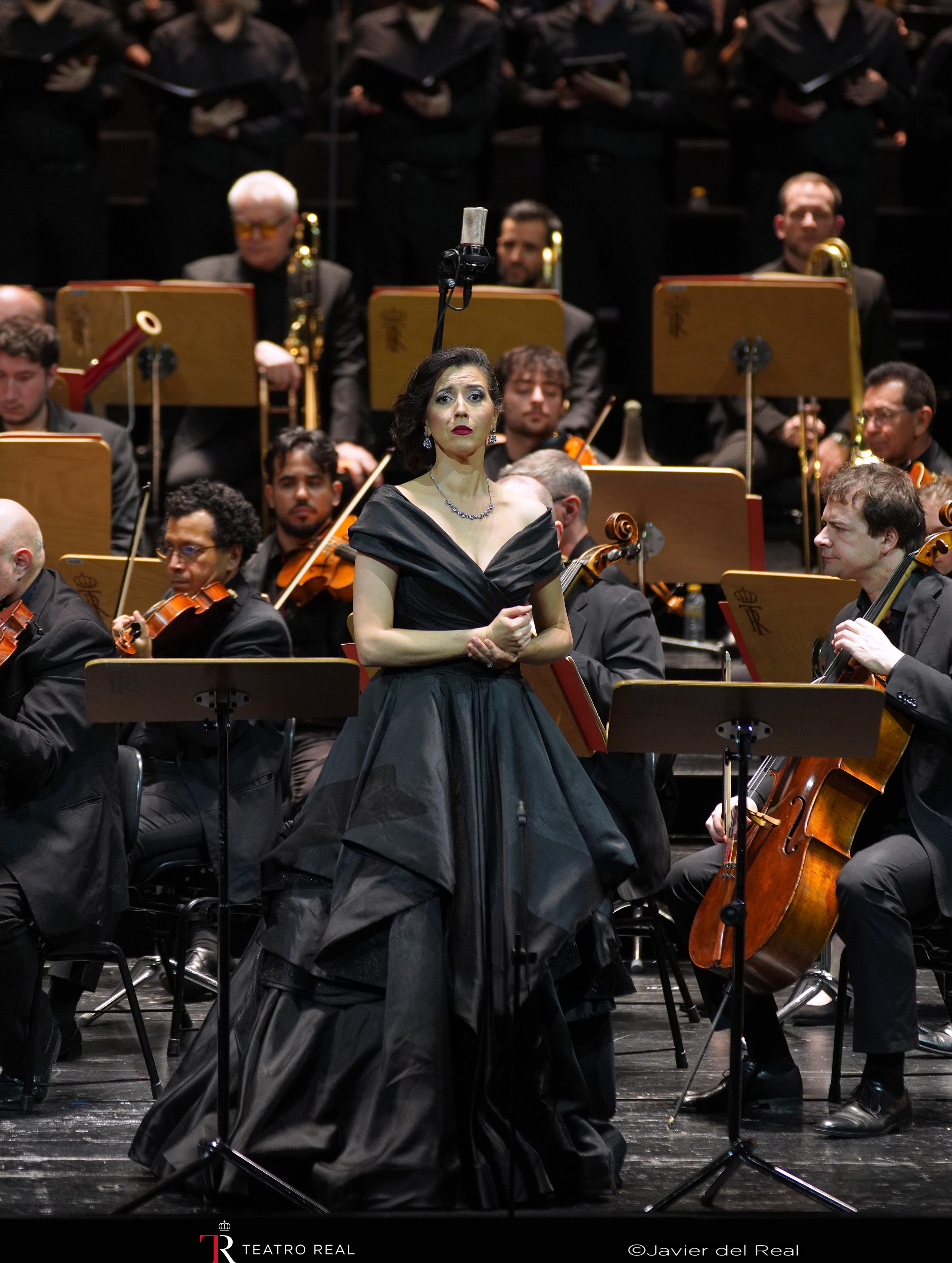
:format(webp)/https://lisetteoropesa.com/media/gallery/2026/teatro-real-i-masnadieri/01-lisette-oropesa.jpg)
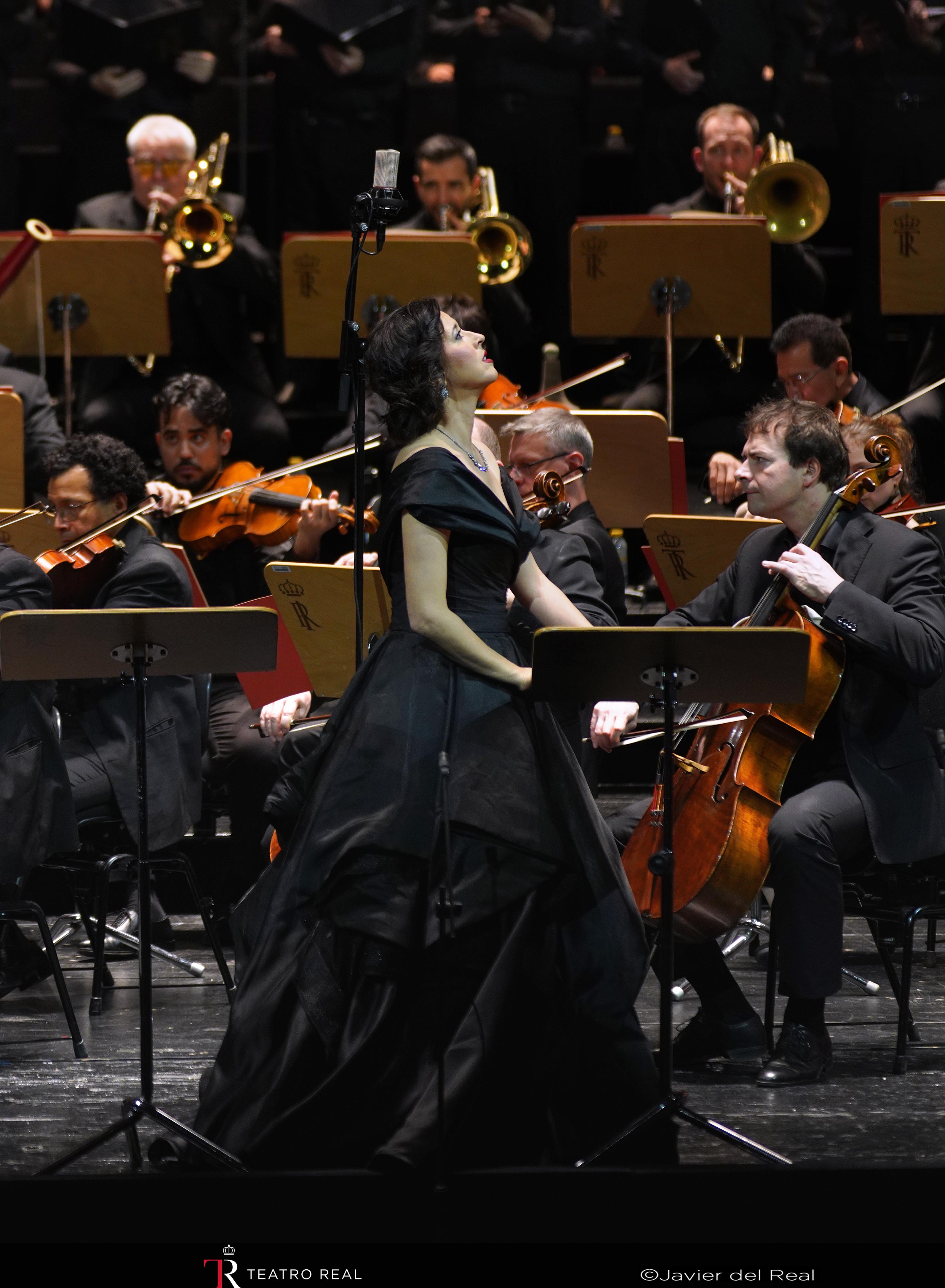
:format(webp)/https://lisetteoropesa.com/media/gallery/2026/teatro-real-i-masnadieri/02-lisette-oropesa.jpg)
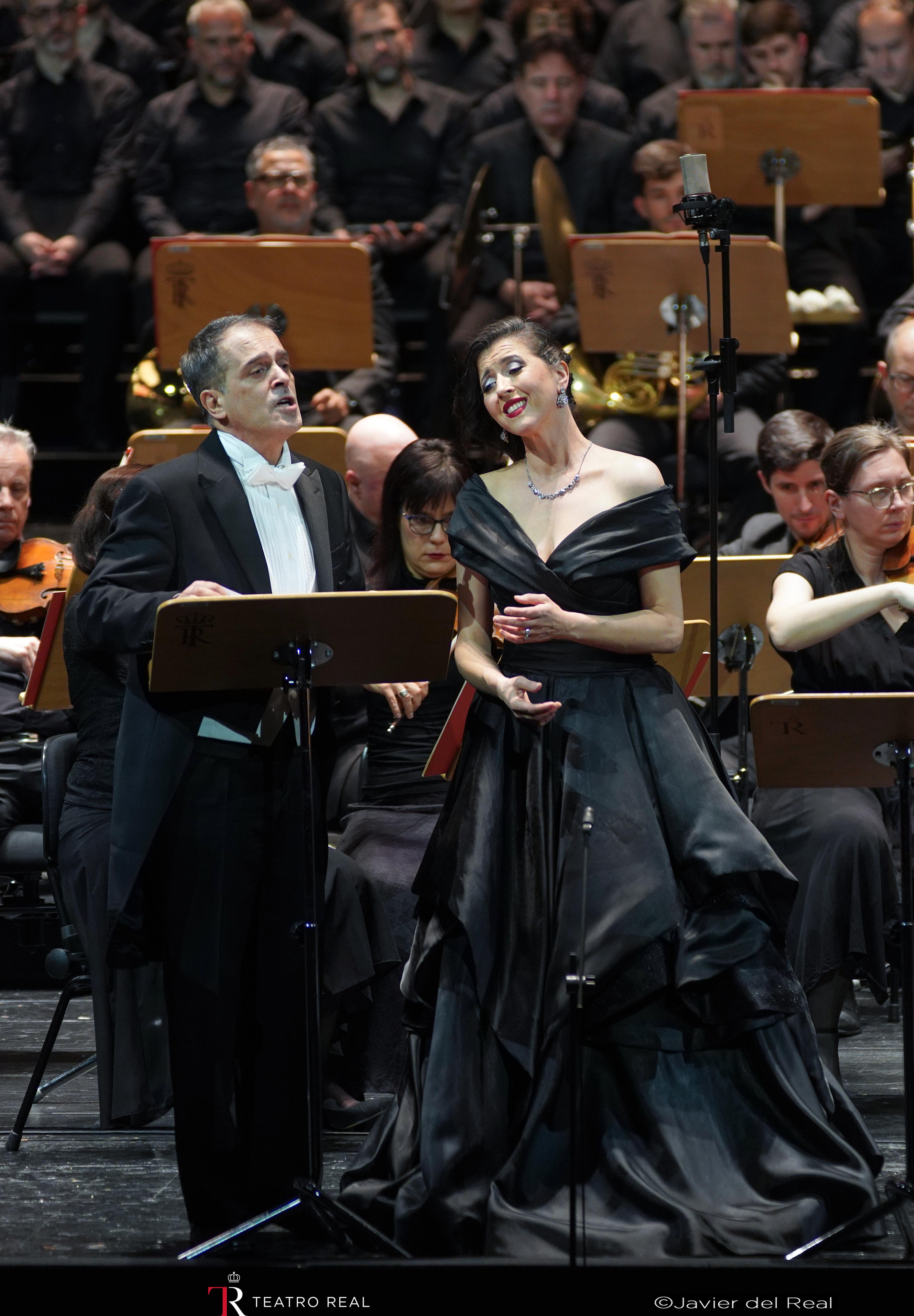
:format(webp)/https://lisetteoropesa.com/media/gallery/2026/teatro-real-i-masnadieri/03-lisette-oropesa.jpg)
:format(webp)/https://lisetteoropesa.com/media/gallery/2026/teatro-real-i-masnadieri/05-lisette-oropesa.jpg)
Media
'I Masnadieri' para Lisette Oropesa / Entrevista
Lisette Oropesa tras realizar un bis de la cabaletta del aria ‘Carlo vive’ de ‘I Masnadieri’ hoy en
Bis I masnadieri ‘Carlo vive? O caro accento, melodia di paradiso’ de Lisette Oropesa | Teatro Real
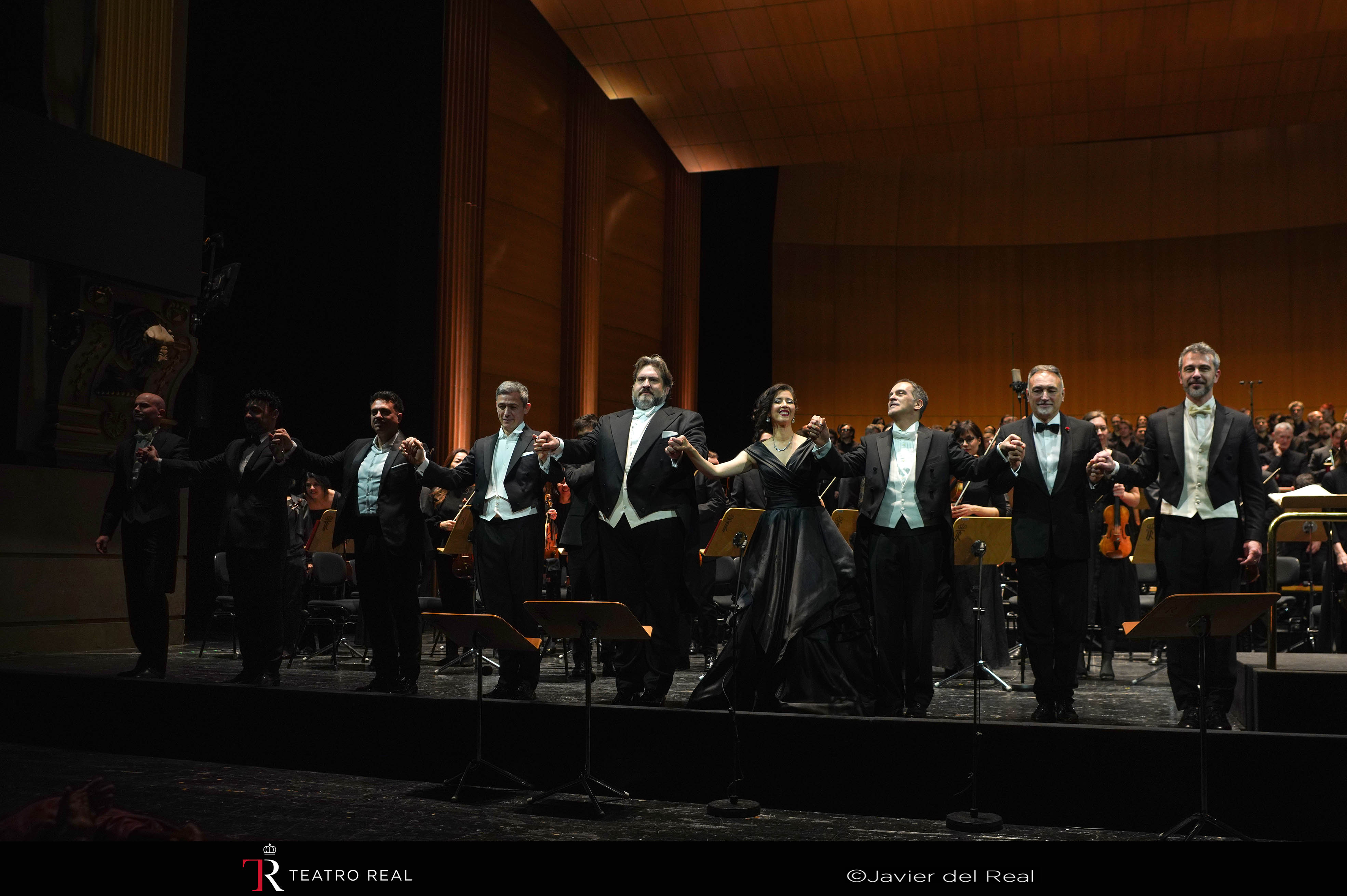
:format(webp)/https://lisetteoropesa.com/media/gallery/2026/teatro-real-i-masnadieri/04-lisette-oropesa.jpg "Lisette Oropesa at the Teatro Real")
Lisette encores the cabaletta of "Carlo vive?" at the Teatro Real
This was the soprano's third encore at the Teatro Real, making her the only singer to date to have given encores in three different operas.

☃️ 2026 - Winter Newsletter
☃️ 2026 - Winter Newsletter
Reviews
Lisette Oropesa, el eco de un bis que ya es historia
En ese contexto de voces curtidas en el repertorio verdiano, el bis de Oropesa no fue un simple añadido festivo. Funcionó como síntesis de la velada. La repetición de la cabaletta dejó al descubierto la esencia de la obra, esa mezcla de ardor juvenil y lirismo apasionado que anticipa al Verdi más maduro.
In that context of voices seasoned in the Verdi repertoire, Oropesa's encore was not just a festive addition. It functioned as a synthesis of the evening. The repetition of the cabaletta revealed the essence of the piece, that blend of youthful ardor and passionate lyricism that foreshadows Verdi's more mature style.
—
Hoy es Arte
•
Hoy es arteMADRID / ‘I masnadieri’: éxito personal de Lisette Oropesa y gran sorpresa de Nicola Alaimo
Lisette Oropesa logró un triunfo personal rotundo, hasta el punto de bisar la cabaletta de su aria del segundo acto, interpolando un sobreagudo que desató el entusiasmo del público. Su voz, de volumen contenido, pero proyección limpísima, revela una técnica refinada. Dueña de la coloratura y de un trino admirable, se muestra hoy plenamente idónea para Amalia. A ello se suma la evidente corriente de afecto que mantiene con el público madrileño.
Lisette Oropesa achieved a resounding personal triumph, to the extent of repeating the cabaletta of her aria from the second act, interpolating a high note that unleashed enthusiasm from the audience. Her voice, with contained volume but extremely clear projection, reveals a refined technique. Mastering coloratura and an admirable trill, she is now fully capable of portraying Amalia. Added to this is the evident current of affection she maintains with the audience in Madrid.
—
Ricardo de Cala
•
Scherzo MagazineCrítica de "I Masnadieri": Verdi y un buen reparto hacen vibrar al Teatro Real
Formidable en la citada aria del sueño del IV acto. Oropesa brilló tanto como pudo hacerlo la célebre Jenny Lindt, que tanto cantó en el primitivo Teatro Real. Especialmente brillante en los trinos, matizando y con una voz que llega a todos lados, hubo de bisar el final de la cabaletta “Carlo, io muoio”, incluso añadiendo un sobreagudo espectacular. Por cierto, se repitieron todas las caballetas y Alaimo bordó una de ellas al variarla en la segunda.
Remarkable in the aforementioned aria of the dream in the IV act. Oropesa shone as brightly as the famous Jenny Lindt could have, who sang so much at the original Teatro Real. Especially outstanding in the trills, adding nuances with a voice that reaches everywhere, she had to repeat the end of the cabaletta "Carlo, io muoio," even adding a spectacular high note. By the way, all the cabalettas were repeated, and Alaimo excelled in one by adding variations in the second.
—
Gonzalo Alonso
•
La Razón'I masnadieri', triunfo verdiano en el Real con bis de Lisette Oropesa
Las tres condiciones se cumplieron de sobra en esta velada. Destacó, como era de esperar, la soprano Lisette Oropesa, favorita del público del Teatro Real, que se enfrentó a un doble reto. Primero, por las exigencias vocales de un papel escrito para Jenny Lind, célebre en su tiempo por su fabuloso virtuosismo canoro. Y segundo, y algo aún más arriesgado, por la posibilidad de encerrar al personaje en el puro despliegue vocal, sin más. Algo que resulta muy tentador dado que el personaje de Amalia carece, de por sí, de consistencia dramática. Pues bien, Oropesa demostró, una vez más, que todo el repertorio de adornos heredado de las divas del belcantismo puede ser puesto al servicio del drama. Se lo permite una voz argentina, limpia, con una peculiar densidad, y capaz de oscurecerse cuando conviene y, cuando llega el momento, de reflejar en su consistencia toda la fragilidad de la pobre muchacha que acaba asesinada por su amante. Ante la interminable ovación del público, Oropesa bisó la super excitante cabaletta “Carlo vive? O caro acento”, tras una delicada interpretación de la apasionada y elegantísima “Tu del mio Carlo al seno”. Un momento que será recordado en la historia del Real que puede revivirse bajo estas líneas.
De hecho, con el triunfo de ayer, Oropesa se ha convertido en la única cantante hasta la fecha que ha ofrecido bises en tres distintas óperas en el Teatro Real, tras Lucia di Lammermoor, en 2018, y La traviata, en 2020.
The three conditions were more than met on this evening. Standout, as expected, was soprano Lisette Oropesa, a favorite with the audience of the Teatro Real, who faced a double challenge. First, due to the vocal demands of a role written for Jenny Lind, famous in her time for her fabulous vocal virtuosity. And second, even more daring, the possibility of confining the character to mere vocal display. This is very tempting given that the character of Amalia lacks dramatic consistency. Well, Oropesa once again demonstrated that the entire repertoire of ornaments inherited from the bel canto divas can be used in service of drama. This is allowed by her Argentinean voice, pure, with a peculiar density, capable of darkening when needed, and, when the moment arrives, of reflecting in its consistency all the fragility of the poor girl who ends up murdered by her lover. Amidst the never-ending ovation of the audience, Oropesa encored the super thrilling cabaletta "Carlo vive? O caro acento," after a delicate interpretation of the passionate and very elegant "Tu del mio Carlo al seno." A moment that will be remembered in the history of the Real and that can be relived through these lines.
In fact, with yesterday's triumph, Oropesa has become the only singer to date who has offered encores in three different operas at the Teatro Real, following Lucia di Lammermoor in 2018, and La Traviata in 2020.
—
José María Marco
•
Opera Actual"I masnadieri", il Verdi che non t'aspetti
La Oropesa se la beve con una facilità quasi insolente e tutto l’apparato virtuosistico richiesto: fiati lunghissimi, trilli fenomenali, coloratura sfavillante ma non meccanica. Risultato: bis a furor di madrileni della cabaletta “Carlo vive!”. Rispetto alla produzione della Scala nel ’19, mi sembra che la voce abbia anche guadagnato in sonorità, specie in basso: insomma, un’Amelia fenomenale.
La Oropesa drinks it up with almost insolent ease and handles all the virtuosic requirements effortlessly: extremely long breaths, phenomenal trills, dazzling coloratura that is not mechanical. The result: encores demanded fervently by the Madrid audience after the cabaletta "Carlo vive!". Compared to her performance at La Scala in '19, it seems to me that her voice has also gained in richness, especially in the lower register: in short, a phenomenal Amelia.
—
Alberto Mattioli
•
La StampaTeatro Real de Madrid 2025-26 Review: I Masnadieri
Oropesa conveyed Amalia’s nobility and strength of character. Her rich voice has a rare quality: it’s immediately recognizable, thanks to its distinct timbre and natural trills. Her interpretation of its most famous aria “Tu, del mio Carlo” was spot on – initially sad and then brilliantly joyous in the cabaletta “Carlo vive,” with clean coloratura and brilliant high notes. When she finished, there was pandemonium in the theatre. The crowd would not stop their applause and loud cheers until Francesco Lanzillotta gave in and had Oropesa give a bis of the aria’s cabaletta. This time, ornaments were added in the tradition of the great coloraturas, to the delight of the Cuban-American diva’s many fans. Astonishingly, this was Oropesa’s third bis at the Teatro Real following the sextet in “Lucia di Lammermoor” in 2018 and the second in “Addio del passato” in “La traviata” in 2020. Even in this little known opera, miracles can happen!
—
Ossama el Naggar
•
Opera WireCrítica / Siempre Verdi y más con Oropesa y Alaimo - por Francisco Villalba
Para servir al papel hemos contado con una gran intérprete, la tan querida en Madrid, Lisette Oropesa que dio una lección de canto tanto en la parte elegiaca, con un legato extraordinario, como en la más espectacular, antes nombrada “Carlo vive…” donde hizo una exhibición de trinos, escalas cromáticas y donde añadió un espectacular sobreagudo al final. Si a esto unimos que Oropesa es una consumada actriz y su entrega al drama fue total, por lo que se comprende que respondiendo a las atronadoras ovaciones que ovaciones que recibió al finalizar dicha aria, nos la regalase de nuevo con un bis.
To serve the role, we had a great interpreter, the beloved Lisette Oropesa in Madrid, who gave a singing lesson both in the elegiac part, with extraordinary legato, and in the most spectacular one, previously named "Carlo vive..." where she displayed trills, chromatic scales, and added a spectacular high note at the end. Adding to this, Oropesa is a skilled actress, and her commitment to the drama was total, which is why it is understandable that, responding to the thunderous ovations she received at the end of said aria, she gifted it to us again with an encore.
—
Francisco Villalba
•
RitmoCarlo vive!
A Lisette Oropesa basta la cavatina di Amalia “Venerabile, o padre, è il tuo sembiante..Lo sguardo avea degli angeli”per conquistare il Teatro Real: linea fluida e pulitissima, legato e dizione perfetti, agilità nitide, trilli precisi e rotondi; la voce, poi, appare irrobustita per peso specifico e nella risonanza. Insomma, una lezione di canto, impartita grazie a un bagaglio tecnico così agguerrito che fa apparire semplicissima una scrittura invece piena di insidie. Poi c’è l’interprete, così calata nella parte da tratteggiare un’Amalia raffinata, cesellata, ma reale, palpabile e carnale pur nella scrittura vocale e nei tratti elegiaci che Verdi le assegna.
L’aria che apre l’atto II, “Tu del mio Carlo al seno” e la successiva cabaletta “Carlo vive?... Oh caro accento”sono così ben cantante, con accenti di aristocratico coinvolgimento emotivo che infiammano il pubblico del Teatro Real: a fuor di pubblico, dopo lunghi e fragorosissimi applausi, Francesco Lanzillotta e Lisette Oropesa decidono di concedere il bis della caballetta. E da questo momento in poi la sua prova è un crescendo di “ben e bel cantare”, di abbandono lirico e di aderenza psicologica all’evoluzione del personaggio: stasera la regina al Teatro Real è lei, Lisette Oropesa.
Lisette Oropesa only needs Amalia's cavatina "Venerabile, o padre, è il tuo sembiante... Lo sguardo avea degli angeli" to conquer the Teatro Real: a fluid and spotless line, perfect legato and diction, clear agility, precise and rounded trills; moreover, her voice seems strengthened by its specific weight and resonance. In short, a singing lesson, imparted thanks to such a fierce technical baggage that makes a seemingly simple writing full of pitfalls. Then there is the performer, so immersed in the role to outline a refined, chiseled, yet real, tangible, and carnal Amalia even in the vocal writing and elegiac traits that Verdi assigns her.
The aria that opens Act II, "Tu del mio Carlo al seno" and the subsequent cabaletta "Carlo vive?... Oh caro accento" are sung so well, with accents of aristocratic emotional involvement that ignite the Teatro Real audience: beyond the audience, after long and thunderous applause, Francesco Lanzillotta and Lisette Oropesa decide to grant an encore of the cabaletta. And from this moment on, her performance is a crescendo of "good and beautiful singing," of lyrical abandonment and psychological adherence to the character's evolution: tonight, the queen at the Teatro Real is her, Lisette Oropesa.
—
Luigi Raso
•
L'ape musicaleMadrid, Teatro Real: “I masnadieri”
Grande protagonista della serata il soprano Lisette Oropesa nella parte di Amalia, acclamata da un pubblico che la adora (sin dal Rigoletto del dicembre 2015, quando si rivelò a Madrid, per tornarvi con Lucia di Lammermoor nel giugno 2018 e, più recentemente, con la trionfale Maria Stuarda del dicembre 2024). Elogiarne la rotondità del timbro, la vibrante policromia della linea di canto, la bellezza calligrafica dei trilli, è ormai come portare vasi a Samo … Forse un po’ troppo ardita nel sottolineare lo stile “leggero” delle colorature, Oropesa affronta la cabaletta «Carlo vive? O caro accento» con tale limpida gaiezza da affascinare il pubblico e convincere il direttore a concedere un bis. Non si tratta di una propina qualunque, giacché la tradizione dei bis sopranili è scarsissima nei quarant’anni della riapertura del Teatro; fu proprio Oropesa, il 28 luglio 2020, durante il periodo delle restrizioni sanitarie, a concedere il primo bis solistico con «Addio del passato» dalla Traviata (nel 2018, lo stesso soprano e il resto degli interpreti principali avevano ripetuto il sestetto della Lucia).
The great protagonist of the evening was soprano Lisette Oropesa in the role of Amalia, acclaimed by an adoring audience (since the Rigoletto of December 2015, when she revealed herself in Madrid, to return with Lucia di Lammermoor in June 2018, and, more recently, with the triumphant Maria Stuarda of December 2024). To praise the roundness of her tone, the vibrant spectrum of her vocal line, and the calligraphic beauty of her trills, is now like carrying coals to Newcastle... Perhaps a bit daring in emphasizing the "light" style of coloratura, Oropesa tackles the cabaletta "Carlo vive? O caro accento" with such clear gaiety as to enchant the audience and persuade the conductor to grant an encore. This is not just any encore, as the tradition of soprano encores is very scarce in the forty years since the reopening of the Theater; it was Oropesa herself, on July 28, 2020, during the period of health restrictions, who granted the first solo encore with "Addio del passato" from La Traviata (in 2018, the same soprano and the rest of the main cast had repeated the sextet from Lucia).
—
Michele Curnis
•
GB Opera MagazineOropesa and Alaimo are outstanding in a Madrid concert performance of Verdi’s I masnadieri
Lisette Oropesa has become a magnificent lyric soprano, with a high-quality voice and an extraordinary facility for singing and moving the audience, overcoming any difficulty she may encounter. In my opinion, she and Nadine Sierra occupy the throne of the new generation of sopranos, and it is a privilege to attend their performances. She sang the role of Amalia and triumphed like few others. In the cabaletta ‘Carlo vive’, she brought the house down and had to perform an encore of the second part.
—
José Irurzun
•
Seen and Heard InternationalAprès Marseille, Les Brigands (I masnadieri) assiègent Madrid !
En Amalia, Lisette Oropesa a remporté un très grand succès. La maîtrise technique impressionne : legato souverain, vocalises précises, trilles impeccables jusque dans le grave – notamment dans le « O caro accento » de la cabalette « Carlo vive », où les soprano les plus illustres n’hésitent pas à les escamoter, même au disque ! Au-delà de la virtuosité, la soprano s’investit pleinement, rendant attachant un personnage dramatiquement mince mais musicalement gratifiant.
In Amalia, Lisette Oropesa achieved great success. Her technical mastery is impressive: sovereign legato, precise vocalises, impeccable trills even in the lower range - notably in the "O caro accento" of the cabaletta "Carlo vive," where even the most illustrious sopranos do not hesitate to omit them, even on record! Beyond virtuosity, the soprano fully invests herself, endowing a dramatically thin yet musically rewarding character with charm.
—
Stéphane Lelièvre
•
Premiere Loge OperaPerformance History
Lisette has given 18 performances as Amalia.